
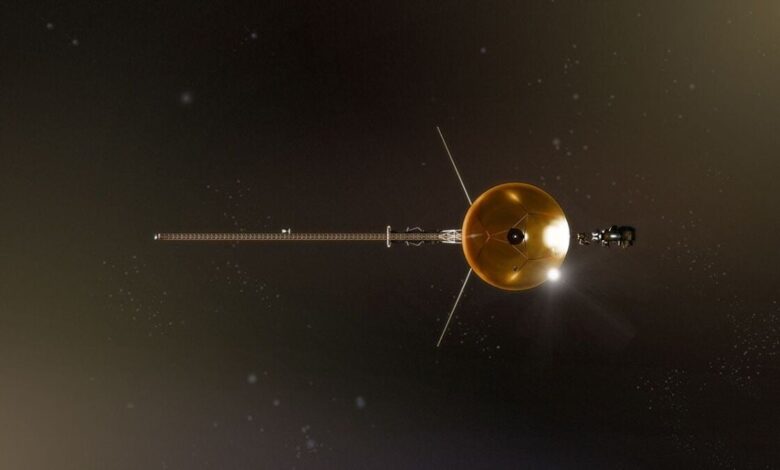
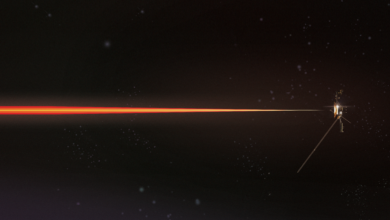
The signal itself is a “carrier,” a basic radio wave similar to the frequency a radio station uses to broadcast music. Under normal operations, Voyager 1 packages scientific and engineering data into blocks called frames and loads them onto this carrier. To read this information, ground antennas must identify the start of each block, a process known as frame sync. Currently, the frame sync is missing. As Suzanne Dodd, the Voyager project manager, explained, “We do have a very strong carrier signal. We currently don’t have a frame sync, so we’re not getting the science or engineering data currently.” In practical terms, the radio station is on the air, but the broadcast is dead air.
The outage began on November 14 and has persisted through the milestone. While the signal confirms that the spacecraft is alive and that its antenna remains pointed at Earth, it does not reveal the status of the onboard instruments. The issue likely resides in the onboard computer responsible for collecting readings from the instruments and packaging them for transmission, rather than the computer responsible for pointing the antenna. Engineers are investigating whether this problem is connected to an episode in October when the mission lost all contact with Voyager 1 for approximately 48 hours before the spacecraft reconnected on its own.
At a one-hour celebration held Thursday at JPL to mark the milestone, the data outage was addressed briefly. Panelists, including astronaut Jessica Watkins, who provided a recorded tribute from the International Space Station, shared memories of the mission. When asked about the spacecraft’s condition, Kareem Badaruddin, the Voyager mission manager, noted that the team has encountered similar issues before. In 2023, Voyager 1 experienced a similar carrier-only signal, which engineers traced to an onboard computer. That experience is guiding the current troubleshooting efforts. Badaruddin described the situation as routine, stating, “The anomalies have become normal for us… An engineer with a problem is like a dog with a bone. So we are very busy and very energized to solve these problems.”
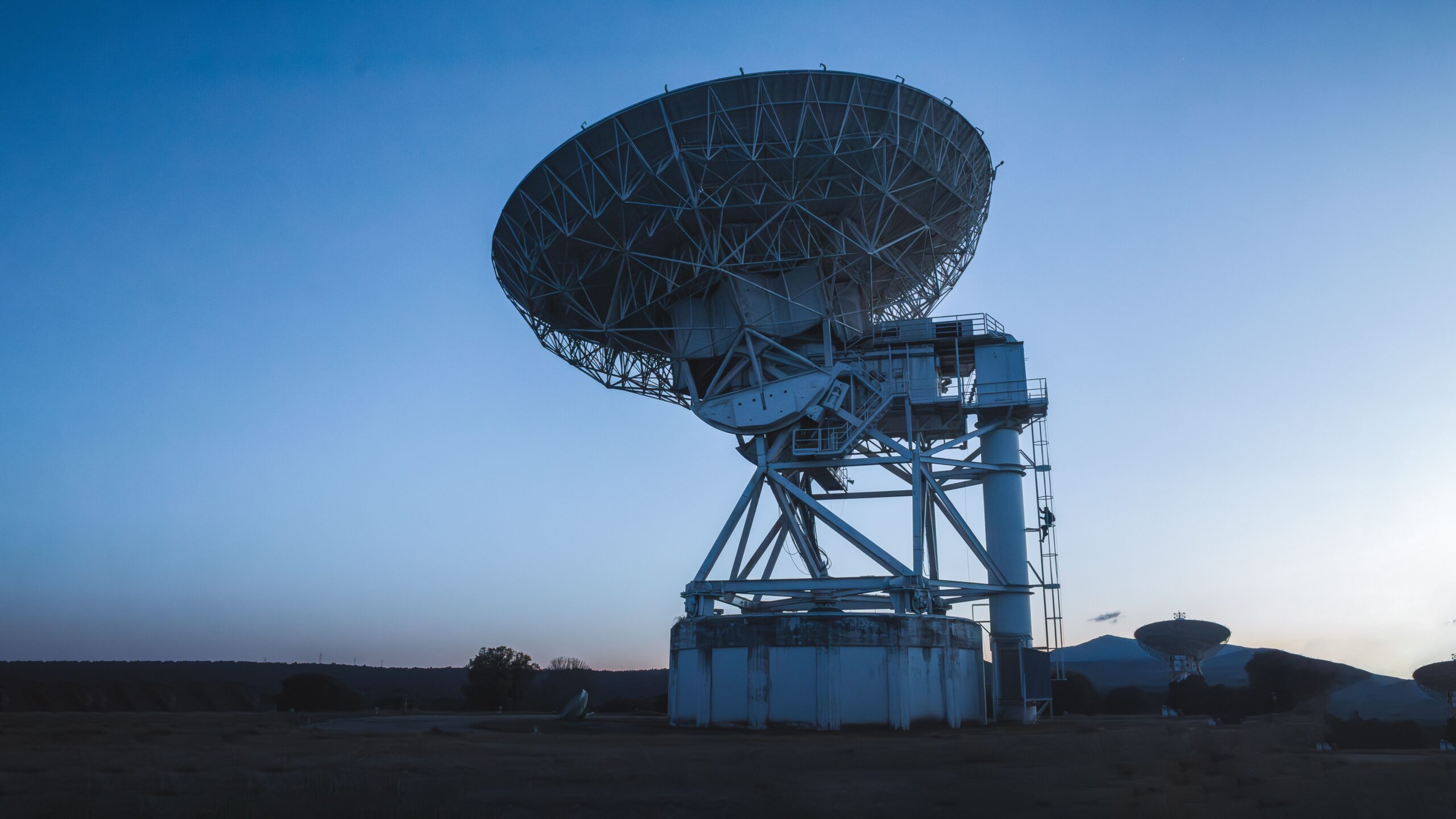
Solving the issue will be a slow process due to the sheer distance involved. Any command sent from Earth takes two days to reach the spacecraft, and another two days for a response to return. NASA has warned that identifying the cause of the current anomaly could take weeks or longer. The delay is a direct consequence of the light-day milestone; the speed of light sets a hard limit on the communication round-trip time.
The challenges of maintaining Voyager 1 are compounded by its age and dwindling power supply. Launched in 1977, the probe relies on a radioisotope thermoelectric generator that converts heat from decaying plutonium into electricity. Each year, the probe loses about four watts of power. To conserve energy, engineers have progressively shut down instruments over the decades. Voyager 1 now operates with only two active instruments: a magnetometer, which measures magnetic fields, and a plasma wave instrument, which detects waves in the electrically charged gas of interstellar space.
This summer, engineers executed a risky but successful maneuver to extend the probe’s operational life. They turned off three devices and replaced their functions with lower-power alternatives that prevent the spacecraft’s fuel from freezing. This power swap is expected to keep the remaining instruments running until at least the mission’s 50th anniversary next summer. Dodd compared the spacecraft to an aging human, noting, “All of us old people have our aches and pains, and you know sometimes it takes longer to stretch out your muscles and remember things.” She expressed confidence that the current issue would be resolved and that the probe would resume sending data.
The technical hurdles are also historical. The original commands for the mission were sent on punch cards, and the team must now ensure that modern ground equipment can communicate effectively with 1970s hardware. Despite these difficulties, the mission team remains focused on finding workarounds. Voyager 2, the probe’s twin, remains healthy with three instruments still functioning, though NASA expects both spacecraft to eventually succumb to unfixable problems. Until that time, the team continues to search for solutions, as Badaruddin put it, by finding more “rabbits out of a hat.”
As the investigation into the frame sync issue continues, the next confirmed step is a detailed analysis of the spacecraft’s onboard computer systems. The team will continue to monitor the carrier signal for any changes and send diagnostic commands, accepting the two-day delay in response as an inherent part of operating at the edge of the solar system. The milestone of crossing one light-day remains a testament to the probe’s endurance, even as it navigates a period of communication silence.



One Comment