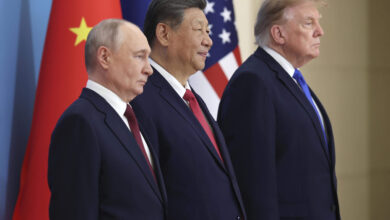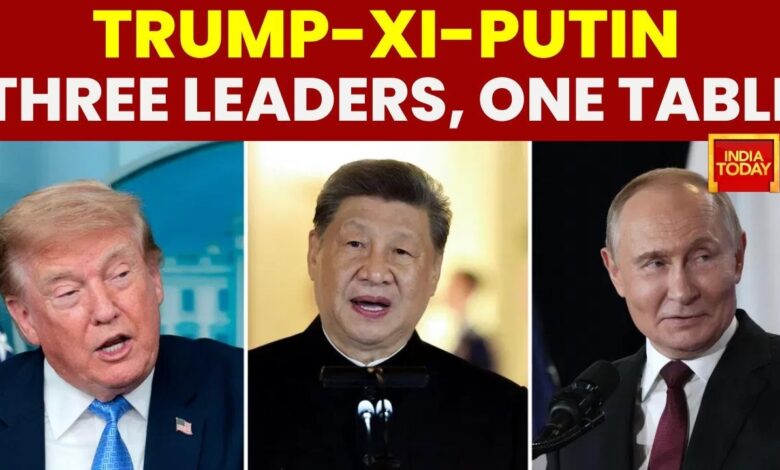
The diplomatic landscape of the Asia-Pacific region underwent a notable shift this week as world leaders converged in Shenzhen for the 33rd Asia-Pacific Economic Cooperation (APEC) Economic Leaders’ Meeting. Hosted by China, the summit served as a platform not only for economic discussion but also for high-stakes geopolitical engagement. The central event of the gathering was a trilateral meeting between US President Donald Trump, Russian President Vladimir Putin, and Chinese President Xi Jinping, marking a significant moment of direct interaction between these three major powers.
The agenda for the summit was extensive, encompassing speeches, plenary sessions, and a series of bilateral talks. While trade priorities and strategic plans formed the backbone of the economic discussions, the conversations were inextricably linked to critical geopolitical issues, including the ongoing conflict between Russia and Ukraine and negotiations concerning Iran. The sequence of diplomatic engagements was deliberate: a key bilateral working lunch between the US and China preceded the trilateral session with Russia, underscoring the layered nature of the diplomatic efforts underway.
Senior journalists and analysts noted the unique nature of the trilateral meeting, describing it as a focal point for discussions on nuclear arms control, technology, and the broader implications of global conflicts. The presence of all three leaders in one forum provided a venue for addressing tensions that have otherwise been managed through separate channels. The discussions reportedly touched upon the war in Iran and the Russia-Ukraine war, indicating that the summit was being utilized as a space to manage multiple simultaneous crises.
However, the path to these trilateral talks was marked by complex diplomatic dynamics. Prior to the meeting, US President Trump had articulated a position against seeking assistance from either China or Russia regarding the Ukraine conflict. This stance contrasted with the broader context of Russian territorial aims in Ukraine and the ongoing debates surrounding NATO expansion guarantees. The inclusion of Russia in the trilateral dialogue, therefore, represented a nuanced diplomatic maneuver, balancing the US’s stated independence in resolving the Ukraine crisis with the practical necessity of engaging all key stakeholders in regional and global stability.
For China, the summit offered an opportunity to reinforce its vision for the region. In his address to the APEC forum, President Xi promoted the concept of an Asia-Pacific community built on solidarity, openness, innovation, and development. He unveiled new initiatives aimed at supporting regional cooperation, positioning China as a central architect of regional stability and economic integration. This messaging was particularly significant amidst ongoing US restrictions on Chinese semiconductor technology. The summit thus became a stage for China to advocate for open trade and technological cooperation while navigating the economic pressures imposed by its largest competitor.
The interplay between these economic and diplomatic threads highlighted the multifaceted nature of current international relations. The US, China, and Russia each pursued distinct strategic objectives at the summit. The US focused on managing nuclear arms and containing the spread of conflicts, while also addressing trade imbalances. China sought to deepen regional ties and counterbalance US technological restrictions. Russia, meanwhile, looked to maintain its diplomatic relevance and address its positions on Ukraine and Iran within a framework that included its two most powerful rivals.
The outcome of these meetings is still unfolding, but the very act of convening such a high-level trilateral dialogue signals a willingness to engage directly rather than solely through proxies or multilateral forums. The discussions on nuclear arms control and technology suggest that the summit addressed long-term strategic competition, while the talks on Ukraine and Iran reflected immediate concerns over global security. The emphasis on “solidarity” and “openness” in China’s address may serve as a counter-narrative to the protectionist trends that have characterized recent international trade relations.
As the leaders concluded their sessions in Shenzhen, the immediate consequence was a renewed acknowledgment of the interconnectedness of economic policy and geopolitical strategy. The summit demonstrated that while tensions persist, particularly regarding the Ukraine conflict and technological dominance, there remains a functional channel for dialogue among the world’s most powerful nations. The next developments will likely hinge on whether the frameworks discussed in Shenzhen translate into concrete agreements on trade, technology, and conflict resolution, or whether they remain largely symbolic gestures in an increasingly fragmented global order.
The return to the central dynamic of the summit reveals a world where economic forums are increasingly used as proxies for hard security negotiations. The trilateral meeting in Shenzhen, with its focus on nuclear arms and global conflicts, stands as a testament to the complexity of contemporary geopolitics. As the leaders departed, the unresolved tensions regarding Ukraine, Iran, and trade policies remained, but the possibility of continued dialogue had been reaffirmed.