The agreed-upon declaration focuses on four primary areas: reducing nuclear risks, reforming the United Nations, increasing the supply of refined petroleum, and respecting state immunities under the International Criminal Court. The summit avoided explicit mention of ongoing conflicts in Ukraine and Iran, as well as issues concerning artificial intelligence and Taiwan. Following the conclusion of the talks, US envoys traveled to brief European and Ukrainian leaders on the outcomes.
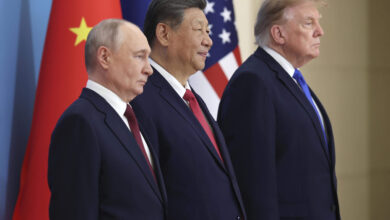
The diplomatic atmosphere in Shenzhen was characterized by an “unscripted spectacle,” with officials noting that physical gestures, such as lingering handshakes and pats on the back, carried significant weight. Breaking with decades of protocol, President Xi personally appeared on the tarmac at Shenzhen Baoan International Airport to greet the visiting leaders, a move that signaled the high priority Beijing placed on the engagement. The visual dynamics of the Xi-Trump-Putin interaction were closely monitored, with analysts suggesting the body language reflected a complex balance of cooperation and subtle power plays.

The timing of the summit follows weeks of intense speculation regarding the potential for direct dialogue between Washington and Beijing amidst broader geopolitical tensions. By bringing the leaders of the US, Russia, and China together, the summit sets a precedent for multilateral engagement among these major powers, which were once wartime allies. The focus on nuclear disarmament and energy stability suggests a strategic effort to manage global risks without addressing the more contentious bilateral disputes that typically dominate US-China and US-Russia relations.
The immediate consequence of the summit is the deployment of US diplomatic teams to communicate the four-point declaration to key partners in Europe and Ukraine. The omission of Ukraine from the joint statement has raised questions about the scope of US commitment to the region, a point likely to be addressed in the upcoming briefings. The next expected event is the formal reaction from European leaders and the Ukrainian government to the US-Russia-China diplomatic alignment.