
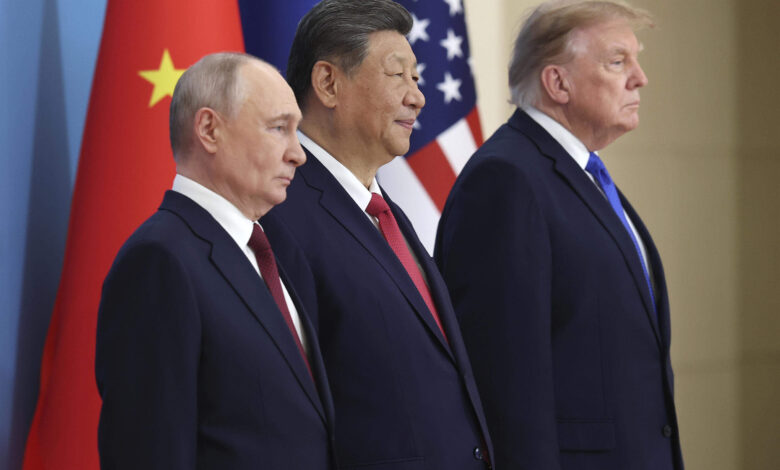
The summit, which took place against the backdrop of intensifying geopolitical pressures, resulted in a joint declaration addressing energy, nuclear risks, and other global issues. However, the most pressing conflict of the era, the war in Ukraine, remained largely unresolved. Kokcharov pointed out that as Europe takes on a greater share of support for Kyiv, the war has intensified, marked recently by Ukraine’s attack on the Crimean Bridge. This escalation suggests that the diplomatic engagement did not yield the de-escalation or security guarantees that observers had hoped for, leaving major questions unanswered regarding the future trajectory of the conflict.
For Vladimir Putin, the summit appears to have been a strategic victory, according to Bloomberg News White House Correspondent Jeff Mason. Mason argues that Putin emerged as a key beneficiary of the meeting, successfully returning to the global stage alongside the leaders of the United States and China. This reintegration into high-level diplomatic forums occurred despite Russia’s ongoing war in Ukraine, effectively challenging the diplomatic isolation Moscow had faced in recent years. The meeting reflected Trump’s distinct preference for leader-level diplomacy, a style that prioritizes direct engagement between heads of state over multilateral institutions or bureaucratic negotiation.
However, the durability of this diplomatic shift is subject to internal and external scrutiny. Michelle Jamrisko, Bloomberg’s White House and National Security Editor, noted that while the summit reinforced Trump’s approach to diplomacy, it left significant questions unresolved, particularly concerning US security guarantees to Ukraine. European skepticism toward Putin remains a formidable obstacle; the continent’s wariness complicates any potential normalization of relations between the West and Moscow. This skepticism is not merely rhetorical but reflects deep-seated concerns about Russia’s military actions and intentions in the region.

Domestic political dynamics further complicate the outlook for US foreign policy. The upcoming shift to a Democratic-controlled Congress in the final weeks of the lame duck session and the following year presents a potential check on the executive branch. Yet, Mason suggests that this change, along with the appointment of Stephen Miller as White House chief of staff, is unlikely to fundamentally alter the president’s foreign policy approach. The continuity of Miller’s presence in a senior advisory role indicates that the ideological underpinnings of the administration’s diplomatic strategy may remain intact, regardless of partisan shifts in Congress.
Internal administration tensions also surface in the post-summit period. Jamrisko highlighted the efforts of Vice President JD Vance to distinguish his views from those of the president as he looks toward the 2028 election cycle. This strategic positioning suggests that key figures within the administration are already calculating their long-term political futures, potentially prioritizing domestic electoral viability over strict adherence to the current foreign policy line. Such maneuvering introduces an element of uncertainty into the consistency of US diplomatic messaging.
The economic implications of the summit’s limited results are also under consideration. While the joint declaration touched on energy and nuclear risks, the lack of concrete breakthroughs in Ukraine means that the broader geopolitical instability continues to impact global markets. Tech disruptions have sparked concern at home, as noted in the WBUR roundtable, linking international diplomatic stumbles to domestic economic anxieties. This interconnection suggests that the failure to resolve the Ukraine conflict may carry tangible costs for the US economy, further complicating the political landscape.

As the lame duck Congress prepares to conclude its business, the focus turns to what lawmakers will accomplish in the remaining weeks. The intersection of foreign policy and domestic legislation will likely shape the US response to the ongoing war in Ukraine and the broader geopolitical order. The summit’s “highly consequential” label, as claimed by Trump, may be tested by the actions of Congress and the reactions of European allies in the coming months.
In the end, the summit stands as a testament to the power of leader-level diplomacy to reshape global perceptions, even if it fails to deliver immediate peace. Putin’s return to the center of international affairs, Trump’s reinforcement of his diplomatic style, and the unresolved status of Ukraine create a complex tableau. The next development will hinge on whether the joint declaration can be translated into actionable policy or if it remains a symbolic gesture in a war that continues to intensify. The coming weeks, marked by congressional inaction and European skepticism, will be critical in determining the true legacy of this historic meeting.




One Comment