
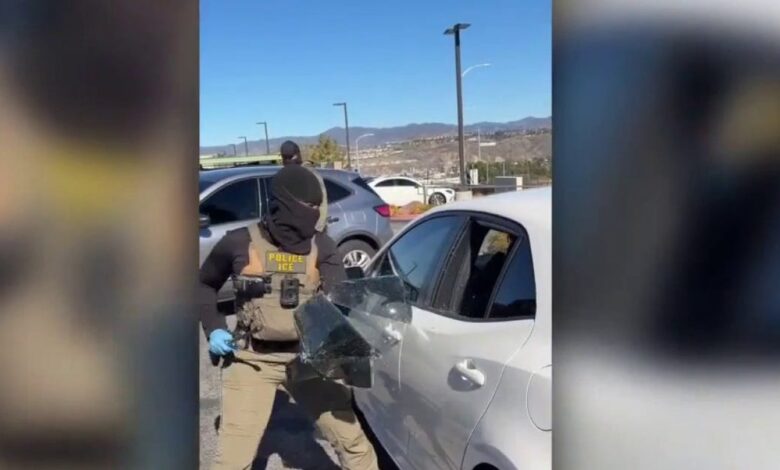
The incident highlights a growing friction point in the overlap between local law enforcement facilities and federal immigration operations. According to witnesses, the confrontation began after a man, who had been released from custody shortly before the event, approached a young couple in the parking lot and asked for a ride home. The couple agreed to help him, and their vehicle quickly became the focal point of the interaction with federal agents. The video shows agents approaching the car, during which a window was broken, sending glass scattering across the pavement.
The legal and procedural context of the arrest remains a subject of intense scrutiny. Activists present at the scene, including Ashley Calkins of the Vote Up Advocacy Coalition, stated that the man was not in the act of committing a crime at the time of the arrest but was simply seeking transportation. Calkins, who was documenting the event, described the scene as “horrifying and brutal and dystopian.” She emphasized that, in her observation, the protesters did not instigate the violence. “At no point did any of the protesters instigate violence, but at every point, the ICE agents chose it,” Calkins said, pointing to the use of force against individuals who were merely recording or observing.
The video captures a specific sequence of actions that raises questions about the proportionality of force used by federal agents in a public setting. In one instance, an agent approaches a protester holding a cellphone. The individual does not appear to be obstructing the agents’ movement when the officer shoves him and sprays him with pepper spray. Calkins can be heard reacting to the moment, shouting, “He did nothing to you! What are you doing?” The use of chemical agents extended beyond the primary subject of the arrest. The video shows the woman from the couple who had offered the ride standing near her vehicle, questioning why she was targeted. “He sprayed me! Why did he spray me?” she asks. Her husband, who attempted to reach her, was also pepper-sprayed during the confrontation.
In response to the incident, the Los Angeles County Sheriff’s Department issued a statement clarifying its role, or lack thereof, in the federal operation. The department stated that its personnel were not involved in the immigration enforcement action. According to the statement, attributed to the Santa Clarita Valley Sheriff’s Station, ICE agents did not notify station personnel before making the arrests. Furthermore, the federal agents did not use any secured facilities connected to the station to stage or initiate the operation. The Sheriff’s Department noted that it did not inform ICE of the individuals’ impending release from custody nor did it coordinate any transfer into federal custody.
The statement underscores a procedural boundary that the department maintains: it does not participate in civil immigration enforcement and does not inquire about immigration status when responding to service calls. The department emphasized that the arrests took place in a public area, after the individuals had been released from local custody and outside any Sheriff’s Department facility. It noted that federal immigration officials, like members of the public, have the right to access public areas of sensitive locations, provided they do not disrupt county operations. Despite its distance from the operation, the sheriff’s department acknowledged that immigration enforcement can create fear and uncertainty in the community, adding that everyone should be treated humanely.
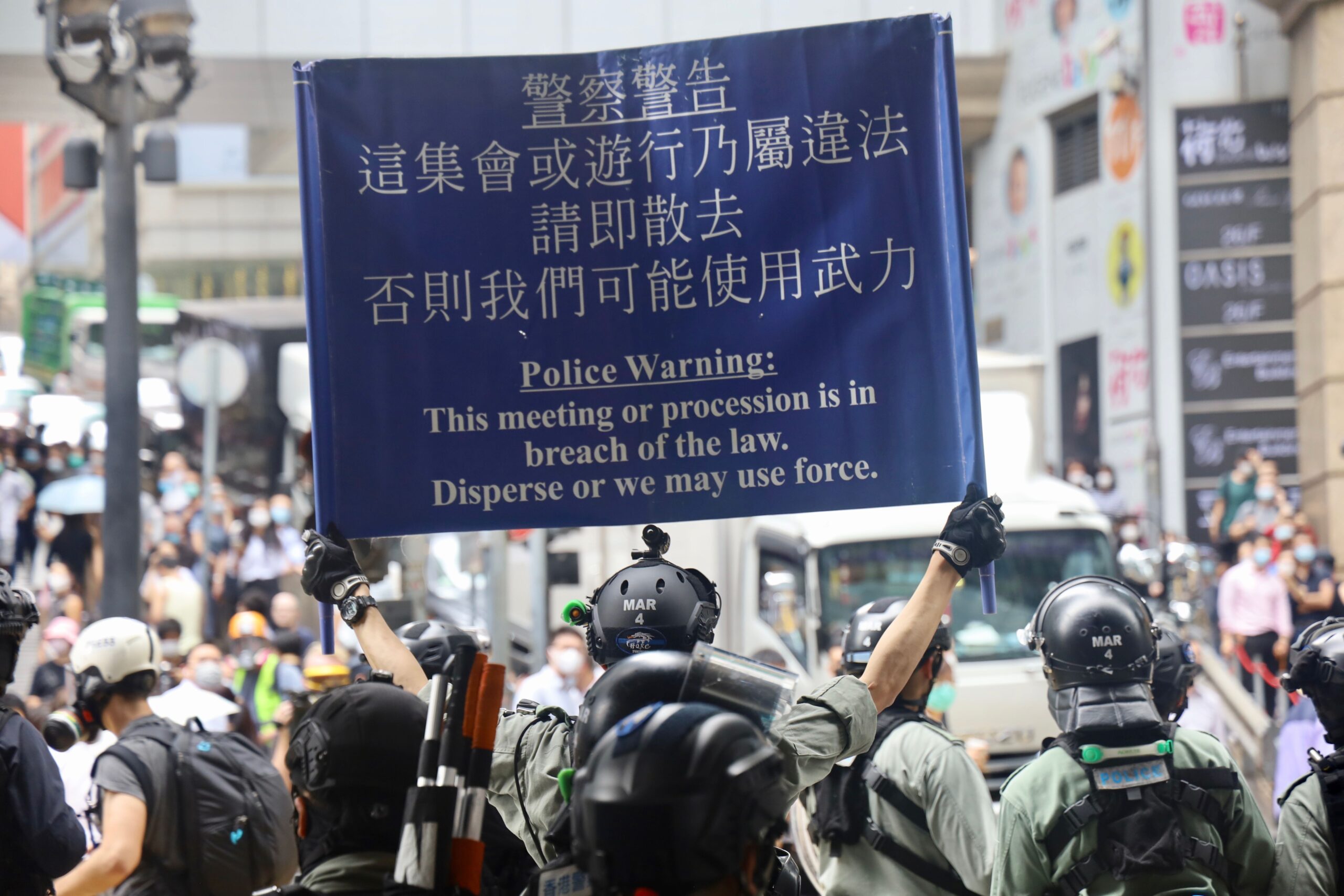
The incident has left questions regarding the specific legal authority invoked by ICE agents at the scene. Protesters in the video can be heard repeatedly shouting at the agents, stating they did not have a warrant. However, the Department of Homeland Security (DHS), the parent agency of ICE, has not responded to requests for information regarding the arrest, the identity of the man detained, or the specific circumstances surrounding the confrontation. The lack of immediate official commentary from federal authorities leaves the precise legal basis for the on-scene actions—particularly the use of force against bystanders and the destruction of property—open to public debate and potential legal review.
For the individuals involved, the immediate aftermath was marked by physical distress and confusion. The man ICE agents were pursuing was eventually taken into custody and removed from the scene. The couple who had offered him a ride were left dealing with the effects of pepper spray and a damaged vehicle. The incident serves as a stark illustration of the complexities and tensions that arise when federal enforcement actions intersect with local public spaces and community members who may be unaware of the federal status of individuals in their midst.
As of now, the next confirmed legal steps remain unclear, pending any formal complaints filed by the individuals affected or official investigations by the Department of Homeland Security. The Sheriff’s Department has distanced itself from the incident, maintaining its policy of non-cooperation with civil immigration enforcement, while the federal agency remains silent on the specific tactics employed by its agents in the Santa Clarita parking lot. The video continues to circulate, serving as a primary record of the event and fueling broader discussions about the conduct of federal agents during public arrests.