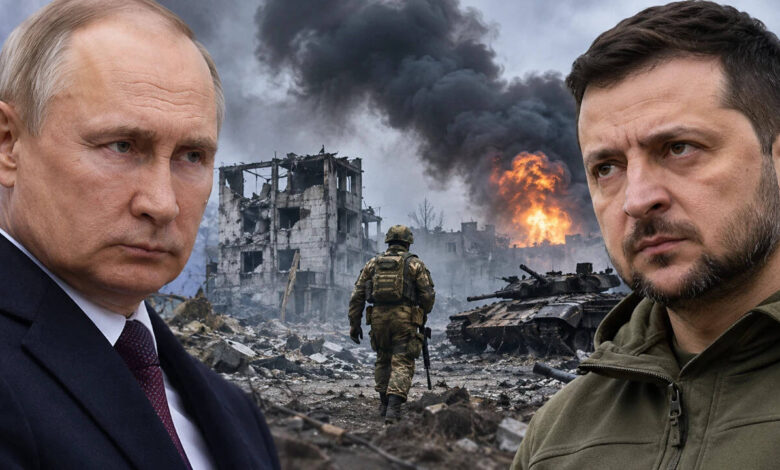
At the core of this stagnation is the divergence in core objectives between the two primary actors. For Ukraine, the strategic imperative remains the restoration of territorial integrity and security guarantees from the international community. For Russia, the stated goals involve recognizing annexed territories and preventing NATO expansion. These objectives are mutually exclusive in their current formulation, creating a zero-sum dynamic that complicates any diplomatic breakthrough. Without a reconciliation of these baseline demands, negotiations tend to collapse at the preliminary stages, leaving the battlefield as the primary arena for decision-making.
The military dimension further entrenches this diplomatic deadlock. Both sides have demonstrated a capacity for sustained attrition, indicating that neither perceives an immediate existential threat that would force a concession. The integration of advanced drone warfare, long-range missile strikes, and fortified defensive lines has created a high-cost environment for any significant territorial change. This military stalemate translates directly into political leverage; neither side feels compelled to trade territory or security guarantees for a ceasefire, as the status quo, while costly, is perceived as sustainable. The result is a conflict of endurance where the passage of time is viewed as a strategic asset rather than a liability.
Economic pressures add another layer of complexity to the peace equation. The war has triggered significant disruptions in global energy markets, grain supplies, and financial systems. While sanctions have imposed severe costs on the Russian economy, they have also accelerated its pivot toward alternative trade partners and self-sufficiency in certain industrial sectors. Conversely, Ukraine’s economy remains heavily dependent on foreign aid and reconstruction funding. This economic asymmetry creates a fragile equilibrium where the cost of war is distributed unevenly, yet neither side has reached a breaking point that would necessitate a political settlement. The international community’s role is further complicated by internal divisions among Western nations regarding the scope and duration of support, which Ukraine interprets as a lack of unified commitment to its long-term security.
Historical context and regional security architectures also play a pivotal role in the impasse. The post-Cold War security order, particularly the relationship between NATO and Russia, remains unresolved. Ukraine’s aspiration for Western integration clashes with Russia’s perception of its strategic buffer zone. This fundamental disagreement over the future of European security means that any peace agreement would need to address not just the bilateral conflict, but the broader geopolitical structure of the continent. The absence of a trusted multilateral framework to guarantee such an agreement further diminishes the likelihood of a successful negotiation. Trust deficits, built over decades of diplomatic failures and recent military actions, make verification mechanisms and enforcement clauses particularly difficult to agree upon.
The humanitarian impact of this prolonged stalemate is profound, with millions displaced and critical infrastructure damaged. However, the human cost, while morally compelling, has not translated into sufficient political pressure for a compromise that either side views as a defeat. The narrative of the conflict has become deeply entrenched in the domestic politics of both nations, making any significant concession a high-risk political move for leaders on both sides. This internal political constraint limits the flexibility available to negotiators, further narrowing the window for a viable peace deal.
Looking ahead, the path to peace appears to require a fundamental shift in one or more of these ten barriers. This could involve a change in military balance that forces a negotiation from a position of weakness, a realignment of international support that provides sufficient security guarantees for Ukraine, or a domestic political shift in Russia that re-evaluates the strategic costs of the war. Until such a shift occurs, the conflict is likely to remain in a state of managed intensity, with periodic diplomatic efforts that fail to bridge the gap between the two sides’ core demands. The front line in Eastern Europe stands as a testament to this reality, a silent witness to a peace that remains, for now, an elusive ideal.