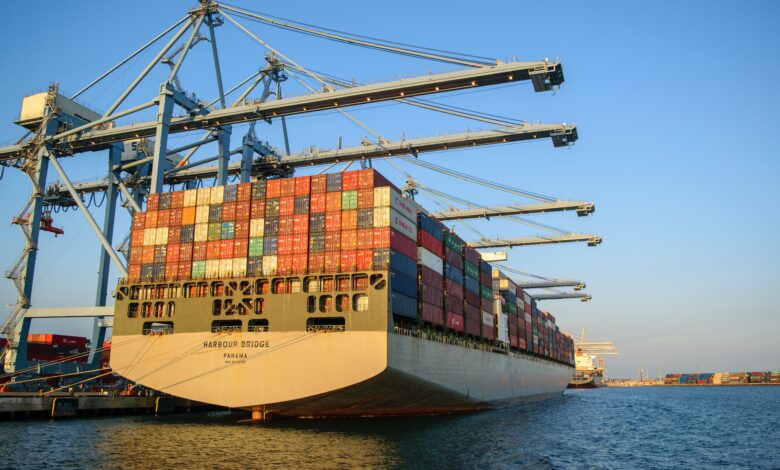
The decision strikes at the core of Singapore’s economic strategy. The city-state had positioned itself as a key intermediary in the global AI supply chain, leveraging its access to advanced U.S. technology and its established commercial ties with Chinese tech firms. According to Nvidia’s financial filings prior to it ceasing disclosure of specific regional sales, Singapore accounted for 22 percent of the company’s global revenue last year. However, a significant portion of this figure represented products billed in Singapore but shipped elsewhere, a practice that has now come under intense scrutiny.
U.S. Trade Representative Jamieson Greer stated that the goal of the new controls is to block indirect access to advanced technology, specifically targeting smuggling operations through Southeast Asia and remote access via data centers in third countries. The crackdown is a direct response to allegations that companies have been diverting hardware to China in violation of existing sanctions. A central figure in this controversy is Megaspeed, a Singapore-based cloud computing company, which U.S. authorities added to a trade blacklist earlier this week.
The U.S. has been investigating Megaspeed since 2024 for alleged diversion of chips to China. The investigation gained further complexity after reports emerged that Alice Huang, a former executive at Megaspeed, was suspected of spying for China while maintaining a relationship with Jensen Huang, the CEO of Nvidia. While these personal allegations have dominated headlines, the institutional implications for Singapore are severe. The city-state is now facing a critical question regarding due diligence: were local businesses doing enough to verify the ultimate destination of the hardware they were handling?
“That question was never asked: When you do business, would you ask where the thing goes?” said Mark Goh, a professor of analytics and operations at the National University of Singapore’s business school. “When the money comes in and nothing is rocking the boat, you say, ‘Fine, we’ll do it.'”
In response to the crisis, Singapore has launched its own investigation into Megaspeed and is cooperating with U.S. authorities. Prime Minister Lawrence Wong confirmed that Singapore is working closely with Washington to improve information sharing and establish a mechanism allowing U.S. authorities to conduct checks and enforce their own export controls within the city-state. This cooperation is essential for Singapore to maintain its reputation as a trusted global trading hub and to secure its continued access to advanced U.S. technology.
The immediate impact on the hardware market has been volatile. Since the announcement of the new rules, dealers have listed an unusually large number of Nvidia GPUs for sale. Jack Duhamel, president of the AI infrastructure marketplace GPU Mart, confirmed to CNBC that the surge in listings is a direct result of the new regulations. Sellers are actively seeking new buyers for thousands of B300 chips, one of Nvidia’s most advanced models, which were originally intended for data centers serving Chinese rental customers.
For cloud providers in the region, the situation is described as “chaos.” Companies now have a 90-day window to apply for a license and prove that no restricted companies are among their end users. One cloud provider executive told the Financial Times that there is currently a lack of guidance on how to apply for these licenses, creating significant uncertainty for ongoing operations.
The financial fallout is already affecting major infrastructure projects. Banks have halted approximately $500 million in loans to Aolani, a Singapore-based cloud provider that had planned to rent computing power to ByteDance, the parent company of TikTok. With the new export controls in place, ByteDance could now pull out of the deal, leaving Aolani with a significant financial liability and a data center without its primary tenant.
It remains unclear whether the shipment halt is temporary or a permanent suspension pending further regulatory clarity. For now, the focus in Southeast Asia has shifted from expansion to compliance, with businesses scrambling to navigate a new regulatory landscape that prioritizes strict adherence to U.S. export controls over commercial flexibility.