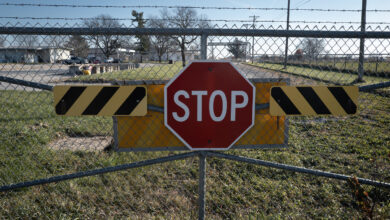
The urgency of the mission is underscored by the physical state of the material. Lead azide, a primary explosive used in detonators, is inherently sensitive to shock, friction, and chemical degradation. According to officials, the specific stockpile in question—comprising 68 drums containing roughly 10,000 pounds (approximately five metric tons) of the chemical—is at risk of spontaneous detonation at any time. Maj. Gen. Eric Shirley, the Army leader overseeing the operation, stated that the deteriorating condition of the chemicals necessitated immediate action to prevent an uncontrolled explosion that could have far more severe consequences for surrounding communities and infrastructure.
The decision to proceed with a controlled detonation, rather than safe transport or long-term storage, reflects a complex balance between military hazard management and public safety. The Army changed the detonation date three times, originally planned for the previous Friday, in response to public backlash and to allow for additional safety measures and favorable meteorological conditions, according to court documents cited in reporting. This procedural delay highlights the logistical and political constraints inherent in handling hazardous military materials in close proximity to civilian populations.
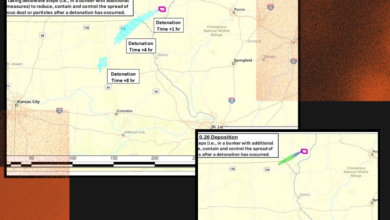
Geographic and meteorological factors have played a decisive role in the operational planning. Officials indicated that wind patterns on Wednesday are expected to carry the resulting plume southwest toward Missouri, moving it away from Burlington, a city of just under 25,000 residents situated along the Mississippi River. To mitigate this risk, barriers have been erected around the blast zone to limit the spread of the plume. However, the Army acknowledged that weather patterns are dynamic, and a precise execution time will be confirmed only after evaluating changing conditions to ensure the safest possible environment for the detonation.

The human and environmental dimensions of the operation have generated significant community friction. The Federal Emergency Management Agency (FEMA) issued alerts to residents within a 20-mile radius, instructing those between five and 20 miles from the plant to stay indoors with windows closed to avoid airborne lead dust, noise, and vibration. For residents within five miles, particularly to the southwest of the plant, evacuation was encouraged “out of an abundance of caution.” The Army stated that FEMA would assist in coordinating these evacuations, though the scale of relocation remains a point of logistical complexity for local authorities.
Beyond immediate residential concerns, the operation poses potential risks to the agricultural sector. The U.S. Department of Agriculture and the Iowa Department of Agriculture estimated that approximately 350 farms could be impacted based on the anticipated direction of the plume. Lead contamination in soil and crops is a long-term environmental concern, and the prospect of such widespread impact has fueled frustration among local farmers and residents who have expressed concerns over a lack of comprehensive information regarding long-term health and environmental restoration.
Technically, the controlled detonation is designed to contain the energy release and particulate matter as much as possible, but the nature of lead azide means that some dispersion of lead dust is inevitable. The Army’s assurance that barriers will limit “much” of the plume relies on the efficacy of these physical controls against variable wind speeds. The distinction between verified safety measures and projected outcomes remains a source of tension, as community members seek clarity on the potential for toxic exposure beyond the immediate blast zone.
The incident serves as a stark reminder of the lingering hazards posed by legacy military munitions. While the Army’s primary objective is the elimination of an imminent threat to public safety, the secondary effects—evacuation, potential agricultural loss, and environmental contamination—illustrate the broader societal costs of military infrastructure maintenance. The operation’s success will be measured not only by the safe disposal of the explosive material but also by the Army’s ability to manage the subsequent environmental assessment and community reassurance.
As the scheduled time approaches, the focus remains on the precise execution of the blast. The next confirmed development will be the official communication of the exact detonation time, contingent on final weather evaluations, and the subsequent monitoring of air quality and soil samples in the affected southwest corridor toward Missouri. The resolution of this crisis will depend on the effectiveness of the containment systems and the transparency of the post-operation environmental reporting.