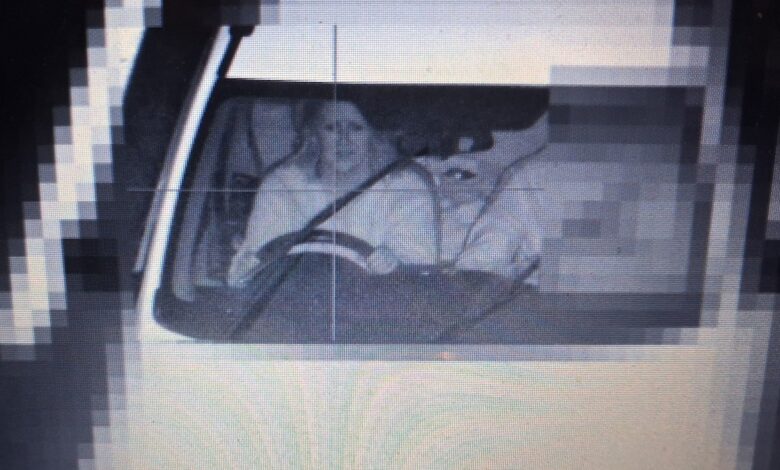
The NSW government recorded 80,970 seatbelt infringements in 2024, vastly outpacing other jurisdictions. Tasmania saw a 98.3 per cent increase, Victoria a 75 per cent rise, and the Northern Territory a 24.7 per cent increase over the same period. In contrast, South Australia and the Australian Capital Territory (ACT) experienced declines of 12.6 per cent and 21.3 per cent, respectively. Each NSW seatbelt infringement carries a penalty of $423 and three demerit points, a financial and legal burden that has prompted a wave of challenges from motorists.
Drivers are increasingly contesting fines based on the quality of the photographic evidence. One former lawyer reported that his daughter was fined for an alleged seatbelt violation while driving on the Pacific Motorway during torrential rain. The individual claimed that the photos provided by Revenue NSW were indecipherable, with the seatbelt appearing washed out and partially obscured by clothing. He argued that a black windscreen wiper visible in the image was mistaken for an incorrectly worn seatbelt, stating that if the matter were adjudicated in court, the offence could not be proved due to the lack of visual clarity.
Photo by Giant Asparagus / Pexels
The AI system operates by using computer vision to scan still images captured by roadside cameras. Software initially reviews all images, automatically deleting those where no infringement is detected. Only images flagged as potential violations are passed to human reviewers before a fine is issued. This process is designed to increase efficiency by reducing the manual workload on enforcement officers. However, the scale of the operation has created a bottleneck in the appeals process. With tens of thousands of fines issued, drivers attempting to challenge errors report spending hours on hold and navigating complex procedures, raising concerns about the accessibility of justice for individual motorists.
Legal and Practical Complications
Beyond image quality, legal ambiguities have emerged in other states. In the ACT, approximately 13,000 fines have been called into question after authorities failed to properly update legislation governing the use of the cameras. In Western Australia (WA), police have dropped hundreds of seatbelt-related fines due to difficulties proving that drivers were aware their passengers were breaking the rules at the time of the offence. WA, which launched its cameras in October 2025, has issued roughly 184,000 infringements, with penalties starting at $550 and four demerit points. One Western Australian driver with a valid medical exemption was issued nearly $20,000 in fines due to multiple repeated infringements, highlighting the cumulative financial risk of the system.
“Older Australians tend to sit on a pillow, or use pillows and other things for comfort, which then adjusts the seatbelt, and that’s how they’re getting fined,” said Peter Khoury, a spokesman for the NRMA.
Photo by Kindel Media / Pexels
Critics argue that the technology unfairly penalises drivers for minor adjustments or comfort modifications that do not necessarily compromise safety. In Queensland, one driver successfully challenged a fine after his passenger shifted their seatbelt under their arm mid-trip; the court accepted that it would have been unsafe for the driver to continuously monitor the passenger on a busy motorway. Despite such precedents, many other challenges have been unsuccessful, and confusion over the appeals process remains widespread.
Queensland has recently updated its road rules to allow drivers to nominate adult passengers for camera-detected seatbelt offences, a first among Australian states and territories. As camera-detected fines become a major source of revenue for state governments, with 1.3 million infringements from fixed cameras and 1.2 million from mobile cameras recorded in 2024, the balance between automated enforcement and procedural fairness remains a contentious issue. The next phase of rollout and potential regulatory reviews will determine whether these systems are adjusted to address the growing volume of disputes.
Emma Watson reports on technology with interests spanning artificial intelligence, consumer technology, online security, digital platforms, and major industry developments. She follows new products and services alongside the policies and business decisions influencing them. Emma's approach emphasizes clear explanations, reliable sourcing, and practical context for readers trying to understand how technology is changing.