
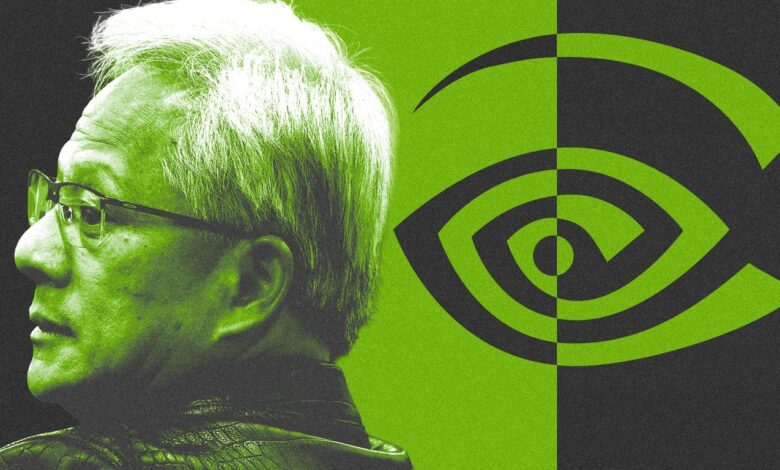
The immediate catalyst for the latest sell-off was reporting by The New York Times, The Wall Street Journal, and the Financial Times that the board is not only investigating but actively preparing for Huang’s removal. According to Bloomberg, the board has selected an outside firm to search for candidates to replace Huang and is considering appointing a temporary CEO. The urgency of the situation was driven by the revelation of a second alleged affair, this time with Kimberly Powell, Nvidia’s vice president of health care. The New York Times reported that the two were captured on video being affectionate at a hotel in San Jose, California, during a company conference in March.
These allegations compound earlier reports of a relationship with Alice Huang, a woman described as a suspected Chinese intelligence operative and the founder of Megaspeed, a company currently under investigation by U.S. authorities for suspected chip smuggling. The geopolitical implications of these claims are profound. Huang has long served as a confidant to U.S. President Donald Trump, lobbying for the easing of export restrictions on high-end chips to China. This stance has placed him at odds with national security hawks in Washington who argue that Beijing must be blocked from access to cutting-edge U.S. technology. The potential ouster of a CEO who has played such a central role in U.S.-China tech diplomacy introduces significant uncertainty into an already volatile trade environment.

Market analysts have reacted sharply to the prospect of Huang’s departure. Dan Ives, senior managing director at Yorkville Ives, stated that Nvidia is worth 25 percent less without Huang. Jay Goldberg, a senior analyst at Seaport Research Partners, emphasized the structural difficulty of replacing such a figure, noting, “Jensen is Nvidia; without him, the company loses its central, animating spirit.” The consensus among industry observers is that Huang’s centralized leadership style means the organization is built around him, making a transition “very painful organisationally, and impossible to do personality-wise.” Mohamed El-Erian, an economist, warned on social media of potential “contagion” across the AI industry, describing the situation as “no ordinary time” for the sector.
The crisis also raises serious questions about compliance and data security within the company. Senators Elizabeth Warren and Chris Coons have asked the Trump administration to preserve all documents related to Nvidia, its exports, and Huang—a standard procedural step often preceding a formal congressional inquiry. This move highlights growing scrutiny over how aggressively the administration has enforced chip export bans. Reports indicate that Commerce Secretary Howard Lutnick faced internal criticism for delaying the enforcement of these restrictions. Furthermore, The Wall Street Journal noted that Nvidia had previously reported that 22 percent of its business went to Singapore as of summer 2025, a substantial figure for a small city-state. The company has since stopped reporting country-specific sales rankings, a change that has fueled speculation about undisclosed export channels.
While the immediate market reaction has been a sharp decline in Nvidia’s stock, the broader economic implications extend to the entire AI ecosystem. Nvidia’s chips, investments, and financial guarantees underpin a vast network of companies worth trillions of dollars. The uncertainty surrounding leadership could dampen investor confidence in the sector, potentially slowing capital expenditure on AI infrastructure. However, historical precedents suggest that large technology firms can survive the loss of charismatic founders; Apple continued to grow after the death of Steve Jobs, and Uber has thrived since the resignation of co-founder Travis Kalanick. Yet, unlike those cases, the current crisis at Nvidia is entangled with national security allegations, raising the stakes for regulatory intervention.
As of early Thursday morning, no final decision had been announced regarding Huang’s position. The White House has been briefed on the situation. The next critical pressure point for the company is its Q3 earnings call scheduled for November 17, where the identity of the host will signal whether a leadership transition is imminent. For now, the market is pricing in the risk that the “hearts and lungs” of the AI boom may be pulled from the body corporate, leaving Nvidia to navigate a period of structural redefinition under the watchful eye of regulators and investors alike.




One Comment