
For the average borrower, the increase will have immediate financial consequences. On a standard $700,000 mortgage, the hike is estimated to add approximately $100 to the monthly interest bill. While the immediate impact is manageable for many, analysts warn that the trajectory of future policy decisions poses a more significant risk to household stability and the property market.
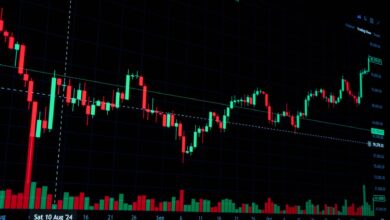
Financial markets are currently positioning themselves for a continuation of the tightening cycle. Traders have fully priced in two additional rate rises, implying a strong probability that the cash rate will surpass 5%—the highest level since the 2008 global financial crisis. Specifically, market pricing indicates a 60% chance of a sixth rate increase by mid-2027. This aggressive pricing contrasts with cautionary assessments from economic experts who argue that the economy may not withstand further shocks.
Shane Oliver, chief economist at AMP, described the prospect of two or three further hikes as “overkill” given the already weakened state of the economy and family finances. Oliver noted that pushing the cash rate to 5.1% would cause “major problems” for households burdened by substantially larger debt loads accumulated over the past two decades. He warned that such levels would be “devastating” for the property market, increasing the likelihood of a “tipping point” where home prices decline by 15-20% rather than the more moderate 10% drop currently observed.

The housing sector is already under severe strain. Tom Devitt, senior economist at the Housing Industry Australia (HIA), highlighted that the national housing affordability index hit its lowest point in history at the end of June. This record low underscores the disconnect between rising borrowing costs and stagnant or falling property values, leaving buyers and investors with reduced capacity to service debt.
Despite these warnings, the RBA’s primary focus remains on curbing inflation. The market’s intense scrutiny is now shifting from the decision itself—which is considered a certainty—to the tone of the accompanying statement. Investors are analyzing whether the central bank’s rhetoric on inflation will be sufficiently hawkish to justify the current market expectations for further hikes, or if it will signal that the current level of 4.60% represents the peak of the tightening cycle.
The RBA’s decision also coincides with a busy slate of global economic indicators. In the United States, market participants are closely watching housing data, including the S&P CoreLogic Case-Shiller 20-City Home Price Index and the FHFA House Price Index, to gauge the resilience of the US housing market in a high-interest-rate environment. Additionally, the Conference Board’s September Consumer Confidence Index and August JOLTS job openings data will provide insights into US labor market conditions, which directly influence global monetary policy expectations.

In the eurozone, the September economic sentiment indicator is forecast to rise slightly to 98.8 from 98.4, while consumer confidence is expected to remain flat at -16.5. In Japan, the release of the July Indexes of Business Conditions and the September Monthly Economic Report will offer further context on the region’s economic performance. These global data points will collectively influence currency markets, with the Australian dollar’s movement particularly sensitive to the RBA’s forward guidance.
As the RBA proceeds with its rate hike, the divergence between market pricing and expert economic forecasts highlights the uncertainty surrounding the future path of monetary policy. If the RBA’s statement fails to temper expectations for further hikes, the Australian dollar and bond markets may experience volatility as traders adjust their positions. Conversely, a signal that the rate has peaked could provide relief to the property market and households, potentially stabilizing borrowing costs and preserving economic stability.
The next critical moment for market sentiment will be the immediate reaction to the RBA’s official statement and subsequent press conference. Analysts will look for specific language regarding the sustainability of current inflation levels and the central bank’s assessment of the economy’s capacity to absorb further tightening. This guidance will be crucial in determining whether the 60% probability of a sixth hike remains a realistic scenario or an overreaction by financial markets.