
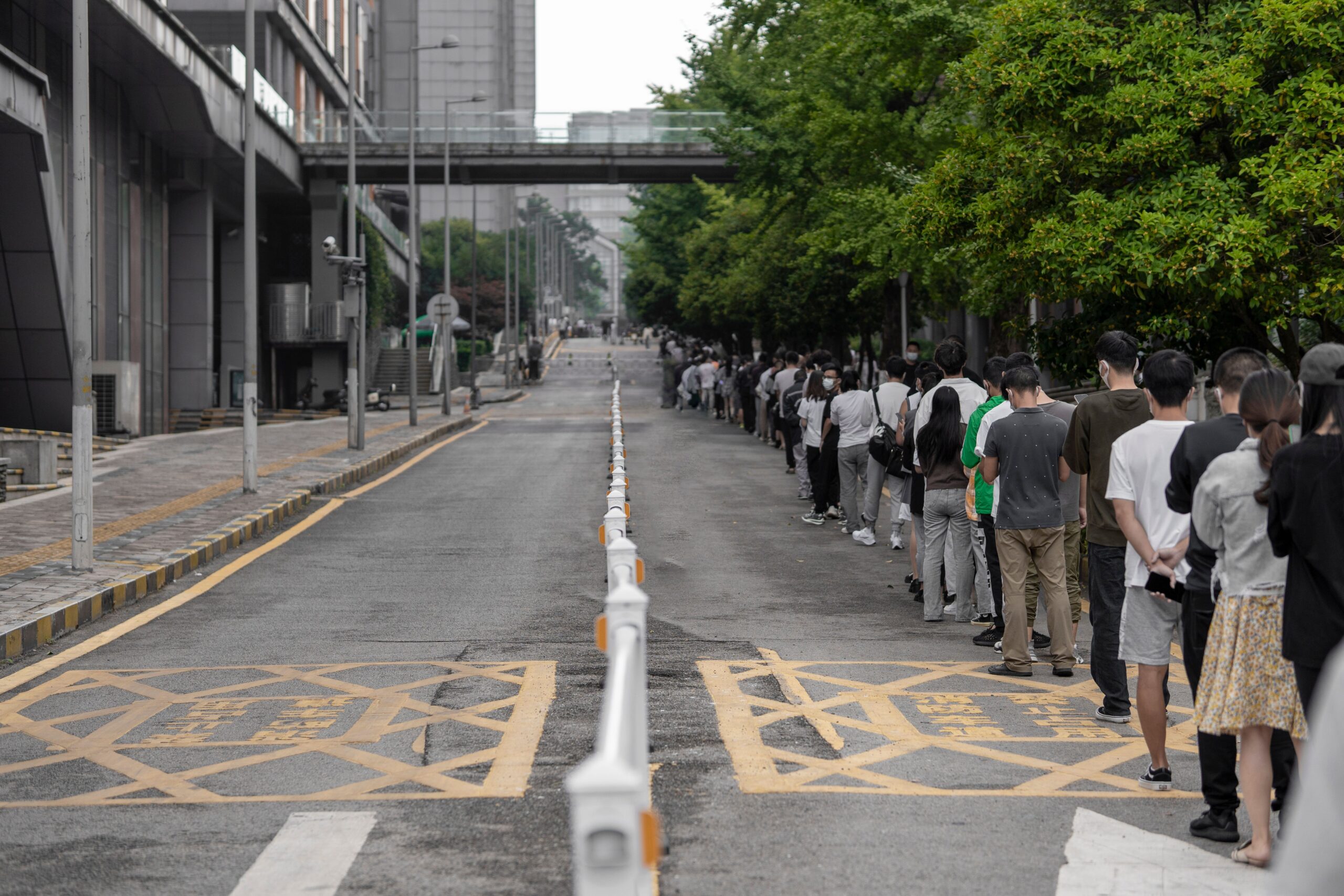
The South African Social Security Agency (Sassa) states that it is implementing initiatives to improve services, citing high client volumes in densely populated areas like Bellville. The agency claims to have introduced measures such as improved queue management, early intake assessments, and the deployment of additional officials during peak demand periods. It also promotes digital services and online applications to reduce physical congestion. However, beneficiaries continue to complain about delays, technical issues affecting the Sassa system, and poor communication, suggesting that these interventions have not yet resolved the core operational bottlenecks.
The political significance of these failures is amplified by the scale of the social grant system. According to Statistics South Africa’s latest general household survey, 40.1% of individuals in South Africa were receiving social grants in 2024, a significant increase from 12.8% in 2003. This means that any delay, suspension, or error in the system does not merely inconvenience an individual; it threatens the economic stability of entire households. For millions of vulnerable South Africans, including single mothers, disabled people, pensioners, and war veterans, the monthly payment is the difference between subsistence and starvation.
The financial inadequacy of the current grant amounts has become a central point of political contention. The older persons grant, currently set at R2,400 a month for those aged 60 to 74 and R2,420 for those over 75, is widely viewed as insufficient against the backdrop of inflation and rising food costs. In June, Parliament adopted a report on a petition from older people in the Western Cape calling for the grant to be increased to R5,000. The committee recommended that the Minister of Social Development engage with the Minister of Finance to review the grant in light of these economic pressures. Similarly, the Care Dependency Grant, which stands at R2,400, leaves many caregivers of children with disabilities stretched thin.
For caregivers like Cleone Tigerls, a mother of three in Eldorado Park, Johannesburg, the grant fails to cover the acute needs associated with disability. Her eldest daughter, Lemisha, who suffers from permanent physical and mental disabilities following a case of streptococcal meningitis, requires regular hospital visits, specialized nutrition, and transport to a special needs school. Tigerls notes that the monthly scholar transport cost alone is R1,200, consuming half of the dependency grant. With food costs estimated at R3,000 a month, the R2,400 grant leaves the family in a “continuous cycle” of debt and financial precarity. She has been unable to seek employment, fearing for her daughter’s care, and reports that the Department of Social Development has provided only a single food parcel in response to her requests for assistance.
Similar struggles are evident in other regions. Christina Mafunda, a mother in Marikana, North West, relies on the Care Dependency Grant for her four-year-old daughter with Down’s syndrome. Mafunda, who has faced unemployment, struggles to afford transport to clinics and medication for recurring health issues. Her experience underscores the lack of system integration and dignified access to services, a gap that experts and parents are calling for the government to address.

These service delivery challenges exist alongside broader administrative risks to the payment system. A recent scandal involving a government contract with Cash Paymaster Services (CPS) raised fears that payments worth approximately $67 million might not be processed on schedule. Although the country’s highest court ruled the CPS contract invalid more than two years ago, the absence of a clear alternative provider has caused anxiety among beneficiaries. While the social development minister has insisted that grants will be paid on time, the lack of a detailed explanation for how this will be achieved has left many, such as 78-year-old Magebatho Mamaile, who supports a family of six, in a state of uncertainty.
The convergence of inadequate grant values, operational inefficiencies at local offices, and contractual uncertainties places the social safety net under intense scrutiny. As the political debate shifts from mere payment delivery to the adequacy of the support provided, the next critical development will likely be the outcome of the proposed review between the Social Development and Finance ministries. Until then, the beneficiaries remain dependent on a system that, by their own accounts, is failing to keep pace with their survival needs.