
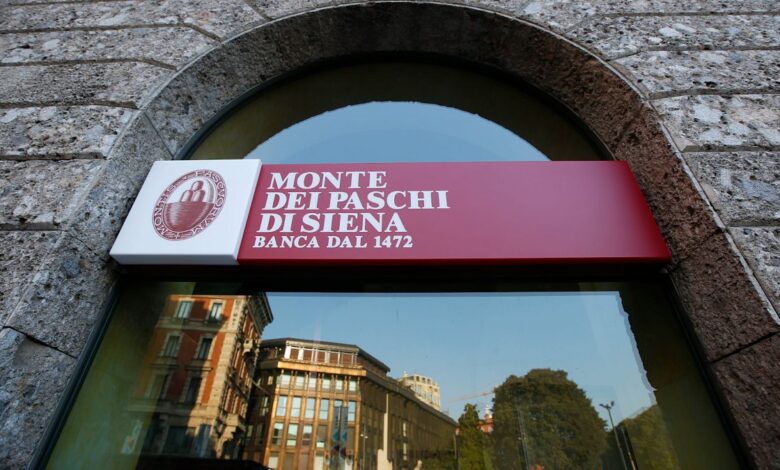
The move by Intesa Sanpaolo places a €30.6 billion valuation on the historic Siena-based bank, signaling a decisive attempt to secure MPS as a strategic asset. The rapidity of the response—issuing a counter-offer almost immediately following Banco BPM’s approach—highlights the urgency surrounding the future of MPS, a institution that has been a focal point of Italian financial policy for years due to its significance and past financial fragility.
However, the path to closing the deal is already facing significant resistance from the target. Monte dei Paschi di Siena has publicly stated that Intesa’s bid undervalues the bank. Management at MPS has flagged specific concerns regarding the proposed terms, citing antitrust issues and doubts about the potential synergies that the merger is expected to generate. By characterizing the offer as insufficient, MPS is positioning itself to either negotiate for a higher price or explore alternative options to fend off the acquisition, a strategy consistent with its stance on preserving shareholder value and institutional independence.
The emergence of two competing or sequential bids from major Italian peers, Intesa Sanpaolo and Banco BPM, underscores the consolidation pressure within the Italian banking system. For decades, Italian banks have operated in a fragmented market with higher operational costs compared to their Northern European counterparts. Mergers of this scale are often viewed as necessary to achieve economies of scale, streamline operations, and improve return on equity in a low-interest-rate environment that has compressed net interest margins across the sector.
Yet, the disagreement over valuation reveals the tension between strategic logic and market price. While Intesa Sanpaolo sees the creation of Europe’s No. 2 bank as a transformative opportunity to strengthen its position in the single market, MPS management appears skeptical that the €30.6 billion offer fully captures the bank’s asset quality and long-term potential. The mention of antitrust concerns suggests that regulators in Italy or the European Union may scrutinize the combined entity’s market share, particularly in key retail banking segments, potentially complicating the approval process.
For investors and market participants, the dispute introduces an element of uncertainty into what was already a complex deal structure. The ability of MPS to “weigh options” to fend off the bid implies that the board is not pre-committed to accepting the Intesa offer. This leverage could lead to a bidding war, where Banco BPM returns to the table with a revised proposal, or it could result in MPS seeking a standalone strategy if it believes its intrinsic value exceeds the current offers.
The broader implications for the European banking sector are significant. A merger of this magnitude would not only reshape the hierarchy of European banks but also have knock-on effects for regional competitors. The success or failure of this deal will serve as a test case for the viability of large-scale cross-border or cross-regional consolidations in Europe, where regulatory hurdles and cultural integration challenges often derail ambitious transactions.
As the negotiation phase unfolds, attention will turn to whether MPS can secure a higher valuation from either bidder. The outcome will depend on the strength of MPS’s asset book, its ability to demonstrate cost-cutting capabilities, and the regulatory appetite for further concentration in the Italian market. For now, the €30.6 billion bid stands as a substantial, yet contested, valuation of one of Italy’s most iconic financial institutions, setting the stage for a critical decision that could redefine the banking map of Europe.