Fiscal Strategy and Revenue Sources
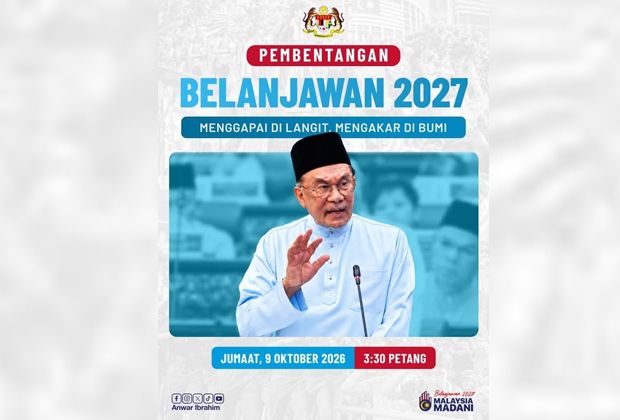
The government projects that Malaysia’s economic growth will moderate to between 4.2% and 5.2% in 2027, down from an estimated 4.8% to 5.3% in 2026 and 5.2% in 2025. To finance the increased spending, the budget relies heavily on a rise in both income tax and consumption levies. Income tax revenue is projected to reach RM199.9 billion, a 4.6% increase, while the Sales and Services Tax (SST) is expected to rise 9.5% to RM73.3 billion. The SST has progressively captured more items since the current administration took power in 2022.
Despite the revenue increases and higher spending, the projected fiscal deficit for 2027 is set to narrow to 3.3% of gross domestic product (GDP). This represents an improvement from 3.6% in 2026 and 3.7% in 2025. However, the 2026 deficit had already widened from the initial planned 3.5% to 3.6% due to soaring fuel prices, which pushed the fuel subsidy bill to RM40 billion and total expenditure to RM444.1 billion. Analysts have noted that the government’s decision to bring forward a September 1 increase in subsidised fuel quotas—originally intended for this budget—suggests a prioritization of immediate political stability over rigid fiscal sequencing.
Household Support and Wage Reforms
A central component of Budget 2027 is the expansion of direct cash assistance to mitigate cost-of-living pressures. The allocation for the Rahmah Cash Contribution (STR) and Basic Rahmah Contribution (SARA) programs will rise to RM16 billion. Under this scheme, all STR recipients will be eligible for SARA assistance of up to RM150 per month (RM1,800 annually), potentially benefiting nine million households. Additionally, a separate SARA Madani payment of RM100 will be distributed twice to eligible Malaysians aged 18 and older, reaching an estimated 13 million people, including middle-income groups.
In a move aimed at narrowing the gap between productivity and wages, the monthly minimum wage will increase from RM1,700 to RM2,000 starting June 2027. The government estimates this adjustment will benefit more than four million workers. To allow smaller enterprises time to adjust, businesses with annual sales below RM50 million are exempt from the immediate mandate. PM Anwar emphasized that the measure is part of a broader effort to ensure dignified wages and equitable distribution of economic gains.

Tax Adjustments and Sectoral Focus
The budget introduces targeted changes to the individual income tax structure to increase disposable income for the middle class. The standard individual tax relief will be raised from RM9,000 to RM12,000. Furthermore, resident income tax rates for taxable income bands between RM70,000 and RM150,000 will be reduced by one percentage point. These changes are estimated to provide additional disposable income of up to RM1,600 to approximately five million taxpayers.
Conversely, the tax rate for individuals earning more than RM1 million will increase to 30%. The budget also broadens tax relief for specific expenses, including medical and caregiving costs, education, and even subscriptions for artificial intelligence tools. Beyond fiscal measures, the budget outlines ten key focuses, including narrowing regional disparities, strengthening social safety nets for gig workers, and preparing for the country’s ageing population by 2030. Industrial priorities include high-value investments in semiconductors and AI, as well as the “Made by Malaysia” initiative to empower local entrepreneurs.
The government frames these measures as a national pledge to ensure that high-value growth translates into tangible wellbeing for citizens. With the 13th Malaysia Plan focused on raising the growth ceiling and the living standards floor, the 2027 budget aims to balance immediate relief with long-term structural reforms in public administration and governance.