
The CME from the October 6 eruption is currently traveling at an estimated speed of 560 km/s, according to forecasters at Belgium’s Solar Influences Data Analysis Center (SIDC). Current models predict the CME will arrive in the early hours of October 9 UTC. However, significant uncertainty remains regarding the precise timing; the U.K. Met Office predicts an arrival around midnight EDT (04:00 GMT), with a margin of error of six hours. Forecasters continue to analyze coronagraph observations to refine the CME’s trajectory and speed, noting that arrival times can shift by several hours as the eruption approaches Earth.
The primary variable determining the visual impact of the storm is the magnetic orientation of the CME upon impact. If a substantial portion of the CME is Earth-directed and carries a southward magnetic field, it could trigger a geomagnetic storm of G1 (minor) to G2 (moderate) intensity. G2 conditions correspond to a Kp index of 6, a level at which auroras have previously been observed as far south as New York and Idaho. Without favorable magnetic alignment, the display may be significantly weaker or confined to higher latitudes.
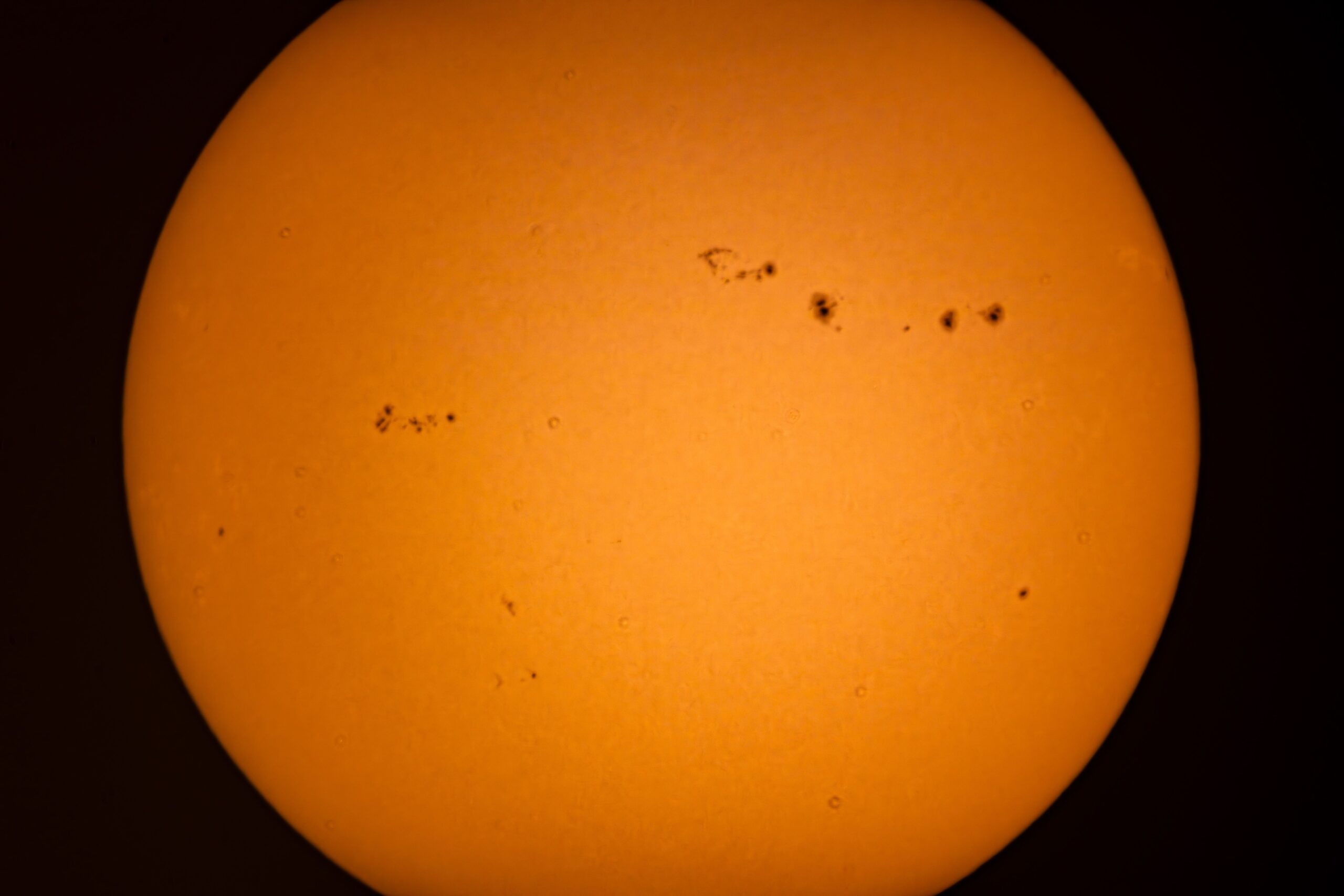
This event follows a similar, though less intense, occurrence earlier in the month. On September 28, a large filament eruption produced a partial-halo CME with an angular width of approximately 200° and a speed near 500 km/s. NASA’s Community Coordinated Modeling Center (CCMC) identified that most of this material was directed westward, leading to a “glancing” encounter with Earth on October 2. Consequently, NOAA issued only a G1 – Minor geomagnetic storm watch for that date, with the highest forecast three-hour Kp at 4.67 (Kp 5−). In that instance, the ensemble model assigned a 95% probability that the maximum Kp would remain between 2 and 4, below the G1 threshold of Kp 5, resulting in minimal observable effects for most of the population.
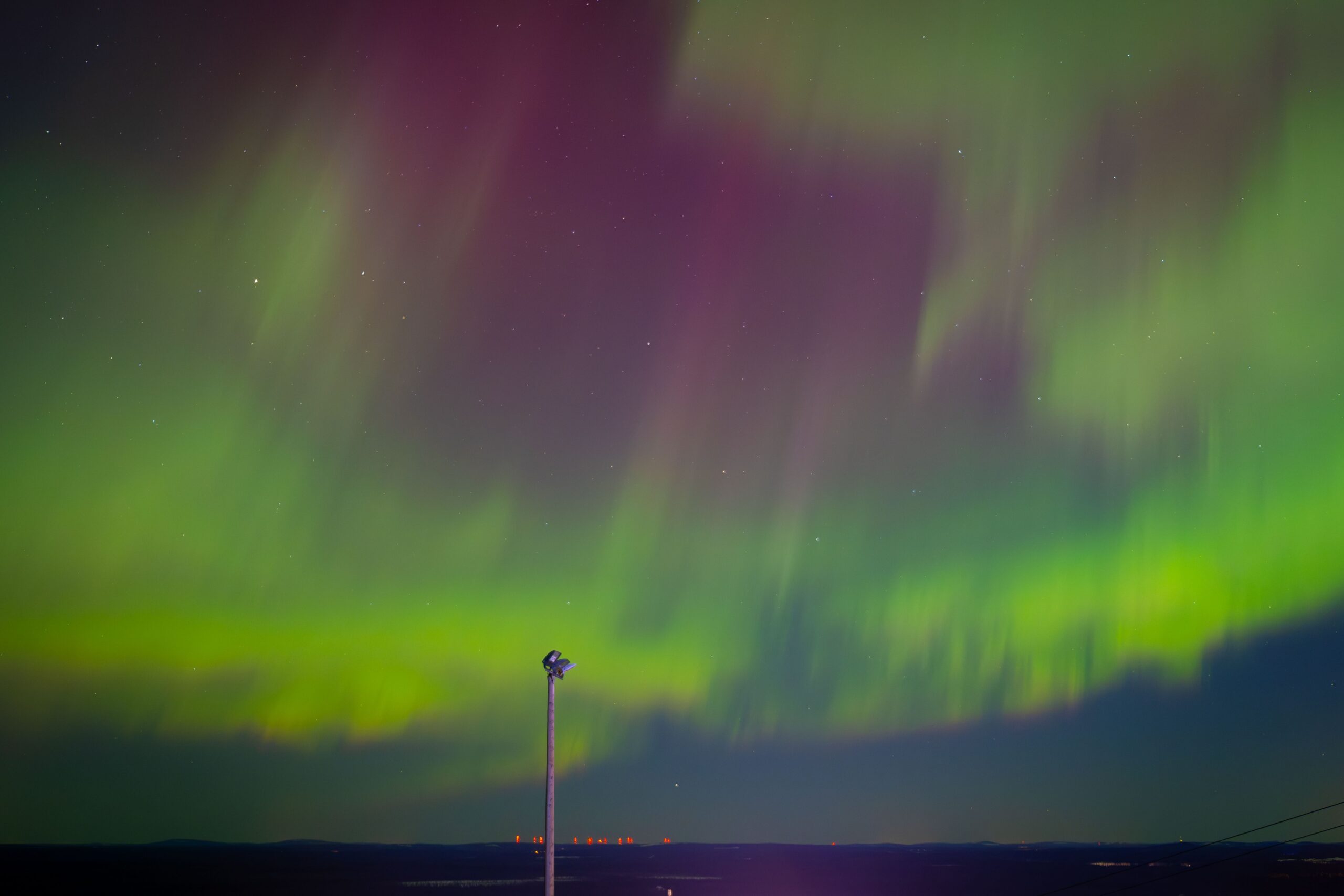
Geomagnetic storms are ranked on a five-level scale from G1 (minor) to G5 (extreme). G2 storms are considered moderate and can cause weak power-grid fluctuations and minor effects on satellite operations. For the general public, the primary consequence is the expansion of auroral visibility. During G1 conditions, auroras may become visible at high latitudes, including parts of the northern U.S. tier such as Michigan and Maine. During G2 conditions, the oval of auroral activity expands significantly further south.
Experts caution that while the G2 watch is in effect, the actual severity of the storm depends heavily on the specific characteristics of the CME as it interacts with Earth’s magnetosphere. Space weather forecasters are currently updating models to determine if the CME will deliver a direct hit or a glancing blow. The next critical milestone will be the real-time monitoring of the CME’s leading edge as it passes by spacecraft near Earth, which will provide a more accurate forecast for the peak of the geomagnetic response on October 9.