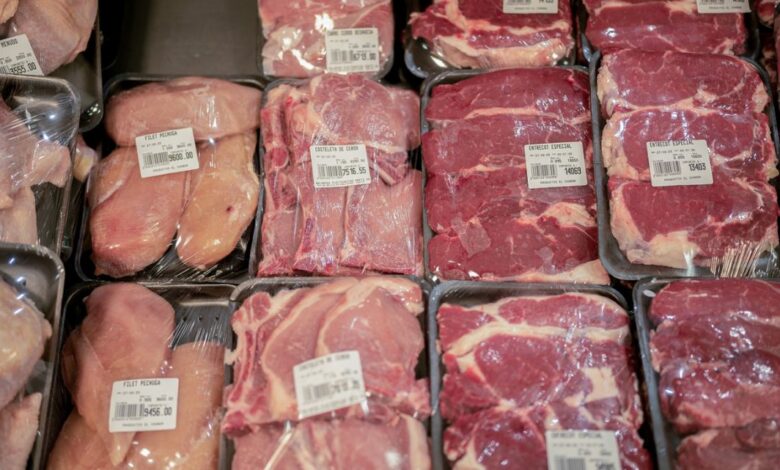
The April data reveals a nuanced picture of price movements across different sectors. Transport led the monthly increases, with prices climbing 4.4%, followed by education at 4.2% and communication at 4.1%. Housing and utilities, as well as clothing and footwear, also posted above-average hikes. Conversely, recreation and culture saw the smallest rise at 1.0%. Food and non-alcoholic beverages, a critical component of household budgets, increased by just 1.5% in April, a significant moderation from the 3.4% spike seen in March. Regulated prices, driven by hikes in transport and electricity, soared 3.4%, while core inflation came in at 2.3%. Seasonal prices remained unchanged from the previous month.
Over the last twelve months, inflation totals 32.4%, down slightly from the 32.6% year-on-year figure reported in March. The Consumer Price Index (CPI) indicates that prices have risen 12.3% so far this year. This trajectory poses challenges for the government’s official budget, which had projected an annual inflation rate of 10% by the end of 2026. In March, the CPI had already risen by 9.4% in just the first quarter, prompting Economy Minister Luis Caputo to attribute the earlier surge to an external “shock” in oil prices, while assuring the public that a process of disinflation and growth would begin in April.
The shift in the inflation trend has provided a political reprieve for President Milei, whose polling ratings had been declining amid corruption allegations and further austerity measures. Milei took to social media to declare that inflation was “back to normal” after months of acceleration. However, the path to this stabilization has been marked by significant controversy regarding how consumer prices are measured. In early May, Marco Lavagna, the head of INDEC, resigned unexpectedly just eight days before the institute was set to publish January’s inflation figures using a new formula intended to better reflect purchasing power.
Hours after Lavagna’s departure, Economy Minister Caputo stated that the new index would only be implemented “once the disinflation process is fully consolidated,” arguing that changing the methodology now would make “little difference.” The decision drew sharp criticism from the State Workers’ Association union, whose deputy secretary-general, Raúl Llaneza, described the justification as lacking technical rigor and politically motivated. “We find it strange… it’s political, and we don’t think it’s right,” Llaneza said, noting that the delay does not give workers “peace of mind.” Lavagna, who was appointed in 2019 by the previous administration, thanked INDEC workers in his resignation letter, emphasizing that the national statistical system needs to continue adapting to changing economic realities.

Despite the methodological questions, the current data shows that the cost of the total basic basket (CBT), which defines the poverty line, rose by 2.5% month-on-month in April. To avoid falling into poverty, a family of four required an income of 1,469,768 pesos (approximately US$1,050 at the official exchange rate). The basic food basket (CBA), which defines extreme poverty, increased by 1.1%. Both figures were below the average inflation rate, suggesting a slight improvement in the relative purchasing power of those on fixed incomes, though the absolute cost of living remains high.
Analysts and opposition figures have pointed to the complexity of the economic scenario, arguing that the price increases are not solely attributable to external factors such as global energy markets, but are also linked to domestic fiscal and monetary policies. While the government maintains that its stabilization plan is working, the previous month’s data showed that regulated services, including fuel, had risen by 5.1% in March, and food prices had matched the general inflation rate. The near-term outlook will depend on whether April’s deceleration marks a sustained break in the inflationary trend or a temporary pause before further policy adjustments are made. The next data release will be crucial in determining if the “back to normal” narrative holds firm against the backdrop of ongoing fiscal pressures.