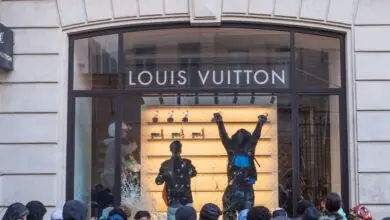
These local restrictions in Toulon are part of a broader escalation of security measures across France, triggered by the unrest that swept the country on October 17. That day, protests organized by the “Yellow Vests” movement, supported by students, turned violent. The demonstrations, which were a response to rising cost of living and high fuel prices, resulted in approximately 2,500 arrests. The physical toll was significant, with more than 1,000 police, gendarme, and firefighter personnel injured. Furthermore, around 3,000 businesses reported damage or looting, leading to widespread criticism of the government’s ability to manage the crisis.
The immediate diplomatic and political fallout from these events has strained relations between the state and labor organizations. On Wednesday, Sophie Binet, the secretary general of the hardline Confédération Générale du Travail (CGT) union, declared that talks with Prime Minister Sebastien Lecornu had collapsed. Speaking to reporters after a meeting with union leaders, Binet stated that the government offered “no measure or an acknowledgement of our demands.” Consequently, she called for strikes, signaling that the social conflict is moving from sporadic street protests to organized labor action as the country reels from the previous weekend’s riots.
While the focus remains on the collapse of negotiations, security authorities have continued to extend restrictive measures in other major cities. In Paris, the Prefecture of Police announced via its social media accounts that curfews in specific districts, including the Republic Square and Halles areas, would be maintained. This ban applies to both minors and adults between 23:00 and 06:00. The decision was made following directives from Prime Minister Lecornu and Interior Minister Laurent Nunez. Similarly, the prefecture of the Rhone department, which includes Lyon, confirmed that the curfew, already in effect for two days, would continue into the day, indicating a sustained state of alert in key urban centers.
The government’s approach has shifted toward preemptive containment. Following the October 17 violence, the central government instructed prefectures across France to ban any gatherings that could be perceived as threats to public order. This strategy has led to partial curfews in several cities, including Lille, Nice, and Marseille, in addition to the extended restrictions in Paris and Lyon. The authorities appear to be prioritizing the preservation of public order and the protection of commercial infrastructure, which suffered extensive damage during the initial wave of protests.
Amidst the civil unrest, law enforcement agencies have also moved to address specific criminal acts. Police announced the arrest of one of the suspects involved in the arson attack on the Limoges town hall. This arrest occurred three days after the nationwide unrest. According to police, the individual was already on a watch list of persons who might pose a threat to national security, suggesting that authorities are distinguishing between the broader political protest and targeted acts of violence or sabotage.
The situation presents a complex challenge for the French state. On one hand, the government is facing a coalition of discontent driven by economic pressures, specifically the cost of living and energy prices, which have mobilized diverse groups from students to the Yellow Vests. On the other hand, the severity of the violence has provided the executive branch with the justification to deploy extensive security measures, potentially deepening the sense of alienation among the protesting populace. The failure of the CGT to secure concessions from Prime Minister Lecornu leaves the path forward unclear, with the union now leveraging its strike capacity to exert pressure.
In Toulon, the coming weekend serves as a test of these new security protocols. The combination of demonstration bans, curfews for minors, and suspended transit services marks a significant increase in state control over daily life in the city center. As the government grapples with the aftermath of the October 17 riots and the subsequent call for strikes, the tension between public order and civil dissent remains unresolved, with the next few days set to reveal whether the security measures can contain the growing social friction.