
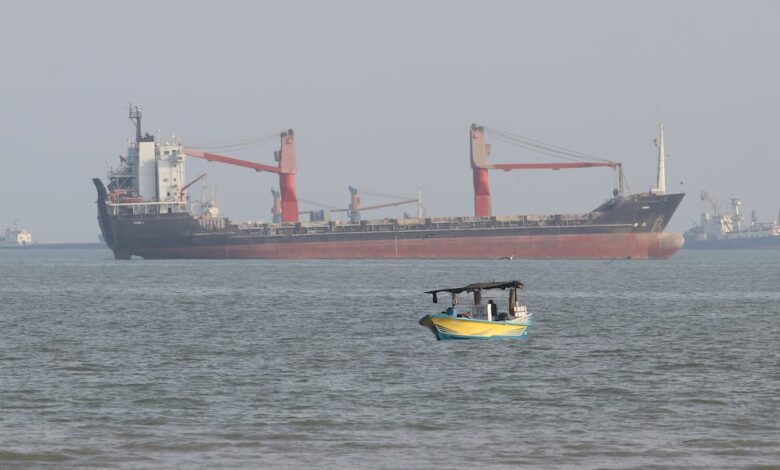
The IRGC stated that four vessels involved in what it termed “illegal oil transfers” in the northern Persian Gulf were simultaneously struck and set ablaze after being tracked by its forces. It added that three additional vessels hit mines west of the Strait. The group threatened to strike U.S. military bases in the region if Washington continues to assist in guiding commercial ships through the waterway. While the Associated Press could not independently confirm the specific details of the attacks, the incident aligns with a broader trend of escalating maritime violence. Bloomberg, citing regional naval organizations, reported that at least 23 incidents involving attacks on vessels in or near the Strait were recorded in the first two weeks of October, with at least five resulting in damage to engine rooms.
This surge in attacks comes as Iran appears to be shifting its tactics to preserve leverage in ongoing negotiations. Although the war began on February 28 with the U.S.-Israeli “Epic Fury” campaign, commercial shipping has shown signs of recovery. Data from commodity analytics firm Kpler indicates that crude exports from the Middle East reached an estimated 16.328 million barrels per day (bpd) in September, the highest level since the conflict began. Flows through the Strait of Hormuz specifically were expected to reach approximately 9.719 million bpd, recovering to nearly 80% of pre-war levels. Saudi Arabia drove much of this rebound, with exports jumping from 2.446 million bpd in August to about 5.4 million bpd in September.
However, experts warn that this recovery does not equate to normality. Susannah Streeter, chief investment strategist at Wealth Club, noted that while increased flows are encouraging, they are not yet regarded as secure or guaranteed while the wider conflict remains unresolved. Tanker insurance costs remain elevated, and energy flows are still far from stable. For Iran, the Strait of Hormuz remains a central point of leverage in talks with the U.S. over the war. By continuing to attack shipping, Tehran seeks to maintain pressure on global oil prices and demonstrate its ability to disrupt trade, even as its economy suffers under heavy sanctions and a U.S. blockade of Iranian ships and ports.
The diplomatic and military landscape is complicated by imminent political shifts in both the U.S. and Israel. In Israel, researcher Danny Citrinowicz of the Institute for National Security Studies told the AP that a clear victory for Netanyahu in the October 27 election would make a new attack on Iran “almost guaranteed.” Citrinowicz accused Israel of rushing into another round of conflict without revamping its strategy, predicting the region is moving toward “another kinetic escalation.” In the United, President Donald Trump has indicated that Washington may launch further military action, referring to a potential “Epic Fury” follow-up. The New York Times reported that U.S. and Israeli militaries have drawn up plans for renewed strikes following the U.S. midterm elections, though it remains uncertain whether President Trump will approve them.
Iranian officials have responded to these threats with a mix of diplomatic caution and military warning. Mohsen Rezaei, secretary of Iran’s Supreme National Security Council, stated in an interview published on Thursday that while Iran preferred diplomacy, it was prepared to continue fighting if the conflict resumed. He warned that U.S. assets in the region, including communications cables, data centers, and artificial intelligence facilities, could become targets. Foreign Minister Seyed Abbas Araghchi also warned on Tuesday that the U.S. and Israel might launch another war, adding that Tehran was fully prepared to defend itself. Araghchi dismissed the idea that renewed conflict would alter Tehran’s policies, stating, “They have already done so twice and have seen the results. If they want to try again, they know they will achieve no different outcome.”
Military exchanges have also intensified in the air domain. On Sunday, Iran’s army claimed its air defense systems shot down a U.S. LUCAS drone over the southern port city of Bandar Abbas, near the Strait of Hormuz. This followed an earlier incident on October 20, when the IRGC said it intercepted a U.S. MQ-9 drone over the same waterway, describing it as the 54th drone of its kind to have been downed. These actions underscore the heightened risk environment in the region, where the line between diplomatic maneuvering and active warfare remains thin.
As the world watches the outcomes of the elections in Jerusalem and Washington, the Strait of Hormuz remains a flashpoint. The recovery in oil flows suggests that the global market is attempting to normalize, but the recent attacks on tankers and drone interceptions indicate that Iran is willing to disrupt this process. The coming weeks will determine whether diplomatic efforts can contain the conflict or if the region will descend into a new phase of hostilities, driven by the strategic calculations of Tehran, Washington, and Jerusalem.