Ziad Daoud, Chief Emerging Markets Economist at Bloomberg Economics, noted on the program Bloomberg This Weekend that the risk of renewed fighting involving the United States, Israel, and Iran is on the rise. This geopolitical friction is the primary engine keeping oil prices elevated, even as the immediate logistics of transport normalize. Daoud, speaking with hosts David Gura and Christina Ruffini, framed the situation not as a transient shock, but as a structural shift in risk pricing. The market is no longer betting on a quick de-escalation; it is pricing in the possibility that conflict could persist in a state of heightened tension for an extended period.
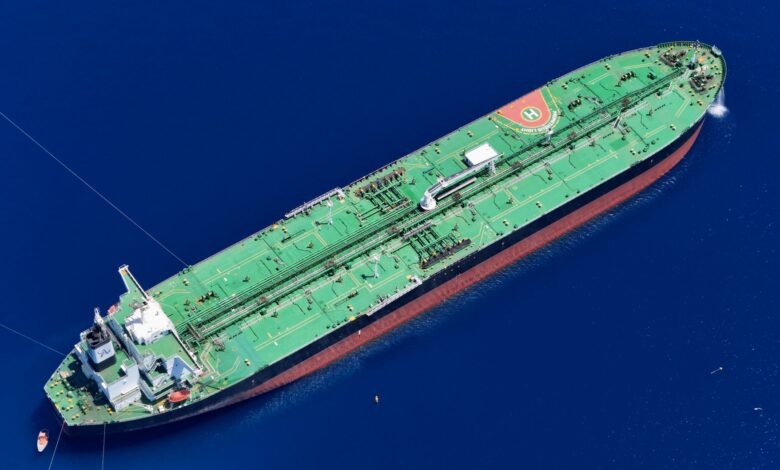
The mechanism of this price support is multifaceted. While the Strait of Hormuz, which handles a significant portion of global oil exports, is currently facilitating the recovery of energy flows, the cost of moving that oil has changed. Daoud pointed to heightened shipping costs as a persistent factor. In a volatile security environment, insurers and shipowners adjust their risk premiums, driving up the freight rates for tankers. These increased transport costs are passed down the value chain, effectively raising the landed cost of crude for importers regardless of the spot price at the wellhead or loading terminal.
Compounding the shipping costs is the state of global stockpiles. Daoud highlighted that stockpiles are depleted. In a healthy, stable market, strategic and commercial inventories act as a buffer, allowing the system to absorb minor supply shocks without significant price spikes. However, with buffers lowered, the market becomes more sensitive to any signal of supply constraint. If the risk of renewed fighting materializes, even a partial disruption to flows would have a more immediate and severe impact on prices because there is less slack in the system to draw upon. This lack of cushioning means that the market is forced to pay a premium for security and reliability.
The prospect outlined by Daoud is not necessarily one of all-out war, but of a “long-term stalemate.” This scenario implies a prolonged period of regional tension where diplomatic solutions remain elusive, and the threat of military escalation remains a constant background noise. In such an environment, energy supplies face continuous threats. The uncertainty itself becomes a driver of market behavior. Traders and investors, seeking to hedge against the unknown, maintain higher price expectations to account for the potential for sudden, sharp disruptions. This is a market responding to probability and risk, rather than just current physical demand and supply.
For consumers and industries dependent on refined products, this geopolitical premium translates into sustained energy costs. The recovery in physical flows through Hormuz suggests that the immediate logistics bottleneck is easing, but the economic bottleneck of risk and cost remains. As long as the risk of renewed fighting between the US, Israel, and Iran remains elevated, the floor for oil prices is likely to stay higher than it would be in a scenario of normalized regional stability. The market is bracing for a duration of tension, adjusting its forecasts to reflect a world where energy security is increasingly tied to geopolitical risk management rather than just production capacity.
As the week progresses, the focus remains on diplomatic indicators and military movements in the region. The data shows that while the pipes are flowing, the market’s anxiety is not subsiding. The next verified development will hinge on whether the stalemate remains static or if specific incidents trigger a reassessment of the risk premium, further influencing the price of oil and the broader energy landscape.