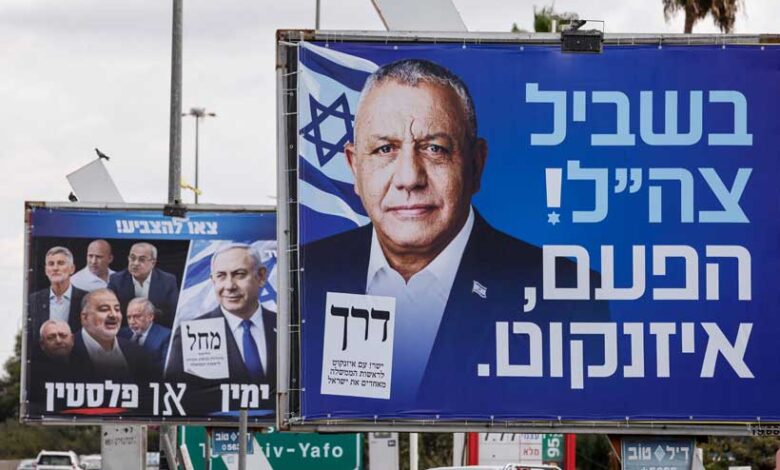
This numerical deadlock represents a significant shift from the political landscape of the past decade. Netanyahu’s coalition, which previously controlled 68 seats, has faced a marked contraction. The far-right religious parties led by Itamar Ben-Gvir and Bezalel Smotrich were expected to secure a combined 13 seats within his bloc, but without the substantial gains necessary to offset losses elsewhere. The election, the first held since the Hamas-led attack of October 7, 2023, served as a referendum on Netanyahu’s handling of the subsequent wars in Gaza, Lebanon, and Iran. The outcome suggests that while voters have not definitively rejected his security posture, they have also not granted him the untrammelled authority his administration had exercised prior to the conflict.
The primary challenger, Gadi Eisenkot, emerged as the strongest alternative to Netanyahu. A former military chief and leader of the Yashar party, Eisenkot claimed that voters had rejected the prime minister’s continued leadership. He characterized Netanyahu as a caretaker prime minister lacking public trust and warned against the politicization of national security decisions. Eisenkot’s campaign strategy involved distinguishing himself from Netanyahu’s far-right allies while maintaining a hawkish stance on security. He opposes Palestinian statehood and argues for the dismantling of Hamas’s military wing, yet he has criticized the current government’s conduct of the Gaza war, asserting that the campaign has failed to achieve its objectives because Hamas remains in control. This nuanced position, informed by personal loss—including the death of a son and two nephews in the war—has allowed him to appeal to both security hawks and those frustrated with the government’s domestic policies.
However, Eisenkot’s path to power is constrained by the structure of Israeli politics. The Joint List, an alliance of Arab parties, holds a potential balance of power. While the Joint List welcomed the exit polls and cited strong turnout among Palestinian citizens of Israel, Eisenkot’s reluctance to form a government with these parties limits his coalition-building options. This strategic hesitation creates a paradox: while the Joint List’s representation could prevent Netanyahu’s coalition from returning to power, Eisenkot’s refusal to ally with them may leave both major blocs unable to reach the 61-seat threshold. The result is a high probability of prolonged coalition negotiations, during which Netanyahu could remain in office as caretaker leader, or potentially another election if no viable government emerges.
The economic and geopolitical implications of this stalemate are significant for international partners, particularly the United States. Netanyahu has argued that Israel faces a unique opportunity to eliminate the Iranian threat through cooperation with US President Donald Trump. He has presented himself as the leader best equipped to confront regional adversaries, citing military operations against senior leaders of Hamas, Hezbollah, and Iran. For Washington, the stability of the Israeli government is a critical variable in regional security strategy. A fragmented Knesset or a repeat election could delay or complicate the implementation of joint security initiatives against Iran and Hezbollah, creating a vacuum in decision-making at a delicate time. Conversely, the continuation of Netanyahu as a caretaker leader may provide a degree of continuity, albeit with reduced domestic legitimacy and limited legislative capacity.
The context of the election is defined by the sheer scale of the recent conflicts. The October 7 attack resulted in approximately 1,200 deaths and 251 hostages, according to Israeli figures, triggering a war that has killed more than 74,000 Palestinians, according to Gaza health authorities. This crisis has deepened Israel’s international isolation and intensified domestic divisions. Netanyahu’s opponents have questioned the effectiveness of the military strategy and the government’s ability to secure a lasting outcome in Gaza, while Netanyahu defends his record by pointing to the decapitation of enemy leadership. The political deadlock now threatens to prolong these divisions, as smaller parties may become decisive during coalition negotiations, potentially forcing compromises that either side might view as unacceptable.
Netanyahu’s political resilience remains a factor that cannot be ignored. Having served as prime minister for nearly 19 of the past 30 years, he has repeatedly survived political crises and returned to office after periods of instability. He also faces corruption charges, which he denies, adding another layer of complexity to his public standing. The final results, expected on Thursday or Friday, will determine the immediate next steps. If the polls hold, Israel enters a period of negotiation where the absence of a clear winner forces all parties to seek out the margins. For the international community, the watch shifts from the ballot box to the coalition talks, where the balance of power will ultimately dictate whether Israel moves toward a new government or returns to the polls, leaving the strategic partnership with the US in a state of temporary suspension.