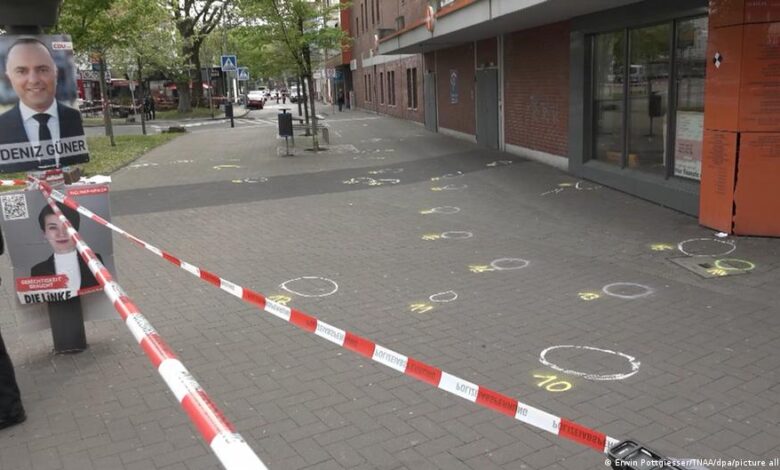
North Rhine-Westphalia (NRW) Interior Minister Herbert Reul addressed reporters on Thursday, describing the aftermath of the incident as “shocking images.” He confirmed that the confrontation involved between 80 and 100 individuals, identified by authorities as members of the Hell’s Angels motorcycle gang and an unnamed Turkish-Arab crime clan. The precise trigger for the violence remains under investigation, but police stated they recovered at least 19 shell casings from 9mm handguns at the scene.
According to state officials, emergency services were dispatched shortly before 9:00 p.m. local time, and police arrived at the scene within four minutes of receiving initial calls. While the immediate threat was contained, the scale of the gathering and the volume of gunfire indicated a premeditated or organized conflict. Police conducted house searches throughout the night, though they reported that the individuals sought, along with their families, had fled their residences before special forces officers could make entries.
Duisburg Police Chief Alexander Dierselhuis, who assumed his post on April 1 and is noted for his expertise in organized crime, stated that the city had not witnessed an incident of this magnitude in a long time. He noted that investigators have access to various videos, some of high quality, which they hope will allow the probe to extend beyond the 15 suspects currently in custody. Dierselhuis expressed skepticism that the incident would lead to further immediate escalation, arguing that such street-level violence is generally counterproductive for the operational interests of organized crime groups.
From a legal and procedural standpoint, a 15-person homicide squad has been deployed to manage the investigation. Duisburg State Prosecutor Christina Wehner emphasized that “perpetrators shouldn’t feel safe,” noting that several experienced prosecutors have been assigned to the case. The investigation is in its initial stages, focusing on securing the crime scene and gathering forensic evidence. Police used drone footage to create a comprehensive 3-D reconstruction of the incident to aid in the analysis of the shooting sequence.
The case highlights the ongoing challenge of “clan crime” in the Ruhr Valley region. Minister Reul stated, “Clan crime is not a PR invention. It is a major problem that terrifies people, especially here in the Ruhr Valley. Keeping quiet about it isn’t a solution.” He underscored the necessity of maintaining vigilance against such organized criminal activities. Authorities have also established an online platform to allow members of the public to submit evidence anonymously, with particular interest in photographs and video footage circulating on social media.
The timing of the incident has drawn political attention, as it occurred ten days before the state elections in North Rhine-Westphalia. Opposition members of the Social Democratic Party (SPD), including Sven Wolf, have questioned the government’s security record, asking if such incidents in residential neighborhoods align with the administration’s claims of increasing safety. The investigation continues, with police remaining on site to secure evidence and interview witnesses. No formal charges have been publicly detailed beyond the general context of the investigation, and the identities of the injured parties have not been released.
The legal proceedings will likely involve complex forensic analysis and witness testimony. The distinction between the arrested suspects and the broader group involved is currently the focus, as investigators seek to determine individual roles in the shooting. The case remains open, with no confirmed convictions or final determinations of guilt at this stage.