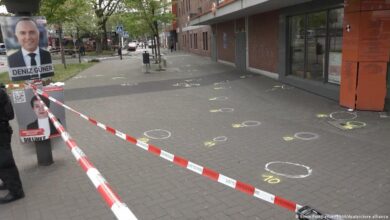

According to reports from German newspapers Bild and Neue Ruhr Zeitung (NRZ), the confrontation escalated rapidly, with witnesses describing the use of pepper spray, knives, and kirpans (ceremonial daggers worn by Sikhs) as weapons. One 56-year-old eyewitness stated that the violence appeared premeditated, alleging that “attackers used pepper spray, then one fired a pistol. I also saw knives.” While the source of the gunfire remains under scrutiny, investigators discovered spent cartridge cases at the scene. Police have not recovered the weapon, but initial evidence suggests the firearm may have been a blank-firing device. As of the latest reports, no gunman was located inside the premises during the police raid.
The immediate aftermath saw emergency services treat multiple victims on-site, most of whom sustained head injuries. Witnesses described scenes of panic, with congregants fleeing the building in distress; one account to NRZ noted that several people ran out barefoot. Although some media outlets initially reported fewer confirmed cases—citing three to four individuals with light cuts or leg wounds—the prevailing figure from official and major media sources stands at 11 injured. At least one individual has been taken into custody, while searches for other suspects, particularly the alleged gunman, have not yet yielded results.
Authorities have not formally confirmed the specific motive for the attack, but multiple eyewitness accounts and local reporting indicate the violence is rooted in a long-running internal dispute within the gurdwara community. The conflict is described as a rift between former and current committee members, centered on issues of leadership influence and the management of community funds. A witness told Bild, “The background is a dispute between former committee members and the current ones. It also involves money belonging to the community… But mainly it’s about influence and who has the say here in the temple.”
Additional context provided by independent journalist Ravinder Singh Robin, who posted video footage on social media, suggests the dispute involved the golak, a donation box used for religious offerings and financial contributions. The footage and accompanying commentary alleged that the previous management, having lost an election for the new committee, attempted to seize back control of the gurdwara’s administration. While these claims highlight the alleged grievances of the parties involved, they remain allegations rather than judicial findings. The police spokesperson told NRZ that inquiries are “proceeding in all directions,” covering both the physical violence and the underlying governance issues.
The legal and procedural status of those involved is currently at the investigation stage. The detention of one individual signifies a preliminary measure to secure evidence and prevent further harm, but no charges have been publicly filed, and no convictions or acquittals have been rendered. The incident raises complex legal questions regarding public order, potential assault, and the unauthorized use of weapons in a public religious space. German law enforces strict regulations on firearms and knives; the presence of cartridge cases and edged weapons will likely form a central part of the criminal case file. The distinction between a private dispute and a public safety threat is critical here, as the deployment of SEK units indicates that authorities treated the situation as a potential armed hostage or mass casualty threat at the time of intervention.
The incident has drawn criticism from within the Sikh community, with commentators describing the violence as a betrayal of religious values. Journalist Man Aman Singh Chhina described the event as a “shameful clash,” noting that turbans were tossed and kirpans were used to attack one another in the presence of the Guru Granth Sahib, the central scripture of Sikhism. While these statements reflect the moral and cultural impact of the event, they do not alter the legal parameters of the ongoing police probe.
The next steps in the legal process will depend on the findings of the forensic and investigative teams. Police must determine whether the firearm was a live weapon or a blank-firing replica, as this distinction significantly impacts the severity of the criminal charges, such as those related to illegal possession of weapons or attempted murder versus public endangerment. Furthermore, the investigation into the financial disputes may uncover evidence of embezzlement or fraud if community funds were mismanaged, potentially leading to separate civil or criminal proceedings against specific committee members. Until a court issues a ruling or a prosecutor files formal indictments, all parties involved remain subject to the presumption of innocence, with the current status limited to suspects and witnesses under police inquiry.