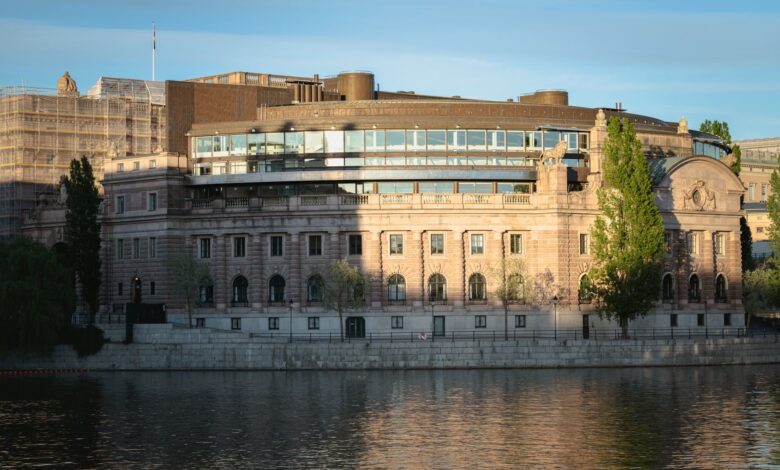
The commission was established following a unanimous vote by the Storting’s Control and Constitutional Affairs Committee. According to Per-Willy Amundsen, the committee’s chair, the inquiry has been granted a “broad mandate” to examine relationships between Norwegian authorities and external organizations, foundations, and networks. The scope of the investigation reaches back more than 30 years, specifically including the period leading up to the 1993–1995 Oslo Accords. The commission is tasked with determining whether these relationships had “consequences for Norwegian interests and security,” as well as reviewing Norwegian campaigns for leadership positions in international organizations and the allocation of development aid and public funding to them.
To ensure the inquiry’s efficacy, lawmakers are drafting legislation to grant the commission “police-like investigative methods and powers.” This includes unrestricted access to relevant information, overriding statutory or contractual confidentiality obligations. Amundsen noted that the files had damaged trust in politicians, stating that Norwegians viewed themselves as an open, democratic society without corruption, but that the revelations had “struck us very hard.” The commission is mandated to pass any relevant findings to police authorities if criminal offenses are identified.
Parallel to the parliamentary inquiry, Norway’s central authority for fighting economic and environmental crimes (Økokrim) has opened a criminal investigation into Thorbjørn Jagland, the country’s former Prime Minister. The investigation focuses on “aggravated corruption” allegations arising from Jagland’s interactions with Epstein during his tenure as Chair of the Norwegian Nobel Committee (2009–2015) and Secretary General of the Council of Europe (2009–2019).
According to reports, the investigation is prompted by documents released by the US Department of Justice in January under the Epstein Files Transparency Act. These files, which comprised over 3 million pages of documents, videos, and images, revealed communications between Jagland and Epstein. One 2018 correspondence discussed a potential introduction to Russian Foreign Minister Sergey Lavrov, while earlier emails from 2012 and 2013 referenced “extraordinary young girls” in Albania and an invitation to visit Epstein’s island. Jagland has stated he never visited the island. The police are investigating whether Jagland received gifts, travel, or loans in connection with his official positions.

Procedural hurdles remain regarding Jagland’s status. He currently enjoys immunity from criminal prosecution due to his former role as Secretary General of the Council of Europe. Norwegian Foreign Minister Espen Barth Eide confirmed that Oslo would request the Council of Europe to revoke this immunity. Økokrim director Pål K. Lønseth stated that there are “reasonable grounds for investigation” given the positions Jagland held during the period covered by the released documents. Further details regarding the specific evidence are expected to be disclosed at a later stage.
Legal counsel for Jagland, Anders Brosveet, has welcomed the opening of the investigation. Brosveet stated that his client would “fully co-operate” and is “confident of the outcome,” arguing that an authoritative clarification from Økokrim is preferable to ongoing media scrutiny. “We are calmly awaiting the outcome,” Brosveet told the Norwegian newspaper VG, adding that key findings and documentation would be submitted to the police as soon as practically possible.
The release of the Epstein files in January sent shockwaves through Norway, with several high-ranking officials, including members of the foreign office and the royal family, named in the documents. The dual-track approach—combining a broad parliamentary inquiry with a specific criminal investigation—reflects the government’s attempt to address both institutional accountability and individual legal liability. The next formal step involves the Storting’s finalization of the legal framework for the commission and the Council of Europe’s decision regarding Jagland’s immunity, which is a prerequisite for the criminal case to proceed to formal charges.