
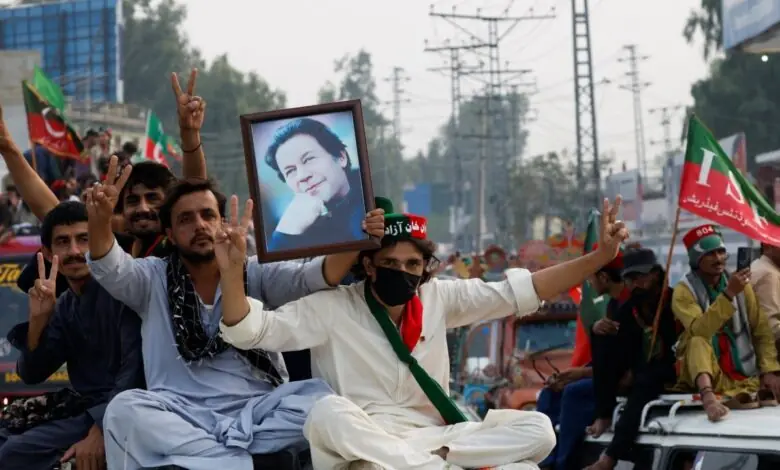
The decision triggers specific constitutional provisions that allow the federal government to assume control over some or all functions of a provincial government during a period of emergency. Under this framework, the provincial governor will assume direct charge of the administration, supported by an advisory council. Law Minister Azam Nazeer Tarar confirmed the details of the transition at a news conference in Islamabad, outlining the immediate procedural steps for the takeover of provincial functions.
This development represents a critical juncture in the relationship between the federal center and the provinces, particularly regarding the political entity led by Mr. Khan. As the former prime minister remains in custody, the suspension of his provincial government effectively removes the last major institutional foothold of his political party within the executive branch of the provincial state. The federal government’s rationale centers on security concerns, specifically the inability of the suspended administration to manage threats from Islamist militant groups.
The constitutional mechanism invoked is a powerful tool reserved for exceptional circumstances, allowing the federal state to override provincial autonomy when the safety and security of the region are deemed at risk. By invoking this clause, the central government is asserting that the existing provincial leadership has failed in its primary duty to maintain law and order. The establishment of an advisory council to assist the governor suggests a structured approach to the interim administration, aiming to ensure continuity in public services and security operations while the political crisis is addressed.

Minister Tarar’s public explanation of the process underscores the legal basis for the action, signaling that the transition is intended to be orderly and compliant with constitutional norms. The involvement of the provincial governor, a figure appointed by the federal government, highlights the shift in power dynamics. Previously, the governor served in a largely ceremonial role while the elected provincial cabinet handled executive matters. Now, the governor holds direct executive authority, with the advisory council likely providing policy guidance and administrative support to manage the day-to-day operations of the province.
The suspension comes against a backdrop of intense political polarization in Pakistan. Imran Khan’s party has long contested the legitimacy of the federal government and previous legal actions against its leadership. The central government, conversely, has pointed to security lapses and administrative failures as justification for its intervention. The current move effectively sides with the federal position, prioritizing security imperatives over the mandate of the suspended provincial administration.
The immediate consequences of this decision are profound for the political landscape. It eliminates the provincial government as a counterweight to federal authority, consolidating power in Islamabad. For citizens in the province, the change may bring shifts in security strategies and administrative priorities, with the federal-appointed governor tasked with addressing the militant threat that prompted the emergency. The advisory council’s composition and specific powers will be key factors in how the interim administration operates in the coming weeks.

This intervention also raises questions about the long-term political trajectory in Pakistan. With the former prime minister jailed and his provincial government suspended, the opposition faces a significant institutional setback. The federal government’s action sets a precedent for the use of emergency powers to resolve political and security disputes, potentially influencing future interactions between the center and the provinces. The legal and political ramifications of this decision are likely to be scrutinized closely by domestic and international observers, who will watch for any challenges to the validity of the emergency declaration or the conduct of the interim administration.
The next formal step involves the operationalization of the governor’s direct control and the functioning of the advisory council. The federal government has indicated that this measure is a response to specific security failures, and the success of the interim administration in curbing militancy will likely determine the duration and nature of the emergency. The political opposition may seek to challenge the move through legal channels or public mobilization, though the immediate suspension of the executive arm of the provincial government limits their capacity to respond through normal political processes.
As the state of emergency takes effect, the focus shifts to the practical implementation of the new administrative structure. The central government’s assertion of authority in the province signals a zero-tolerance approach to security threats, placing the burden of proof on the interim administration to demonstrate effectiveness in stabilizing the region. The outcome of this period of federal oversight will have lasting implications for the balance of power in Pakistan’s federal system and the political fortunes of the suspended leadership.