The immediate political consequence is a fragmented parliament where no single bloc holds decisive power. This deadlock has triggered a dual-track process: Netanyahu’s camp is working to preserve the existing right-wing government, while opposition leaders are attempting to assemble a new administration. The complexity of the task is underscored by the fact that the opposition’s potential partners include parties that have historically been excluded from governing coalitions, such as the Arab-led Ra’am party.
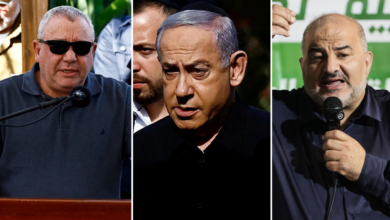
On Thursday, leaders from both sides held a series of strategic meetings. Within the opposition camp, Gadi Eisenkot, chairman of the Yashar party, met with Yair Lapid, head of the Yesh Atid party, as well as Naftali Bennett of the B’Yachad party. Yair Golan, chairman of the Democrats party, also engaged in separate talks with Eisenkot, Lapid, and Mansour Abbas, the chairman of the Ra’am party. Bennett also held meetings with both Eisenkot and Golan, signaling a broad effort to coordinate a unified front against the incumbent government.
Conversely, Netanyahu focused on retaining his power base. Itamar Ben-Gvir, National Security Minister and chairman of the Otzma Yehudit party, held a lengthy meeting with the Prime Minister. According to party statements, the two discussed strategies to “preserve the right-wing government and prevent the establishment of a left-wing government supported by supporters of terrorism.” Netanyahu also met with Bezalel Smotrich, chairman of the Religious Zionist Party, for what was described as “coordination of steps.” These meetings suggest Netanyahu is attempting to consolidate his far-right allies to either maintain the current government or block a successor.
Despite the procedural next steps, the political atmosphere is strained by serious allegations. Likud alleged on Thursday, without providing evidence, that the historic gains made by Arab parties in this week’s election were driven in part by voter fraud. These accusations represent an escalation in anti-Arab rhetoric by Netanyahu and his far-right partners. The significant performance of Arab-led parties has granted them a potential “kingmaker” role in the formation of the next government, a dynamic that has intensified partisan attacks.
Adding to the tension, Gadi Eisenkot addressed suspicions of foreign interference in the election. Following meetings with the head of the Shin Bet (Israel Security Agency) and the chairman of the Central Elections Committee, Eisenkot stated that it was too early to determine if interference had occurred. He emphasized that professional authorities must be allowed to complete their investigations without political involvement. However, he simultaneously accused Netanyahu and Likud of conducting a coordinated campaign to delegitimize the election results, asserting that he would not allow any deviation from the planned timetable for the swearing-in of the Knesset.
Yair Lapid, in a public statement, urged patience from the electorate. He acknowledged that the election did not produce a decisive outcome but argued that the results represented a victory for Netanyahu’s opponents, citing a high voter turnout of 77.7%. Lapid maintained that Netanyahu has no way to form a government based on the current seat distribution, although he admitted that forming an alternative government would be a “complicated task” with no guarantee of success. He compared the negotiation process to the work of a watchmaker, “carefully assembling gears until the mechanism begins to function,” and asked the public not to expect constant updates during this discreet period of work.

Eisenkot further outlined the legislative agenda for the next Knesset, announcing that his team is preparing several bills. These include legislation establishing military recruitment and national service requirements for all Israeli citizens, the creation of a state commission of inquiry into the October 7 massacre, and changes to the budget allocation mechanism. He pledged to continue acting with determination while calling on the public to show restraint.
The next formal step remains the official convening of the Knesset, a process Eisenkot insists will proceed according to the standard timetable regardless of political disputes. The coming weeks will be defined by whether the opposition can bridge the gaps between its diverse partners to reach the 61-seat threshold, or if Netanyahu’s bloc can find a mechanism to maintain power despite its loss of majority.