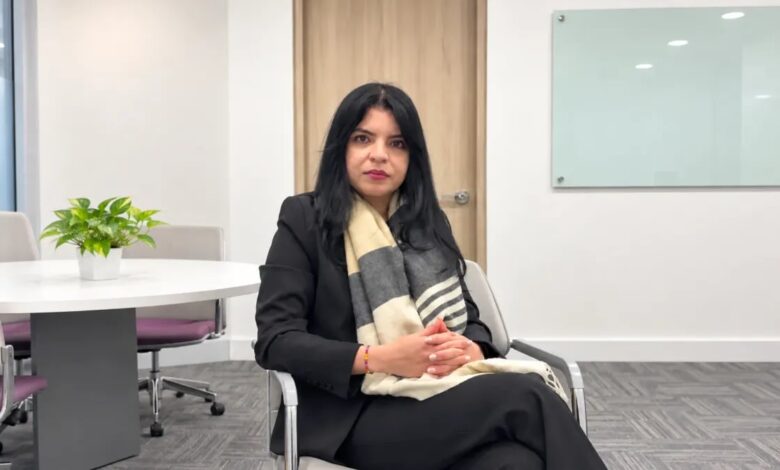
The release of the video marks a significant escalation in a controversy that began two weeks prior, when Jiménez accused Petro of offering public contracts to her and more than 30 other women in exchange for intimate relations. “It’s to satisfy his sexual needs,” she said. While Petro does not deny knowing Jiménez, he has consistently asserted that he has never engaged in such an exchange. The allegations have moved beyond media reporting into the formal judicial system, with investigations opened by both the Attorney General’s Office and the Inspector General. Jiménez has also made these statements to the Supreme Court of Justice.
According to Jiménez’s complaint, she held contracts during Petro’s administration (2022-2026) with the Senate, specifically with Senator María José Pizarro, a supporter of Petro; the Superintendency of Surveillance; and the Ministry of the Interior. The official government contract database, SECOP, has confirmed that 10 of Jiménez’s contracts appear in the system: seven with the Senate, two with the Subdirectorate of Projects for Security and Civic Coexistence at the Ministry of the Interior, and one with the Control Office of the Superintendency of Surveillance. Whether these contracts were linked to the alleged personal relationship remains the central question confronting Colombian authorities.
Petro responded to the video on X, maintaining that he never used government contracts to obtain favors from anyone and that personnel in his administration were hired based on merit. He emphasized that no expert or judge has yet examined the footage, noting that it remains unknown when the video was recorded or where it originated. “There is no corruption in it,” he stated. Petro said he would comply with a gag order issued by the judge presiding over the case, choosing to defend himself “before the judges” rather than on social media. He further accused those circulating the video of creating a smokescreen to divert attention from a law reducing penalties for drug traffickers, which the government recently signed and which his legal team announced it would challenge in court on Friday.
Political dimensions of the dispute are complex. When the allegations first surfaced, Petro suggested that the effort to expose his private life stemmed from the government of Abelardo de la Espriella and involved money. This remark came shortly after an official from the Office of the President, Carlos Ríos, told lawmakers that there were 48 women working for Petro who were “unfortunately exploited through OPS” (orders to enter into service contracts). The initial public accusation by Jiménez was published in Semana magazine, an outlet that has editorially aligned itself with the executive branch, adding another layer of political scrutiny to the timeline of the disclosures.
Supporters of Petro argue that the video depicts a consensual relationship and proves none of the corruption charges. Individuals close to the former president have pointed to the potential legal liability of publishing an intimate video recorded without consent. Conversely, Jiménez’s legal team has framed the video as critical evidence. Her new attorney, Dina Luz Malo, stated in a public letter that she would submit the video to the courts. Malo also noted that Jiménez is currently under a protection program after becoming the target of threats, including instances where unidentified individuals photographed her on November 3.
The legal proceedings have been marked by instability. Jiménez’s previous attorney, Andrés Felipe Caballero, stepped down earlier this week citing security concerns. “I am stepping aside for reasons of personal safety,” Caballero wrote, adding that his decision did not signal a withdrawal of support for Jiménez’s account. His resignation disrupted a scheduled appearance before the Prosecutor General’s Office. Although the Prosecutor’s Office has sought to question Jiménez, a scheduled proceeding was postponed. It is important to note that while investigations are underway, available reporting does not establish that Petro has been formally charged in connection with the allegations.
Additional claims have entered the public discourse, though their verification status varies. Jiménez has alleged that consuming cocaine was sometimes a condition of accompanying Petro during gatherings. However, the materials reviewed do not independently establish these specific allegations, and Petro’s public statements have not specifically addressed claims of cocaine purchase or transportation. The dispute remains focused on the alleged quid pro quo between state resources and personal favors.
As the judicial process continues, Jiménez met in Bogotá with Angie Rodríguez, a former senior official in Petro’s administration who has separately accused him of mistreatment and pressure. The two discussed coordinating their legal strategies. For now, the central focus remains on whether government contracts were improperly used. Petro has stated he will respect the confidentiality of the judicial process, while Jiménez and her legal team move to present their evidence in court. The next major development is expected to be the legal challenge against the drug penalty law, which Petro’s team claims will refocus public attention, or the formal submission of the video and other materials to the judicial authorities.