Flight Diversion and Passenger Impact
Avianca Airlines Flight 042, traveling from José María Córdova International Airport in Medellín to New York’s John F. Kennedy International Airport, landed at Miami International Airport (MIA) at 3:30 a.m. local time on Friday. According to Greg Chin, communications director of the Miami-Dade Aviation Department, the diversion was necessitated by “unexpected turbulence” encountered during the journey. The aircraft landed safely, adhering to the airline’s standard safety protocols for managing in-flight medical and structural concerns.
The incident resulted in injuries to three crew members and six passengers. The Miami-Dade Fire Rescue Department (MDFR) responded to a “medical call” at 3:10 a.m. following reports of turbulence. MDFR units transported one individual to the main trauma center, while seven others were taken to local hospitals via private ambulances. As of Friday morning, the specific medical conditions of the injured passengers were not publicly detailed. Avianca confirmed in a statement that the flight had “encountered unexpected turbulence” and that the diversion was a precautionary measure to ensure the safety of those on board. The incident highlights the persistent risks associated with transcontinental flying, where severe atmospheric disturbances can necessitate rapid operational changes to mitigate harm to passengers and crew.
Social Context: The Return of a Cartel Insider
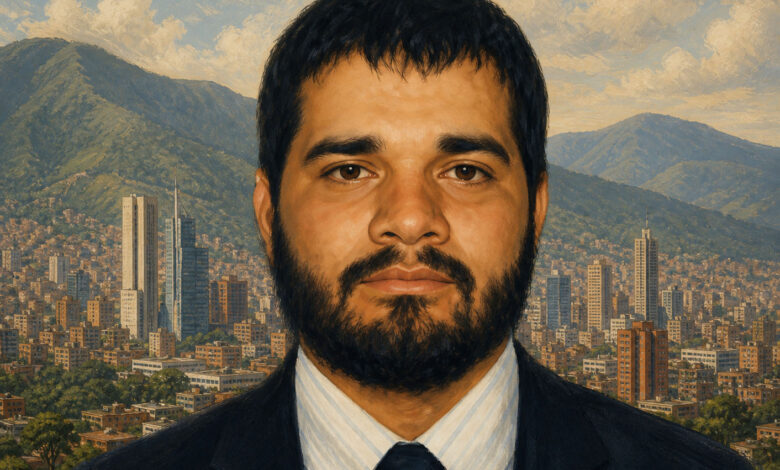
While the aviation incident captured immediate international attention, a separate development in Medellín has drawn scrutiny from judicial and historical observers. Fabio Enrique Ochoa Vasco, a former operative of the now-defunct Medellín Cartel, has quietly returned to the Antioquia capital. Ochoa Vasco, 65, arrived approximately two and a half months ago after completing a nine-year prison sentence in the United States for drug trafficking and money laundering. He is currently living under a low profile in Medellín, a city that maintains its tourism operations and has joined Colombia in sending messages of solidarity following recent regional disasters, such as the recent earthquake.
Ochoa Vasco’s return is part of a broader trend in Colombia, where former cartel figures, paramilitary commanders, and extradited traffickers are re-entering civilian life after serving lengthy terms abroad. Many of these individuals return without pending criminal cases in their home country, a legal reality that has sparked debate regarding the closure of historical justice processes. Ochoa Vasco, known within the cartel as “Kiko Pobre” or “Carlos Mario,” was a significant figure in the organization’s history. He was part of the faction led by Fernando Galeano and Gerardo Moncada, two of Pablo Escobar’s most powerful associates who controlled major cocaine routes from the municipality of Itagüí.
Historical Background and Legal History
The return of Ochoa Vasco recalls the violent internal purges of the 1990s. In 1992, Escobar accused Galeano and Moncada of hiding millions of dollars while Escobar was serving a negotiated prison sentence in “La Catedral,” a luxury prison he built in Envigado. Both men were tortured and murdered inside the prison on Escobar’s orders. Ochoa Vasco, who worked closely with their network, was branded a traitor and forced into hiding. He subsequently aligned himself with “Los Pepes,” a vigilante alliance of Escobar’s enemies whose acronym stood for “Persecuted by Pablo Escobar.”
Despite the collapse of the cartel’s leadership after Escobar’s death in December 1993, Ochoa Vasco’s criminal career continued. U.S. authorities alleged he was responsible for sending between six and eight tons of cocaine per month from Colombia to the United States. He was indicted in the Middle District of Florida in September 2004 for narcotics trafficking and money laundering, in addition to a previous 1989 indictment from the Southern District of Florida. Captured in Venezuela in 2009, he was extradited to the U.S. and sentenced to nine years in prison. His release and return to Medellín mark the end of his formal incarceration, though his presence continues to resonate with the city’s complex history of organized crime and its subsequent transition to a modern, tourism-focused economy.
Conclusion
The juxtaposition of the flight diversion and the return of a historical criminal figure illustrates the dual nature of Medellín’s current environment: a city navigating modern global logistics and safety standards while also grappling with the lingering social echoes of its past. For travelers, the turbulence incident serves as a reminder of the inherent volatility of air travel, requiring robust emergency response infrastructure like that demonstrated by Miami-Dade officials. For the local community, the quiet resettlement of Ochoa Vasco represents a shift from active criminal conflict to a phase of historical reckoning and social reintegration, a process that continues to unfold across Colombia.