The National Disaster Management Agency (BNPB) explained that the technique involves releasing 3-millimeter granules of solid carbon dioxide, or dry ice, at temperatures of minus 75 degrees Celsius (minus 103 degrees Fahrenheit). Unlike traditional cloud seeding, which disperses silver iodide or salt to induce rainfall, this method aims to disrupt atmospheric inversion layers that trap hazardous smoke close to the ground. Acting head of the agency’s data center Berton S.P. Panjaitan stated that the dry ice is designed to “break down” the lower atmosphere haze, allowing it to rise and disperse without requiring the presence of rain clouds.
During the trial, a Cessna Caravan aircraft conducted two flights at an altitude of 4,500 feet, releasing a total of 1,600 kilograms (3,527 pounds) of dry ice. The disaster agency reported that visibility in the area increased from 650 meters (2,133 feet) to 2,800 meters (9,186 feet) following the operation. Coordinating Minister for Political and Security Affairs Dudung Abdurachman confirmed the use of the technique, noting that if the trial proves successful, similar operations will be expanded to other haze-affected regions, including Central Kalimantan.
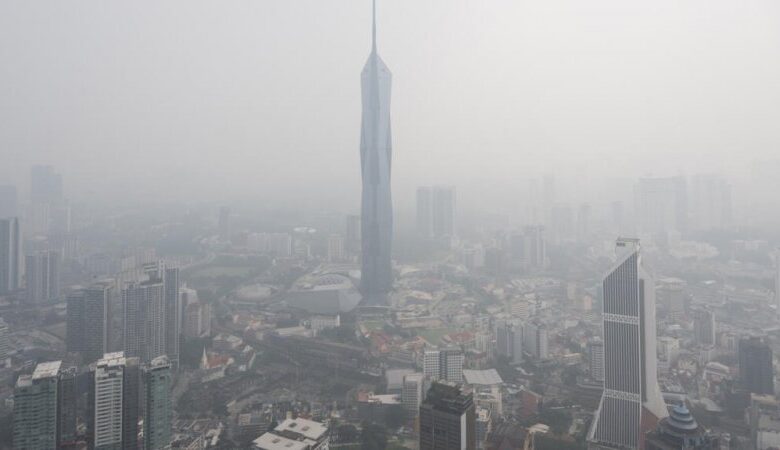
This intervention comes as Indonesia confronts its most severe wildfire season in a decade. An unusually strong El Niño event has intensified drought conditions, making flames in peatlands and forests harder to extinguish. While dozens of helicopters have been deployed to fight ground-level blazes, operations have frequently been disrupted by poor visibility caused by the dense smog. Concurrently, new cloud seeding operations using silver iodide are scheduled for Central Kalimantan on Thursday and Friday, continuing a multi-week effort to induce rainfall.
The crisis has extended beyond Indonesia’s borders, with pollutants drifting into neighboring Singapore and Malaysia. Air quality scores in these regions have soared to unhealthy levels, prompting public health concerns and diplomatic discussions, including Singapore’s consideration of legal action against Indonesian firms. President Prabowo Subianto has urged all agencies to step up efforts to extinguish the wildfires and mitigate the impact of the toxic smog.
Authorities are monitoring the short-term effectiveness of the dry ice dispersion as they prepare for further trials. The success of this method in breaking down the inversion layer remains under evaluation, with potential expansion to other central haze zones depending on continued improvements in air quality and visibility.