The occurrence of this natural earthquake coincides with ongoing scientific efforts to understand and monitor seismic activity in the region. In a separate but related development, researchers from RWTH Aachen University in Germany, in collaboration with Swiss institutions, successfully triggered a “controlled earthquake” in the Gotthard massif region of southern Switzerland. This experiment represents a significant milestone in geophysical research, marking the first time scientists have intentionally induced seismic activity in this part of the Alps for study purposes.
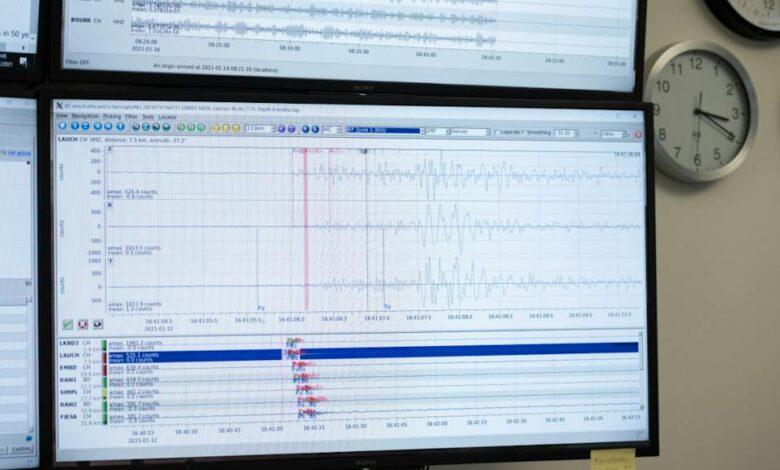
The controlled experiment took place at the Bedretto Underground Laboratory for Geosciences and Geoenergies, a unique research infrastructure operated by the Swiss federal technology institute ETH Zurich. Located 1.5 kilometers below the surface in the Swiss Alps, the laboratory is situated within a 5.2-kilometer tunnel that connects Ticino with the Furka railway tunnel. The objective of the experiment was to trigger controlled stress changes in the rock to generate microquakes in a targeted manner. Over several days, scientists pumped highly pressurized water into a natural fracture zone within the laboratory. The result was a series of small tremors, some measuring just below magnitude 0, which were recorded by hundreds of highly sensitive sensors placed in the immediate vicinity of the fault. Importantly, these induced tremors were not felt on the earth’s surface, distinguishing them sharply from the natural Linthal earthquake.
Florian Amann, the project manager from RWTH Aachen University, described the signals obtained as “incredible,” noting that they provided unique insight into the physics of earthquakes. The success of the experiment demonstrates the capability to isolate and study seismic mechanisms in a controlled environment, separate from the variable forces of natural tectonic activity. While the natural Linthal event serves as a reminder of the inherent seismic risk in the region, the Bedretto experiment highlights the advanced tools available to scientists to mitigate that risk through better understanding.
Contextualizing these events within the broader seismic history of Switzerland, the SED records an average of three to four earthquakes per day in Switzerland and neighboring countries, totaling between 1,000 and 1,500 earthquakes per year. However, the general public typically feels only about 10 to 20 tremors annually with magnitudes of 2.5 or higher. The Linthal earthquake, at magnitude 4.0, falls into the category of events that are distinctly noticeable to the population, though not necessarily catastrophic. For perspective, the most devastating earthquake recorded in central Europe occurred in Basel in 1356, with a magnitude of 6.5 to 7.0. Basel remains a city of particular concern due to its fault zone location and dense population, serving as a historical benchmark for the potential severity of seismic events in the region.
The distinction between the natural event near Linthal and the induced microseismicity in Ticino illustrates the dual nature of seismic science in Switzerland: monitoring natural hazards and actively probing the subsurface to understand geological processes. The Linthal earthquake, striking just ten minutes before a smaller aftershock of magnitude just over 1.0, followed the typical pattern of seismic sequences. The ability to detect and characterize these events, from the massive 1356 Basel quake to the sub-magnitude 0 tremors in Bedretto, relies on the robust network of sensors and the data analysis capabilities of institutions like ETH Zurich and RWTH Aachen.
As research continues, the focus remains on improving the accuracy of seismic models and understanding the long-term stability of the Alpine fault zones. The successful triggering of controlled stress changes in the Bedretto laboratory opens new avenues for studying how rock fractures propagate and how energy is released during seismic events. Meanwhile, the public experience of the Linthal tremor serves as a tangible reminder of the geological forces at play beneath the surface of one of Europe’s most stable, yet seismically active, nations. The ongoing monitoring and research efforts aim to ensure that while earthquakes cannot be prevented, their impacts can be better predicted and managed.