In Zaporizhzhia, Ivan Fedorov, head of the Zaporizhzhia Regional Defense Council, reported that three people were killed and three injured as a result of enemy strikes on the city of Zaporizhzhia and the surrounding district. The scale of the air campaign in this region was significant, with Fedorov stating that Russian forces launched 862 strikes against 48 populated settlements within the oblast in a single day.
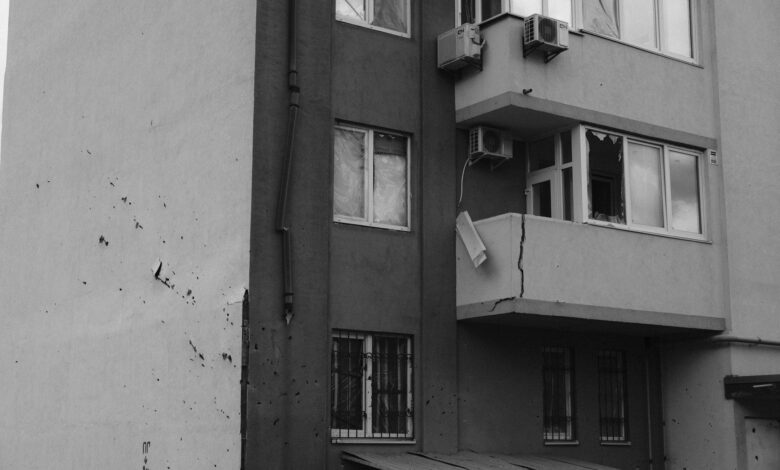
The breakdown of these attacks reveals a heavy reliance on unmanned aerial vehicles. Russian forces deployed 633 drones, predominantly FPV (First Person View) kamikaze drones, alongside 28 aerial strikes, four multiple rocket system (MRS) barrages, and 197 artillery impacts. The drone attacks specifically targeted the city of Zaporizhzhia, as well as the towns of Vilniansk, Kushuhum, and Komyshuvaha. Artillery and rocket fire focused on Pavlivka, Hulyaipilske, and Kopani. Fedorov noted that residents reported 90 instances of damage to residential housing, vehicles, and local infrastructure during the same period.
Simultaneously, in the northern Chernihiv region, Vice-Head of the Chernihiv Regional Military Administration Vyacheslav Chaus confirmed one fatality and one severe injury resulting from strikes on local enterprises. Chaus stated that Russian forces attacked a facility in the city of Chernihiv twice. The initial strike injured a 54-year-old man with a traumatic brain injury. A subsequent, repeated strike on the same target killed a 61-year-old man. Chaus described the weapons used in the city attack as “Banderya” (a colloquial term for specific types of guided missiles or advanced drones, though the specific technical designation was not provided in the source).
Further south in the Sevchenkivka district of Chernihiv oblast, a “Geran” (often referred to as Shahed-136) drone struck an agricultural enterprise in Semenivka. The impact ignited a fire in a warehouse and several administrative buildings. Local emergency services confirmed that the fire was extinguished without additional casualties reported at that specific site.
These incidents highlight the continued use of long-range and short-range precision and area-effect weapons by Russian forces to degrade Ukrainian economic capacity and civilian morale. The high volume of FPV drone usage in Zaporizhzhia indicates a sustained effort to saturate air defense systems and target smaller, dispersed locations, while the strikes on industrial and agricultural sites in Chernihiv suggest a strategic focus on disrupting supply chains and local economies.
Official figures from regional administrations represent the primary source of casualty data in these conflict zones. No independent verification of these specific casualty counts or damage assessments is available at this time. The ongoing use of mixed weapon systems—ranging from low-cost FPV drones to ballistic missiles—demonstrates a multi-layered approach to striking both military and civilian infrastructure across multiple fronts simultaneously.