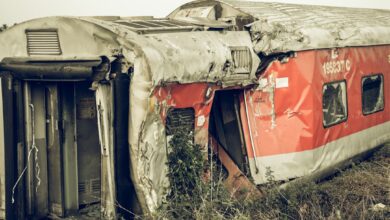
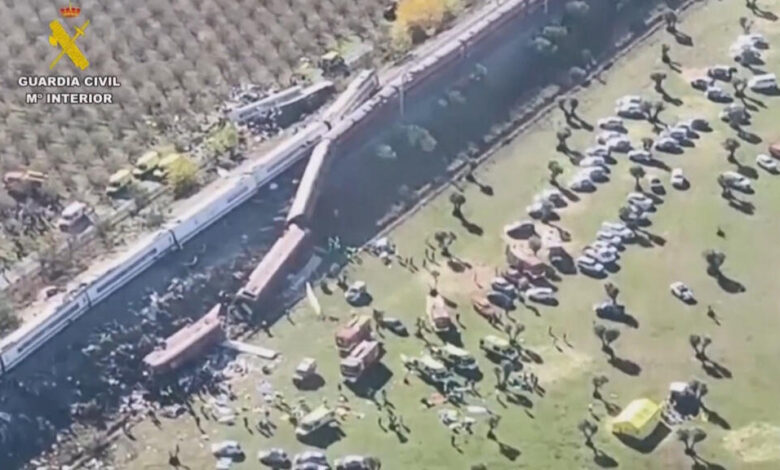
The impact derailed two carriages, which were seen flipped over on an embankment. Regional authorities in Castilla-La Mancha reported that 58 people required hospital treatment, though rescue workers continued searching the wreckage for survivors and bodies as of Wednesday morning. The Renfe train was carrying 397 passengers, while the Iryo service had 147 aboard. In response to the tragedy, Spanish Prime Minister Pedro Sánchez announced that Spain will observe three days of national mourning.
“All of Spain is in mourning,” Sánchez said from the scene, describing the incident as “not acceptable for a country like Spain” to suffer two such disasters in the same year. He expressed his shock at the “serious” accident and pledged support for the victims and their families, with emergency services coordinating with involved administrations to assist those affected.
Transport Minister Óscar Puente provided a preliminary account of the cause, attributing the initial failure to a computer malfunction at the Urda control station at approximately 8:30 a.m. This error disabled the safety system for a 63-kilometer (39-mile) stretch of track, triggering an automatic stop, or “red signal,” for all rail traffic in the affected zone. According to Puente, operators at ADIF, the state company responsible for managing and maintaining Spain’s railway infrastructure, took over communications during this period.
The minister stated that at 8:36 a.m., the driver of the Renfe train was instructed to resume its journey “with normality,” despite the red signal remaining active. Puente described this instruction as “inexplicable.” Between the time of the instruction and the collision at 8:53 a.m., the Renfe train traveled approximately 25 kilometers (15.5 miles). While investigators are still determining the exact speed at impact, Puente noted that trains could travel up to 200 kilometers per hour (124 mph) on that section, suggesting the speeding train likely reached speeds exceeding 100 km/h (60 mph) before the crash.
Puente emphasized that the train drivers were not to blame for the collision, placing the focus on the control center’s decision-making process. He declined to answer questions about whether he would resign, stating his priority was clarifying the circumstances and supporting the victims. The incident has intensified scrutiny of Spain’s high-speed rail network, particularly following a previous disaster in January near Adamuz in Andalusia, where a high-speed train derailed and collided with an oncoming train, killing 46 people and injuring more than 150. That earlier accident had already shaken confidence in the safety of the AVE system, which is a cornerstone of Spain’s domestic transport infrastructure.
The geographic scale of the disruption is significant, with rail services between Madrid and Seville currently suspended. The collision highlights ongoing questions regarding the reliability of digital signaling systems and human oversight in critical infrastructure. While the immediate cause appears to be a combination of technical failure and procedural error, the broader implications for European rail safety policy remain under examination. Authorities are expected to launch a formal investigation to determine the precise sequence of events leading to the fatal instruction, with findings likely to influence future regulatory standards for high-speed rail operations in the region.
As the death toll has been confirmed by both local and central government offices, the focus has shifted to recovery operations and the long-term review of safety protocols. The recurrence of such a severe accident within nine months underscores the urgency of addressing systemic vulnerabilities in the rail network, balancing the efficiency of high-speed travel with robust safety mechanisms.