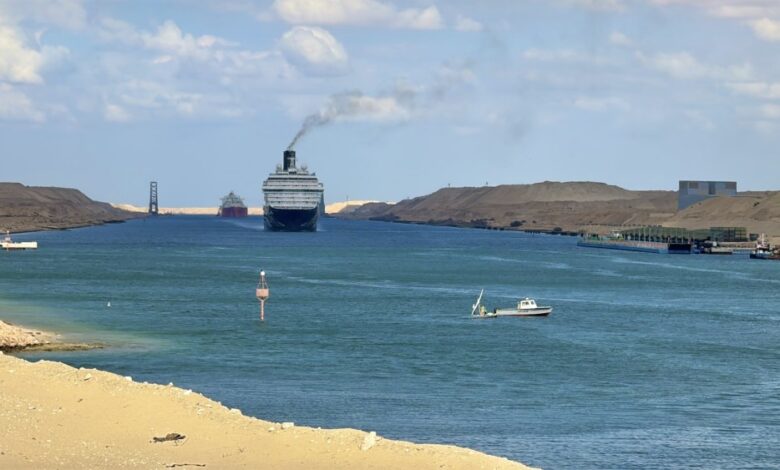
Sixteen shipping services have announced returns to the Suez route since early July, according to the international shipping association BIMCO. These carriers span the three major vessel-sharing alliances—Gemini, Ocean, and Premier—as well as Mediterranean Shipping Company (MSC). This week, the Premier Alliance, comprising Ocean Network Express (ONE), HMM, and Yang Ming, added its FE1 Asia-North Europe service to the Suez schedule. This marks the coalition’s first return to the Red Sea since it began diverting ships around the Cape of Good Hope at the start of the attacks.
Market data from Linerlytica corroborates the increase in traffic. Between August 31 and September 27, roughly 29.5 container ships over 4,000 TEUs passed through the Suez and Bab el-Mandeb Strait. This number rose to 45 vessels in the week of October 5-11, with approximately 47 projected for the current week. Linerlytica estimates that more than 140 container ships, representing over 2 million TEUs of capacity, have switched away from Cape routing since May. The company anticipates that weekly transits will soon breach 50, while Drewry projects a phased return reaching 80 percent of pre-diversion levels by February 2027.
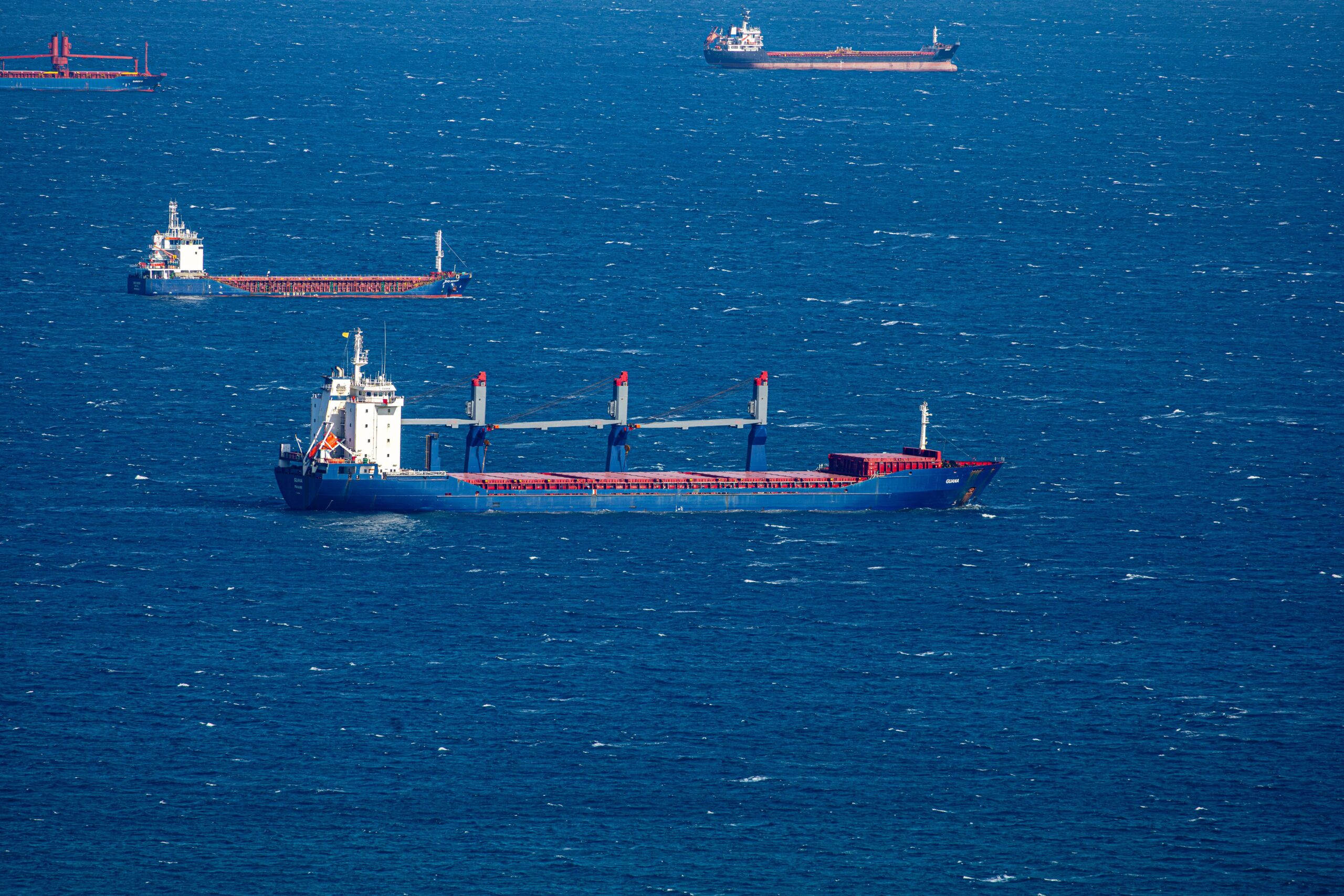
However, analysts warn that the rapid return poses risks to freight rate recovery. Drewry notes that shorter transits via Suez effectively add more capacity to the Asia-Europe trade lane, contributing to a 13-week decline in freight rates. Simon Heaney, senior manager of container research at Drewry, stated that the critical question is not whether Suez is cheaper per voyage, but whether the annual value of routing justifies the risk. For a 24,000-TEU ship on the Asia-North Europe route, Suez saves roughly $1 million per round voyage, or $43 per slot, before insurance costs. However, a one-way war-risk premium of 0.3 percent adds $1.35 million per round voyage on a $225 million hull, potentially tipping the advantage back to the Cape of Good Hope. A 1 percent premium would add $4.5 million, likely dictating Cape routing.
The Suez Canal Authority also reported significant growth, with chairman Ossama Rabiee stating that 166 medium and mega container vessels used the canal between July and September 2026. This totaled 29 million net tons, compared with 16 vessels and 2.4 million tons in the same period last year. As carriers test the route, primarily for backhaul voyages, the balance between time savings and war-risk insurance remains the central variable for future routing decisions.