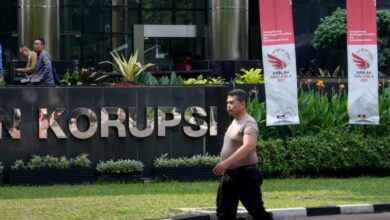
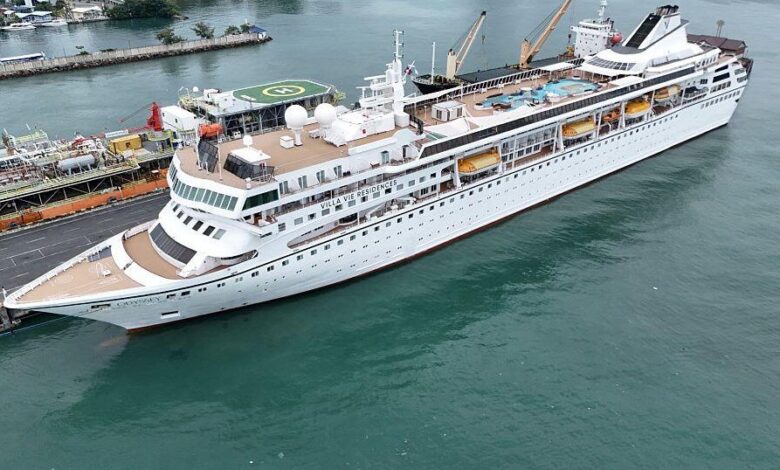
A ship arrest is a specific legal mechanism within maritime law that allows a vessel to be detained or seized following a financial or other legal claim. This procedure serves to secure the ship as a guarantee for the satisfaction of a claim, potentially leaving it subject to further proceedings or a judicial sale. In this instance, the arrest follows the suspension of the Odyssey’s operations in Cambodia, where approximately 200 residents were forced to disembark at Sihanoukville Autonomous Port with little notice in late October.
The central legal development involves the transfer of control over the vessel. Villa Vie Residences, the Florida-based company that marketed the ship as a floating home offering indefinite global travel, failed to keep up with its financial obligations. Consequently, the vessel is now being operated by its lender. The immediate trigger for the Singapore arrest appears to be an unpaid invoice; Villa Vie reportedly owes a supplier in the region approximately $500,000. Although it is unclear if this specific supplier is the party represented by Helmsman LLC, the timing and nature of the arrest suggest a dispute over commercial debts accrued during the vessel’s final weeks in Southeast Asian waters.
The collapse of the Odyssey’s operations has been attributed by the US company to soaring fuel costs linked to regional geopolitical tensions, specifically the war in Iran. Villa Vie stated that monthly fuel expenses, which had historically averaged $1,800 per cabin, had risen to an estimated $6,000 to $8,000 in parts of Asia. The company attempted to mitigate these costs by slowing the ship’s speed and extending port stays, but these measures were insufficient to offset the financial strain. The vessel’s journey, which began in Belfast, Northern Ireland, in October 2024, had already shown signs of distress for months prior to its arrival in Cambodia, with the company reportedly seeking additional contributions from residents to maintain operations.
The legal and operational breakdown has left former residents in a precarious position. After the vessel departed Sihanoukville on November 4 without its passengers, individuals were left to make their own arrangements. Top Sopheak, a spokesman for Cambodia’s Tourism Ministry, noted that approximately 98 passengers remained in the country as of that date, dispersed across locations including Sihanoukville, Kampot, Kep, Siem Reap, and Phnom Penh. The ministry stated that a coordination team was available to assist those remaining, welcoming them to continue exploring the country.
The financial impact on individual passengers has been substantial, as many had invested large sums for what was marketed as long-term or permanent accommodation at sea. Joel Greiff, a 57-year-old American passenger, paid $350,000 for a cabin but spent only 26 days on board after joining in October. Following his forced disembarkation, Greiff secured accommodation in Kampot for approximately $200 a month. He has publicly stated that he has come to terms with the possibility that he may never recover the money invested in the cruise. Other residents had attempted to organize a collective purchase of the vessel to keep the residential cruise operating. This effort reportedly attracted financial pledges from 169 residents but failed after a lender declined to provide the necessary funding.

The current legal status of the MV Odyssey remains uncertain. With the vessel under the control of its lender and subject to a ship arrest in Singapore, the path forward involves navigating complex maritime claims and debt recovery processes. The arrest highlights the vulnerabilities of the “residential cruise” business model when faced with volatile energy markets and fixed operating costs. For the former residents, the immediate legal battle is over the vessel, but the personal consequences involve the loss of significant capital and the disruption of travel plans that were predicated on the ship’s indefinite operation.
As the vessel sits detained in Singapore, the next steps will likely involve judicial proceedings to determine the validity and priority of the financial claims against the ship. The outcome of these proceedings will dictate whether the vessel is sold to satisfy debts or if a resolution is reached that allows for its release. Until then, the MV Odyssey remains a central figure in a dispute that has moved from a novel travel concept to a case study in maritime insolvency and consumer risk.