The competitive narrative of the event shifted significantly following Aryna Sabalenka’s elimination in the quarterfinals, which was overshadowed by a widely discussed on-court incident. During her 6-3, 3-6, 6-1 loss to Svitolina, video footage circulated on social media appearing to show the Belarusian using offensive language. Sabalenka addressed the controversy in a Saturday post, clarifying that her comments were not directed at her opponent but were a reaction to a “small group of spectators” who aggressively cheered her mistakes. “I should have handled my frustration differently and I apologize to anyone I offended,” Sabalenka wrote. Svitolina, who advanced to the semifinals on the strength of that win, responded by emphasizing respect, noting that while comments regarding the war have appeared in the past, she hopes their matches remain respected. The Ukrainian federation’s policy, which has led to the refusal of handshakes with Russian and Belarusian players since 2022, remains a backdrop to these interactions.
Andreeva’s path to the final has been defined by statistical dominance. The French Open champion, competing in her first singles draw at the year-end championships, has dropped the fewest games (18) of any player en route to the title match. Her round-robin performance included a sweep of Sabalenka, Svitolina, and Diana Shnaider, winning 36 of 47 games played. Against Pegula, Andreeva displayed efficiency, overcoming a “scratchy” start to secure the win. Pegula, who had previously saved a match point against Noskova to keep her campaign alive, noted the unfamiliarity of their head-to-head history, acknowledging Andreeva’s confidence and efficiency as key factors in the outcome.

Meanwhile, Svitolina’s progression represents a personal milestone, marking her first appearance in a WTA Finals championship match since 2019. Her victory over Noskova was decisive, with the Ukrainian rolling past a flat opponent to reach the final. Svitolina’s performance contrasts with the broader context of the tournament, which has seen a departure from traditional formats and locations. The 2026 edition is a transitional stop in the Coachella Valley, following the early termination of the deal to host the event in Riyadh, Saudi Arabia. This iteration serves as the first of a planned three-year run in Charlotte, North Carolina, intended by the WTA to restore the event’s status and relevance.
The absence of world No. 1 Elena Rybakina, who withdrew due to a viral illness on the eve of the tournament, altered the competitive landscape. Rybakina, the reigning Australian Open and U.S. Open champion who had dethroned Sabalenka in both Grand Slam finals, was replaced by alternate Marta Kostyuk. This withdrawal allowed players like Svitolina and Andreeva to emerge as the frontrunners, with Andreeva’s debut and Svitolina’s return to the final signaling a new chapter for the tournament’s brand.
Commercially, the WTA and Tennis Channel announced a significant broadcasting expansion to coincide with the final. The championship matches will be simulcast for free on Tennis Channel 2 (T2) on Sunday, November 15, available through streaming platforms including Amazon, Roku, and DirecTV. This move, described by WTA Chair Valerie Camillo as a “significant win for the WTA and, most importantly, for fans,” aims to expand the tour’s reach beyond core tennis audiences to those interested in fashion, sports, and entertainment. The free simulcast caps a week of coverage on Tennis Channel and its app, providing a barrier-free entry point for the general public to witness the conclusion of the $10 million event.
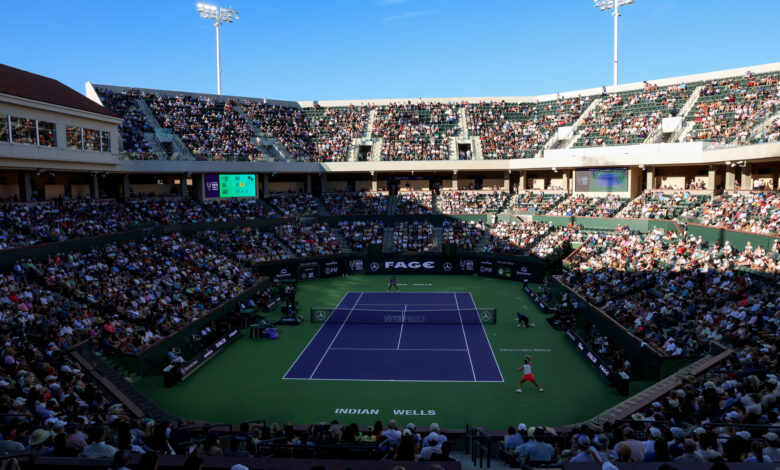
As the tournament moves to its decisive conclusion, the focus returns to the Indian Wells Tennis Garden, where Andreeva and Svitolina will contest for the title. The final is scheduled for Sunday, November 15, with the broadcast available globally through the expanded T2 simulcast, marking a pivotal moment in the WTA’s strategic efforts to redefine its season-ending championship.