The release marks a significant escalation in the use of artificial intelligence to tackle complex theoretical challenges. Weeks prior, OpenAI had announced that its internal model solved the Navier-Stokes equations, one of the Millennium Prize problems. AI researchers have long targeted difficult mathematical problems as a benchmark for model capabilities, arguing that training on such tasks helps systems learn logical reasoning and persistence—skills that may generalize to other domains like physics or economics. However, the extent to which these capabilities translate to fields without objectively verifiable correct solutions, such as law or business strategy, remains unclear.
The publication has divided the mathematical community. Dan Litt, a professor of mathematics at the University of Toronto, expressed enthusiasm for the results, noting that several solutions addressed problems he was personally interested in. “My view is that this is great for mathematics,” Litt said. He emphasized that while a perception of AI having “solved math” could discourage young talent or lead funding organizations to withdraw support, society must reaffirm its backing for human mathematical expertise to leverage the progress made by AI.
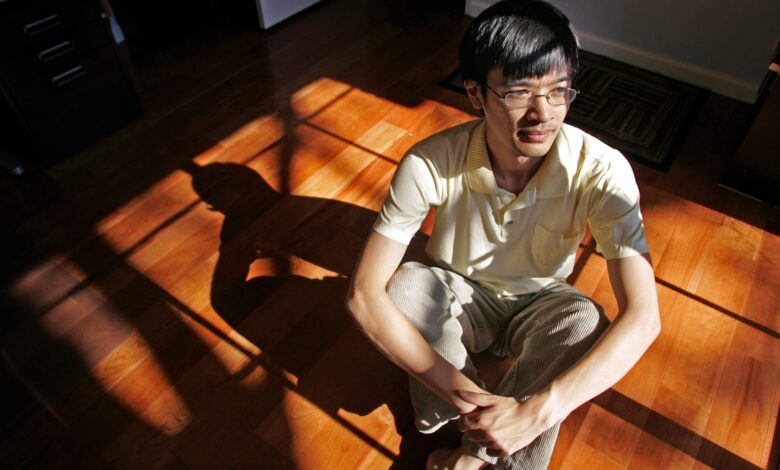
Conversely, Terence Tao, a UCLA mathematics professor widely regarded as one of the world’s leading mathematicians, has been increasingly critical of this approach. In a social media post on Mastodon, Tao argued that the process of arriving at solutions—not just the solutions themselves—is what advances mathematical understanding. He warned that AI prompters often lack the depth to interact with the field, resulting in fewer seminars, collaborations, and community growth compared to traditional breakthroughs.
“Problems are being solved autonomously by AI prompters who have no interest in the broader field itself once their initial target is ‘solved,’ and do not understand the AI output well enough to answer questions on the result, give talks, or otherwise interact with the rest of the field,” Tao wrote. “Many fewer seminars, workshops, collaborations, or other activities are being generated from these results compared to traditional breakthroughs.”
Tao described the mass publication as the end of “Math 1.0,” where finding solutions served as the field’s engine, and called for a “Math 2.0” era that values exposition, community building, and the opening of new directions of study more holistically. He expressed concern that promising open directions are being withheld from the public in fear of being “scooped” by AI systems.
The controversy over the integrity of these solutions has also drawn scrutiny regarding the methodology behind them. Last month, two mathematicians accused OpenAI of feeding their work-in-progress to its model to help solve the Navier-Stokes equations. OpenAI denied the allegation, stating its training data cutoff preceded the mathematicians’ use of its products. Tristan Buckmaster of New York University, one of the accused party, said it remains unclear whether the company’s internal system inadvertently relied on the work of mathematicians using its tools. “I don’t think they’ve done their sort of due diligence at all to ensure the AI model had not plagiarized anyone’s work,” Buckmaster said.
In response to growing concerns, an independent advisory group on mathematics and artificial intelligence, hosted at the Institute for Advanced Study in Princeton, released recommendations last month for the responsible publication of AI-generated proofs. These guidelines suggested that companies disclose the model name, prompts, “chain of thought” reasoning, and computing costs. OpenAI stated it had “drawn on” this advice, publishing formalizations of proofs for verification by specialized software and sharing summaries of reasoning and compute statistics for 10 specific problems. However, the company did not follow all recommendations, leading the advisory group to reaffirm its calls for responsible release practices.
Despite the procedural disputes, the immediate impact is a shift in how mathematicians approach their work. Litt, while agreeing with Tao that the field must change, remained optimistic about AI’s potential to enable “open-ended exploration.” He cited a collaborator who remarked, “I feel like I’ve been crawling my entire life, and now I can fly.” As OpenAI commits to funding workshops to help mathematicians understand the new results, the discipline faces a transitional period where it must redefine what constitutes valuable contribution and how it trains the next generation of researchers.