
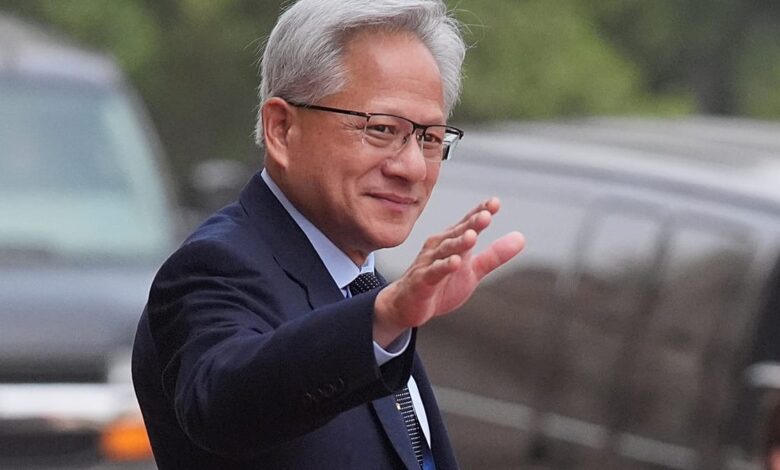
Colette Kress, Nvidia’s Chief Financial Officer since 2013, has been appointed as interim CEO. Her appointment provides a familiar face to investors, but analysts are divided on her ability to replicate the aggressive deal-making and strategic foresight that Huang employed to drive the current AI boom. Dan Coatsworth, head of markets at AJ Bell, noted that the AI industry is moving at an “incredible pace,” making it difficult to predict whether investors will warm to the interim leadership while the board searches for a permanent successor. The immediate financial impact has been severe, with tech stocks across the sector experiencing a significant drop due to the leadership upheaval.
While the resignation is framed partly around personal conduct, including reported affairs, the more consequential aspect involves national security and export controls. US authorities and lawmakers are investigating possible violations related to a Singapore-based partner known as Megaspeed. According to The New York Times, Huang’s relationship with Alice Huang, who is alleged to have ties to Megaspeed, dates back to 2023. She is reported to be in the middle of a sprawling effort to accumulate AI chips across Southeast Asia, with Megaspeed under investigation for potentially diverting restricted Nvidia chips to Chinese companies.

This investigation intersects with a turbulent period for Nvidia in 2023, when the company was redesigning chips to comply with strict US export controls restricting sales to China. At the time, Huang told CNBC that the regulation would be “just fine” and that the company would work through it. However, the current allegations suggest that compliance may have been compromised. US officials have requested classified briefings to assess the national security risks, intensifying scrutiny on the semiconductor supply chain. The potential diversion of advanced AI hardware to China represents a significant geopolitical concern, particularly as the US government seeks to maintain a technological advantage.
The resignation also highlights the deep intertwining of Nvidia’s leadership with its commercial and political environment. Huang was a central figure in fueling the AI boom, not only through the development of advanced chips but also by investing in customers and suppliers to build out the necessary infrastructure. This strategy helped cloud providers and AI labs expand their capabilities, cementing Nvidia’s dominance in the market. Kunjan Sobhani, a senior semiconductor analyst at Bloomberg Intelligence, indicated that Huang’s departure is unlikely to change earnings estimates for Nvidia’s 2027 and 2028 financial years, suggesting that the company’s fundamental business model remains intact in the short term. However, long-term risks surrounding succession, deal-making, and regulatory compliance remain elevated.
The situation has created uncertainty that extends beyond Nvidia to its rivals and partners. The corporate upheaval has intensified rivalry among chip manufacturers, as competitors look to capitalize on any perceived weaknesses in Nvidia’s position. For businesses relying on Nvidia’s hardware, the leadership change introduces a variable that could affect future product roadmaps and partnership dynamics. Investors are also watching closely for signals on how the company will navigate the ongoing investigations. Any attempt by Huang to offload his substantial stock holdings, estimated at $135 billion, would further unnerve investors, though such a move is fraught with legal and price risks.
As the board begins the search for a permanent replacement, the focus will shift to how Nvidia manages the fallout from the export control probe. The coming weeks and months may see a broader examination of the company’s dealings in China and the extent to which US government oversight was applied or bypassed. For the AI industry, which is heavily dependent on Nvidia’s chips, this period of transition carries the potential to reshape the landscape, affecting everything from data center construction to the availability of advanced AI models. The stability of the AI industry, which has grown rapidly in the last few years, now rests on how effectively the new leadership can restore confidence and navigate the complex regulatory environment.
The next critical step involves the outcome of the classified briefings requested by US lawmakers and the board’s announcement of a permanent CEO. Until then, Nvidia operates under the interim leadership of Colette Kress, tasked with maintaining operational continuity and addressing the security concerns that have derailed what was previously considered a dominant market position.




One Comment