

Clearing the Way for Criminal Proceedings
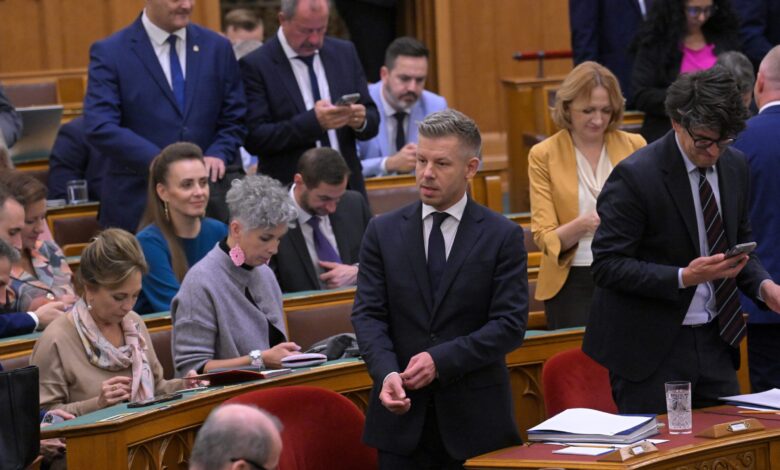
The suspension of immunity does not constitute a finding of guilt; rather, it removes the legal protection that prevents investigative measures from being taken directly against sitting members of parliament. For Prime Minister Magyar, whose immunity was previously tied to his role as a Member of the European Parliament, the decision allows the Central Chief Prosecution Office of Investigation to proceed with a case opened in 2024.
The charges against Magyar stem from an incident at the Ötkert nightclub in Budapest on June 21, 2024. According to prosecutors, Magyar became involved in an altercation with a man who was filming him. Magyar allegedly seized the man’s mobile phone and later threw it into the Danube River. The device was subsequently recovered by divers. Prosecutors indicated that the circumstances could constitute the criminal offence of theft. The case had previously been closed after the European Parliament denied a request to suspend his immunity in September 2024. The investigation was reopened after Magyar took his seat in Hungary’s National Assembly in May 2026.
Magyar had publicly called on his fellow Tisza party MPs to vote for the suspension of his immunity. Following the vote, he stated that everyone is equal before the law and that he had nothing to hide. He denied committing a crime, asserting that he would act in the same manner again in similar circumstances. Magyar also criticised the prosecution, arguing that the authorities were attempting to link his case to more serious corruption allegations involving former ministers to divert attention from those matters. The prosecution rejected this characterisation, stating its role is to conduct proceedings lawfully and fairly.

Investigations into Former Ministers
The same session saw the suspension of immunity for two former ministers: Balázs Hankó, a Fidesz MP and former minister for culture and innovation, and Miklós Seszták, a KDNP lawmaker and former minister for national development. Both votes passed with the same 139-0 margin, despite the Parliamentary Immunity Committee previously recommending that their immunity be maintained.
Prosecutors allege that Hankó directed unlawful activities while responsible for the National Cultural Fund and its Temporary College for Priority Cultural Programmes. The investigation concerns the operation of these bodies, with prosecutors claiming the fund was used in a manner that caused more than 17 billion forints in damage to the state budget. Hankó has described the proceedings as politically motivated.
Seszták faces a separate investigation into alleged bribery and other offences. The Central Chief Prosecution Office of Investigation alleges that Seszták and the former chief executive of the Hungarian National Asset Management Company received more than 11 billion forints in unlawful benefits. These benefits were allegedly obtained through an intermediary from representatives of companies with contractual ties to the bus operator Volánbusz between 2015 and 2018. Neither former minister has been convicted, and both have denied wrongdoing.

Political Context and Institutional Shifts
The immune votes coincide with the launch of a new phase of the government’s anti-corruption initiative, referred to by Prime Minister Magyar as “Operation Purgatory.” On Sunday evening, Magyar announced that the newly established National Asset Recovery and Protection Office (NVVH) would begin investigating several high-profile corruption cases on Monday. The NVVH was created in 2026 as an independent state institution tasked with tracing, protecting, and recovering public assets believed to have been unlawfully removed from public ownership. The body has investigative powers and can represent the public prosecution in court in cases involving public procurement, state subsidies, and EU funds.
The proceedings also addressed a procedural matter involving Tisza MPs Orsolya Schummer and Erzsébet Csézy. Parliament Speaker Ágnes Forsthoffer informed lawmakers that video footage showed Schummer pressing a voting button on Csézy’s device after Csézy had already cast her vote. Both MPs acknowledged the mistake, explaining that Csézy’s equipment had malfunctioned. The speaker reminded legislators that equipment malfunctions must be reported to the chair rather than resolved by another MP operating the device.
With the legal barriers to investigation removed, the Central Chief Prosecution Office is expected to proceed with formal investigative measures against all three individuals. The next step involves the resumption of criminal proceedings, which will test the operational capacity of the new asset recovery office and the judicial process in handling cases involving high-ranking political figures.