
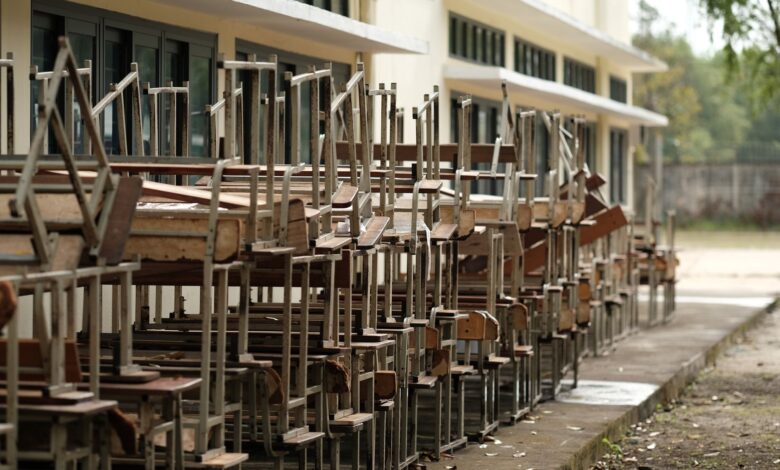
A report published this month by the Higher School of Economics details the scale of this contraction. In 2000, Russia had 68,800 secondary educational institutions. By 2026, that number has fallen to just under 38,000. The impact has been disproportionately severe in rural areas, where the number of state schools has dropped from more than 45,000 to approximately 21,000, a decline of more than half. Urban areas have also seen reductions, with city schools falling from 22,700 to 16,300 over the same period. Consequently, Russia now operates with fewer schools than Germany, despite having a population roughly twice as large; Germany currently maintains more than 40,000 schools.
The drivers of this closure wave are primarily economic. An “optimization” program launched in 2001 shifted state funding to a per-student model, making small schools financially unviable. As enrollment numbers dropped, institutions received less funding, leading to mergers with neighboring schools or outright liquidation. The data shows that the scale of these closures significantly exceeded natural demographic shifts. While the number of school-age children in Russia decreased by 13.5% over the past two decades—falling from 20.5 million to 17.7 million—the reduction in school buildings was far more drastic. By 2010, 26% of all schools had already closed. Another 10,000 were shut down during the 2010s, and a further 2,300 have closed since the start of the 2020s. Meanwhile, the average number of students per institution has risen from approximately 300 to 470.
Private schools have seen modest growth, increasing from 635 in 2000 to 982 in 2026, but they remain a marginal part of the system, accounting for only 2.5% of all institutions. Critics, including teachers and parents, have argued that the consolidation process degrades educational quality. Large, merged institutions are often harder to manage, and the distinctive character of local schools is lost. Furthermore, overcrowded classrooms can limit individual attention, leading to a decline in the overall standard of education.
Sociologists have linked these closures directly to the depopulation of villages. A 2026 study published in the Russian magazine *Nozh* found that when a village school closes, families typically become separated: one parent moves to a city with the children while the other remains to work. This separation often becomes permanent, effectively destroying the local social fabric. “By saving the cost of one classroom and one teacher, you can destroy an entire thriving local economy,” the study notes. In response, Communist Party lawmaker Dmitry Novikov has called for rural schools to be funded as strategic social infrastructure rather than based on student numbers. He has proposed a moratorium on closing upper-secondary classes in villages and guaranteed year-round transportation to schools in neighboring districts where closures are unavoidable.
Centralized Curriculum and Propaganda
As the physical network of schools contracts, the ideological content within them has become more centralized. Since September 2022, all Russian schools have been required to hold weekly mandatory classes titled “Conversations About Important Things.” Lesson plans for these sessions are prepared directly by the Ministry of Education. The curriculum includes topics such as traditional Russian values, Russia’s role in the world, and the war in Ukraine, which official materials exclusively refer to as a “special military operation.” Other subjects include “service to the Motherland” and “self-sacrifice.”
This centralization extends to history education. Unified history textbooks were introduced for high school students in 2023 and for middle school students in 2024–2025. The 2023 textbook portrays Ukraine as an aggressive anti-Russian bridgehead and frames Russia’s 2014 occupation of Crimea as the correction of a historical injustice. Anna Wright, a researcher at Amnesty International, has described these materials as attempts to conceal the truth and distort facts regarding serious human rights violations and crimes under international law committed by Russian military personnel against Ukrainians. She has characterized the indoctrination of children as an attempt to eradicate Ukrainian culture, cultural heritage, and identity.
The combination of physical consolidation and ideological standardization suggests a state strategy that prioritizes administrative control and narrative cohesion over local educational diversity. As the number of institutions continues to shrink, the remaining schools face increased pressure to manage larger cohorts while adhering to a rigid, centrally dictated curriculum. The next critical pressure point for the Russian education system will be the implementation of the proposed transportation guarantees for rural students, a measure that could determine whether the remaining village schools survive or if the exodus from rural areas accelerates further.