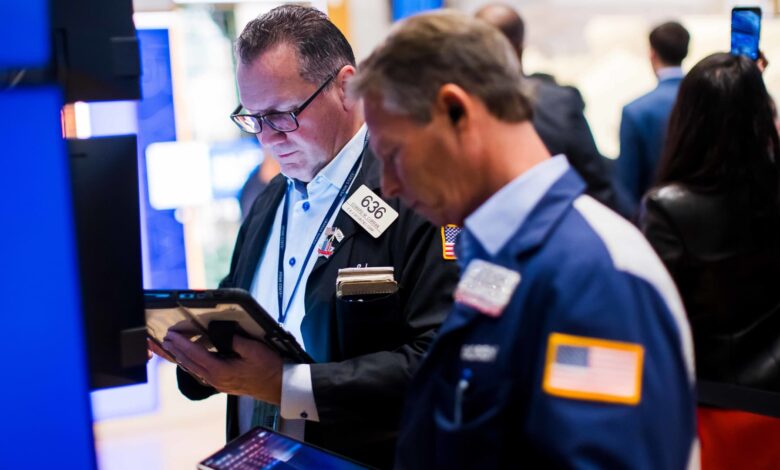
The decline in U.S. equities was led by the Dow Jones Industrial Average, which lost 341.41 points, or 0.66%, to close at 51,179.87. The S&P 500 shed 0.22% to end at 7,801.77, while the Nasdaq Composite slipped 0.22% to settle at 27,538.69. The market reaction came after the release of minutes from the Federal Reserve’s September meeting, which revealed that officials anticipate raising rates before the end of the year.
“With regard to the outlook for monetary policy beyond the current meeting, most participants assessed that another increase in the target range for the federal funds rate would likely be appropriate by year end,” the minutes stated. The document emphasized that participants approached each meeting with an open mind, noting that decisions at future meetings would depend on incoming information and its implications for the outlook and balance of risks. The lack of a specific timeline for the hike left investors cautious, though the anticipation of tighter monetary policy was sufficient to trigger the sell-off in growth-oriented and financial stocks.

The rise in yields had an immediate impact on key sectors, particularly banking. Shares of major financial institutions dropped as investors weighed the potential hindrance that higher interest rates could place on lending activity. Goldman Sachs and Bank of America shares each fell 1%, while Wells Fargo, Citigroup, and JPMorgan also closed lower. The sell-off in these stocks reflected broader market concerns regarding the cost of capital and the potential slowdown in credit growth.
Despite the morning volatility, the 10-year yield backed off its intraday high following a Treasury auction in which the government sold $39 billion in 10-year notes. The auction drew strong participation, helping to stabilize sentiment in the bond market and allowing stock indices to pare their declines. Bill Merz, head of capital markets research at U.S. Bank Asset Management, noted that the bid-to-cover ratio and indirect bidder participation were “quite strong.”

“There’s investor interest at these relatively elevated yield levels compared to what people have become used to in the last 15 to 20 years, but we need to take it with a grain of salt,” Merz said. “There are a lot of other drivers out there that we need to take into consideration as well on a standalone basis. It was a solid auction.” The strong demand for the 10-year notes suggested that despite the elevated rates, institutional investors remained willing to lock in longer-term yields, providing a floor for the bond market that indirectly supported equity trading in the latter part of the session.
The market activity occurred against a backdrop of unusual divergence in equity performance, a condition that has historically preceded significant volatility. While the immediate driver was the bond market and Fed expectations, the underlying structure of the stock market suggests an elevated chance for a larger directional move, either a surge or a deep plunge, as investors adjust to the new rate environment. The next major catalyst for the market will be the upcoming Federal Reserve policy meeting, where the central bank is expected to provide further clarity on the timing and magnitude of the anticipated rate increase.