The re-entry phase presents extreme physical challenges for the capsule. As the Dragon spacecraft descends through the atmosphere, it generates a layer of hot plasma in front of the hull, reaching temperatures as high as 1600°C. The spacecraft’s heat shield is designed to provide protection from these intense thermal loads, ensuring the safety of the crew during this critical phase of the mission. The team is planned to splash down off the coast of California on 8 October at 15:34 GMT, where a recovery team will retrieve the astronauts and return them to solid ground.
The εpsilon mission, during which Adenot launched into orbit on 13 February 2026, represents a significant milestone in European space exploration. Adenot reached the mark of 200 consecutive days aboard the station on 3 September 2026, setting a new European record for the longest single spaceflight. This achievement surpasses the previous record held by ESA astronaut Luca Parmitano for his 200-day Beyond mission, which was closely followed by Thomas Pesquet’s 199-day Alpha mission.
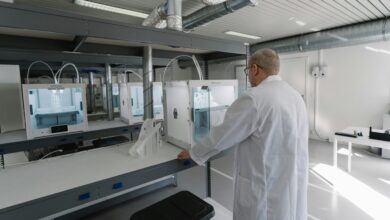
Adenot’s time in orbit has been characterized by a broad and intensive research programme. Throughout the mission, she carried out a wide range of European experiments spanning multiple scientific disciplines, including health research, materials science, biology, fluid physics, radiation physics, and fundamental science. Beyond these core research activities, she also contributed to the testing of technologies intended for future exploration missions. This included the evaluation of the new European exercise device, known as E4D, and the operation of in-orbit metal 3D printing systems. Additionally, she supported various commercial research payloads, highlighting the increasing role of commercial partners in station-based science.
The mission also featured significant extravehicular activities. Adenot became the first French woman to conduct a spacewalk and the second European woman to do so, following ESA astronaut Samantha Cristoforetti in 2022. She completed three spacewalks within a 14-day period, logging a total of 19 hours and 42 minutes working outside the station. These activities were crucial for the maintenance and expansion of the station’s infrastructure and capabilities.
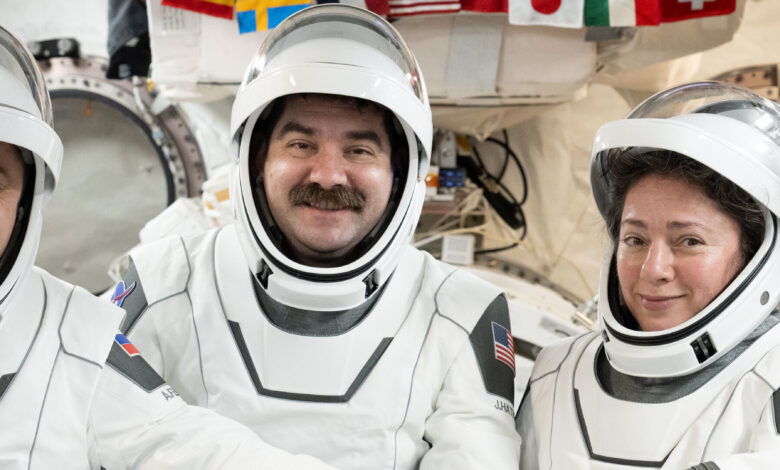
Adenot is the second French female astronaut in history, after Claudie Haigneré, who flew to space for the first time in August 1996. Her presence on the εpsilon mission, alongside NASA astronauts Jessica Meir and Jack Hathaway, and Roscosmos cosmonaut Andrei Fedyaev, underscores the international cooperation that defines the operation of the International Space Station. The crew launched aboard Dragon Freedom, a spacecraft designed for rapid and efficient crew transport to and from low Earth orbit.
Upon their return, Adenot will fly to Cologne, Germany, a few hours after the splashdown. There, she will begin her post-flight activities at the European Astronaut Centre (EAC) and the nearby :envihab facility, operated by the German Aerospace Center. These facilities are designed to assist astronauts in adapting to Earth’s gravity and normal physiological conditions after an extended period in microgravity.
The undocking and splashdown are scheduled to be streamed live on ESA Web TV and ESA’s YouTube channel, providing the public with a direct view of the conclusion of the εpsilon mission. While all times are subject to change, the event marks the end of a record-setting chapter in European spaceflight and the safe return of key scientific data and technological insights gathered over the course of the mission.