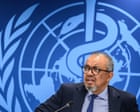
Top officials at the UN health agency have stated that they do not currently know how the lab worker died. The WHO is actively urging Russian authorities to provide more detailed information to clarify the circumstances surrounding the death and to assess any potential public health risks. This lack of transparency has compounded concerns among international observers, who are monitoring the situation closely for signs of an emerging epidemic.
Official Responses and Diplomatic Tensions
In response to the growing international attention, Russian authorities have moved to downplay the severity of the incident. Rospotrebnadzor, the Russian federal service for surveillance of protection of consumers’ rights and human well-being, announced that nearly 5,000 tests had been conducted. These tests reportedly found no dangerous pathogens, and the agency concluded that there is no epidemic risk. The Kremlin has further characterized much of the media coverage as “false” and stated that it has no knowledge of any formal US request, or “demarche,” for additional information.
Despite these assurances, the United States has expressed a more cautious stance. US President Donald Trump addressed the issue in the Oval Office, stating that the death did not appear to be linked to a biological weapon. “We don’t think so. We’re going to find out soon enough, but we don’t think so,” Trump told reporters. He noted that Russian officials had assured their American counterparts that the situation was under control. However, the President acknowledged a significant parallel to the early stages of the global health crisis in early 2020, when similar assurances were made before a widespread pandemic emerged. “China didn’t say much, and Russia doesn’t say much. But they say they have the situation fully under control,” he remarked, highlighting the recurring challenge of verifying early-stage outbreak containment.
US Secretary of State Marco Rubio emphasized the need for greater clarity, stating on Tuesday that Russia should provide more information about the death of the laboratory worker. Trump added that he was disappointed that Russia had not been more forthcoming with data. He confirmed that he had met with US experts who are monitoring the situation and that a telephone conversation with Russian President Vladimir Putin was planned to discuss the matter, although no specific date was given.
Public Health Implications and Uncertainty
The medical and public health significance of this incident lies primarily in the uncertainty surrounding the pathogen involved. While Russian authorities claim the situation is contained, the international community remains wary of the potential for hidden transmission or laboratory-acquired infections that may not have been immediately detected. The WHO’s inability to determine the cause of death underscores the critical importance of rapid data sharing in preventing localized incidents from becoming global health threats.
The available evidence presented by Russian officials, specifically the negative results from nearly 5,000 tests, provides a baseline for reassurance. However, the strength of this evidence is tempered by the lack of independent verification and the limited detail provided to the international community. For health systems globally, this incident serves as a reminder of the vulnerabilities in biosecurity protocols and the diplomatic hurdles that can delay the exchange of vital epidemiological data.
As the investigation continues, the focus remains on whether further cases will emerge. Reports have hinted at a second suspected case, which has intensified calls for transparency. The next verified development will depend on whether Russian authorities choose to share more granular data with the WHO and other international partners. Until then, the death of the Siberian lab worker remains an unresolved case study in the complexities of modern public health diplomacy, where scientific fact and political messaging often compete for dominance in the narrative.