Amid this military backdrop, the diplomatic front has seen a notable shift in tone from Washington. US Vice President JD Vance has called for Iran to make a “meaningful” reduction in its uranium enrichment capacity as part of an agreement to end the war. This statement suggests a potential softening of Washington’s earlier insistence that Tehran abandon enrichment altogether. Vance argued that if Iran does not seek a nuclear weapon, there is no justification for maintaining high levels of enriched fuel. “If you don’t want a nuclear weapon, then why do you need 60 percent enriched fuel?” Vance asked. He emphasized that building highly enriched fuel is a “very basic threshold issue” that Iran must address to demonstrate its commitment to non-proliferation.
This position appears to create room for compromise, a development that contrasts with the hardline rhetoric maintained by other senior US officials. Secretary of State Marco Rubio has reiterated that Iran cannot possess a nuclear weapon, while President Donald Trump has warned that the war will end through either “the nice way or the not-so-nice way.” The divergence in messaging highlights the complexity of US strategy as the conflict enters its eighth month. Officials in Tehran have, in turn, questioned whether Washington genuinely seeks negotiations, pointing to the continued intensity of military operations as evidence of mixed signals.
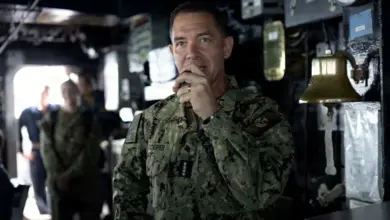
The military dimension of the conflict remains intense, as evidenced by the recent return of the USS Abraham Lincoln carrier strike group after a record 321-day deployment in the Middle East. Defense Secretary Pete Hegseth addressed the sailors from the carrier off the coast of San Diego, presenting them with the Presidential Unit Citation for extraordinary heroism. According to Pentagon statistics, the strike group executed 3,693 combat sorties, delivered 1.37 million pounds of ordnance, and launched 450 Tomahawk land attack cruise missiles. The group also shot down 77 one-way attack unmanned aerial systems, sank 64 Iranian warships, and destroyed 21 anti-ship cruise missiles. Hegseth acknowledged hardships faced by the crew but emphasized their resilience, stating that the US military adapts and overcomes to finish its mission.
Maritime safety in the region continues to deteriorate, posing risks to global trade. A tanker sailing off the north coast of Qatar reported being struck by multiple projectiles, resulting in an unspecified number of casualties. The incident occurred 59 miles off the coast of Madinat ash Shamal in the Persian Gulf. The United Kingdom Maritime Trade Operations (UKMTO) issued an advisory urging vessels to transit with caution and report any suspicious activity. This incident aligns with Secretary Rubio’s claim that Tehran has “lost complete control” of the Strait of Hormuz, a critical chokepoint for global energy supplies.
Despite the tactical and strategic shifts, significant obstacles remain for any potential deal. Simon Mabon, a professor of international relations at Lancaster University, noted that the prospect of Iran seeking a nuclear weapon has remained remote. Instead, the primary concerns for Tehran’s negotiators revolve around sanctions, frozen Iranian assets, the US naval blockade, and fighting across the region. These non-nuclear issues represent the main barriers to an agreement, suggesting that even if enrichment levels are reduced, broader geopolitical tensions will require substantial resolution.
As the US military continues to project power in the region and diplomatic channels remain open, the next few weeks will be critical. The focus now shifts to whether Iran will accept the new threshold regarding enrichment and whether Washington is prepared to address the broader economic and security concerns that Tehran cites as obstacles. The interplay between military pressure and diplomatic overtures defines the current trajectory of the conflict, with the potential for a negotiated end hinging on the resolution of these complex, multifaceted issues.