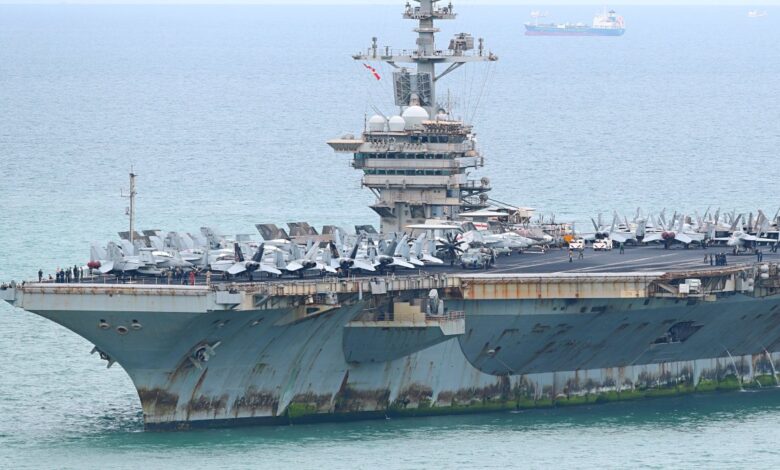
The deployment, which began in November with the carrier leaving San Diego, was significantly extended after U.S. and Israeli forces launched airstrikes against Iran on February 28. The Lincoln spent much of its time in the Middle East without a port call, logging 286 days at sea without docking. This duration places it as the second-longest deployment for an aircraft carrier since the Vietnam War, trailing only the USS Gerald R. Ford, which set the record at 326 days earlier this year. The carrier’s return follows a brief stop in Thailand earlier this month, which provided a logistical pause during the long journey back to the United States.
Combat Operations and Official Recognition
On Wednesday, the day before the carrier’s arrival in San Diego, Defense Secretary Pete Hegseth visited the ship to present the crew with the Presidential Unit Citation. This is the highest honor a military unit can receive and is typically reserved for significant achievements in combat. Hegseth cited “40 days of combat operations and an ironclad maritime blockade against Iran” as the basis for the award. The citation was bestowed upon the Lincoln and its accompanying ships, recognizing their sustained presence and operational readiness in a high-threat environment.
During his address to the crew, Hegseth acknowledged the unprecedented nature of the extension, stating that he was the “only thing standing between you and home” and that he had signed the orders to extend the deployment twice. He pushed back against narratives he described as attempts to turn the Lincoln into a “symbol of dysfunction or a symbol of low morale.” Hegseth emphasized the adaptability and resilience of the U.S. military, asserting that the crew “finish[ed] the mission nonetheless.” He also noted that President Donald Trump had tracked the carrier’s activities from the beginning of the deployment and expressed pride in the crew’s execution.
The mood aboard the ship on the evening before docking was described as jovial, with sailors engaging in informal activities such as running a 5K around a flight deck that was free of aircraft. This atmosphere contrasted with the intense operational tempo the crew had endured during the conflict.
Logistical and Human Challenges
While the official narrative emphasizes mission success and unit honor, the deployment drew significant national attention due to reports of severe conditions aboard the ship. Crew members faced documented stress, mental health challenges, and supply shortages, including shortages of food and hygiene products. These issues arose during the extended period of combat operations and the maritime blockade, which placed sustained pressure on logistical chains and personnel welfare.
The Navy initially downplayed these reports, and President Trump commented in August that the Lincoln’s lengthy deployment was “not nearly long enough,” indicating a strategic preference for maintaining a robust naval presence in the region. The tension between the operational demands of the Iran conflict and the physical and psychological limits of the crew highlighted the logistical constraints of prolonged high-intensity deployments. The carrier’s return to San Diego allows for immediate maintenance, resupply, and the rotation of personnel, addressing the immediate needs of the sailors and Marines who served on the ship.
The conclusion of this deployment underscores the shifting dynamics of U.S. naval strategy in the Middle East. The Lincoln’s record-setting tenure at sea, combined with the formal recognition of its combat role, signals a sustained military commitment to the region. However, the documented internal challenges aboard the ship raise questions about the sustainability of such extended deployments for carrier strike groups. As the crew processes their return, the next confirmed development will focus on the ship’s post-deployment maintenance cycles and the potential redeployment of other assets to maintain operational presence in the area.