Storage Shortfall and Demand Reductions
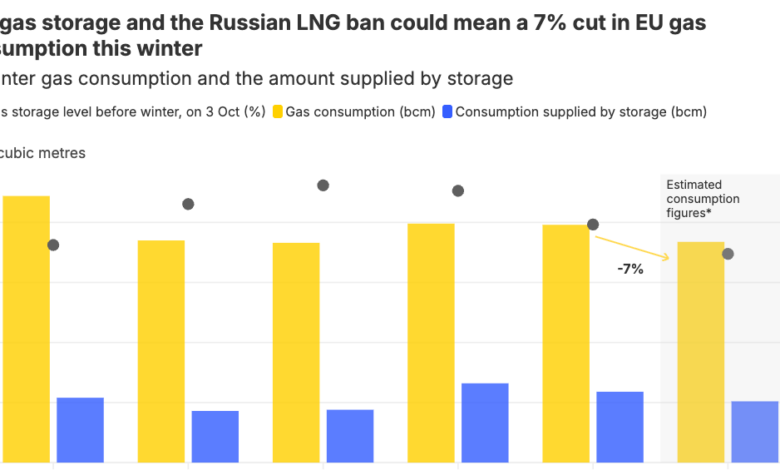
The EU’s reliance on storage to balance winter demand has increased significantly in recent years. Following a rebound in winter gas demand over the last two winters while net imports remained flat, storage withdrawals during the 2024–25 season were 50% higher than in the preceding two years. With current inventory levels depleted, independent analysis projects that storage will provide 7.3 billion cubic metres (bcm) less gas to the market this winter (November to March) compared to the previous year.
This physical shortfall, combined with the EU’s full ban on imports of Russian LNG taking effect in January 2027, creates a structural gap that cannot be filled by existing storage alone. Consequently, the EU may need to cut winter gas demand by 7%, equivalent to 14 bcm, compared with last winter to maintain grid stability and avoid critical shortages. While this does not mean storage will run dry, the reduced pressure in partially filled facilities makes it harder to withdraw gas quickly during late-winter cold snaps, increasing the risk of supply interruptions.
The Economics of Storage vs. Efficiency
The financial implications of managing this shortfall are stark. Covering the storage deficit with extra gas imports would cost the EU an estimated €3 billion. Due to price increases driven by the US–Iran conflict, this volume now costs 12% more than the same amount of gas would have in 2025. This pricing dynamic has turned increased reliance on gas storage into a major financial liability for the continent.
The mechanism behind the low storage levels is rooted in the collapse of the summer-winter price spread. Traders typically buy gas in the summer at lower prices to store it for sale at higher winter rates. However, this year’s refill season saw the spread turn negative for parts of the period, with summer gas contracts trading higher than winter contracts. This inversion means that buying gas to store it has become a financial risk rather than a profitable strategy, leading to slower and later injections into storage facilities.
Strategic Dilemma: Infrastructure Investment vs. Demand Shift
European policymakers face a difficult choice regarding how to address the winter gap. One option is to invest in expanding physical gas storage capacity. However, such spending risks locking in fossil fuel infrastructure for decades, a commitment that may conflict with long-term decarbonization goals. Furthermore, with storage utilization rates already strained, the capital expenditure required for new facilities is difficult to justify when the seasonal arbitrage window is closing.
Alternative strategies focus on reducing peak winter demand through energy efficiency, heat pump adoption, industrial electrification, and renewable energy deployment. These measures offer a long-term solution that shields the region against future geopolitical crises and price volatility. By lowering the absolute volume of gas required during peak heating periods, the EU can reduce its vulnerability to external supply shocks, such as the diversion of LNG cargoes to Asian markets or further disruptions in the Middle East.
The current situation highlights the fragility of Europe’s energy transition. While the ban on Russian LNG is a clear policy win for energy independence, the timing of its implementation coincides with a period of global supply tightness and elevated prices. The next critical milestone will be the monitoring of storage levels through the winter months and the regulatory decisions on demand-side response measures that may be enacted to ensure the system remains stable through the cold season.