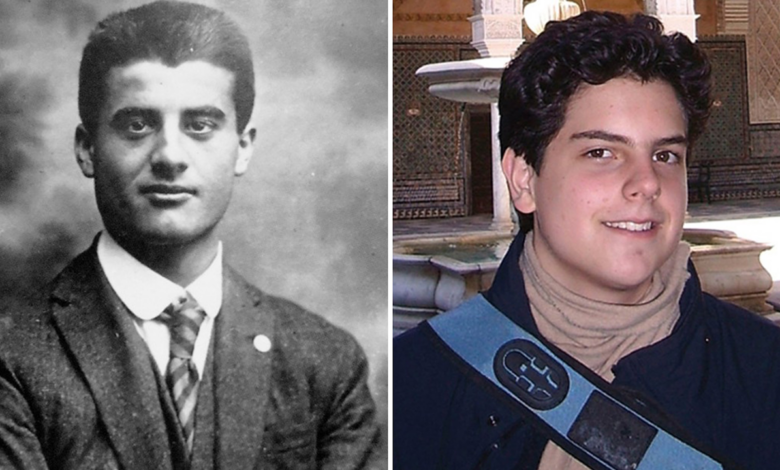
The decision resolves a period of uncertainty regarding the timing of these high-profile events, which had been previously scheduled separately under the late Pope Francis. Acutis, beatified in Assisi on 10 October 2020, was originally slated for canonization on 27 April, the Second Sunday of Easter, to coincide with the Jubilee of Teenagers. Frassati’s canonization was set for 3 August, marking the culmination of the Jubilee for Youth. However, on the day of Pope Francis’ death, 21 April, the postponement of Acutis’ canonization was announced, leading to widespread assumptions that Frassati’s ceremony would also be delayed. Friday’s announcement by Pope Leo XIV settled these doubts, unifying the two events into a single liturgical celebration.
The pairing of these two figures is notable for the distinct eras they represent. Frassati, a young man from the early twentieth century, and Acutis, who will become the first twenty-first-century saint canonized by the Church, led lives that were vastly different in context and activity. Yet, the Vatican emphasizes that they are united by their love for Christ and their ability to impart that faith to those around them. The announcement has been met with significant anticipation from the faithful, who have long awaited the formal recognition of these two modern devotional icons.
Pope Leo XIV’s decision to enroll both young men in the catalogue of saints on the same day underscores a strategic and spiritual message about the continuity of faith across generations. By linking a figure from the early 1900s with a millennial known for his digital evangelization, the Holy See highlights the timeless nature of the virtues being celebrated. The previous pontiff had announced these canonizations during a General Audience on 20 November 2024, an event that prompted thunderous applause from crowds gathered in St. Peter’s Square, signaling the immense popular support for both candidates.
During the same consistory, Pope Leo XIV also finalized dates for the canonization of seven other Blesseds, most of whom are scheduled for October. Among them is Ignatius Shoukrallah Maloyan, an Armenian Catholic Archbishop who was martyred in 1915 during the Armenian Genocide in the Ottoman Empire. His inclusion in the canonization process carries significant historical weight, recognizing the faithfulness of the Church’s leaders during one of the twentieth century’s most tragic episodes.
Also scheduled for canonization is Peter To Rot, a lay catechist martyred in 1945. To Rot was killed for continuing his apostolic work despite a ban imposed by Japanese authorities. His elevation to sainthood is a landmark moment for the region, as he will become the first canonized saint from Papua New Guinea. The group also includes three female religious: Vincenza Maria Poloni, founder of the Institute of the Sisters of Mercy of Verona; Maria del Monte Carmelo Rendiles, a Venezuelan founder of the Congregation of the Servants of Jesus; and Maria Troncatti, a professed religious of the Daughters of Mary, Help of Christians.
Two other laymen complete the group of eight: Bartolo Longo, the founder of the famous Marian Shrine at Pompeii, and José Gregorio Hernández Cisneros, a Venezuelan doctor and member of the Secular Franciscan Order. Known as “the doctor of the poor,” Cisneros was renowned for treating those in need and even paying for their medicines out of his own pocket.
The consolidation of the canonization calendar by Pope Leo XIV reflects a broader effort to streamline the recognition of new saints following the transition of leadership in the Vatican. While the specific dates for the seven other Blesseds were set for October, the specific focus on the 7 September date for Acutis and Frassati suggests a particular emphasis on engaging younger generations of the faithful. The simultaneous nature of the ceremony will likely draw global media attention, reinforcing the Vatican’s message that sanctity is not limited to historical figures or traditional religious vocations, but is accessible to young people in both secular and religious lives.
As preparations for 7 September begin, the Vatican will focus on coordinating the logistical and liturgical aspects of what promises to be a major event. The joint canonization serves not only as a religious milestone but also as a diplomatic and cultural statement, highlighting the Church’s enduring influence and its ability to connect contemporary audiences with the historical narrative of the faith. The resolution of the scheduling ambiguity brings clarity to the faithful, who can now mark their calendars for a day that will honor two of the most beloved modern figures in the Catholic Church.