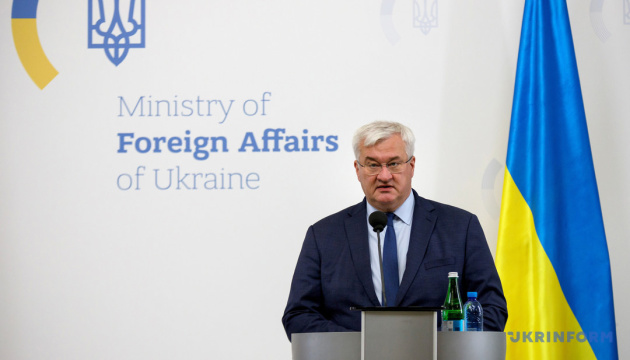
“President Zelensky leads our nation in a time of war — a war for independence, freedom, and dignity. He has the support of the Ukrainian people, and they have the right to decide,” Sybiha said, adding that statements from abroad only confirm that the President is doing his job well.
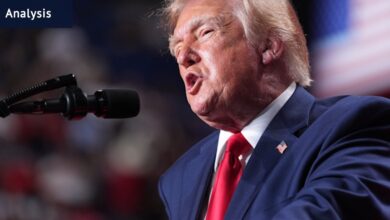
This defense of the incumbent administration comes against a backdrop of shifting geopolitical pressures. Sybiha’s comments follow reports that President Trump decided to strike a deal with Russia on diesel fuel after President Zelensky refused to unilaterally halt strikes on Russian oil refineries. The exchange underscores the tension between external diplomatic initiatives and Ukraine’s insistence on maintaining its strategic autonomy in wartime. By emphasizing that foreign statements serve as validation of the President’s effectiveness, Sybiha frames international attention not as interference, but as recognition of a leader managing a critical existential crisis.
While defending the political status quo at home, Sybiha has simultaneously pursued a robust diplomatic offensive on the economic and security front. In a telephone conversation with World Trade Organization (WTO) Director-General Ngozi Okonjo-Iweala, the Ukrainian Foreign Minister urged the international body to support efforts to restore safe shipping in the Black Sea. The primary driver of this urgency is the ongoing Russian targeting of civilian vessels and ports, which has begun to disrupt global food supplies and trigger a sharp rise in prices.
“Russian attacks on civilian vessels, sailors, and Ukrainian ports in the Black Sea pose a threat to global food supply chains. The security of shipping must be restored without delay,” Sybiha told Okonjo-Iweala. Although the Black Sea ports and their maritime corridor technically remain open, reciprocal strikes between Russia and Ukraine have increased in recent months. This escalation has made food shipping severely dangerous, creating a situation that functions effectively as a blockade. Kyiv is counting on the WTO’s support to help achieve a just peace, leveraging the organization’s influence to highlight the humanitarian and economic consequences of the maritime conflict.
The scale of the damage to Ukraine’s agricultural logistics is substantial. According to data from Ukraine’s Ministry for Recovery, Infrastructure and Transport, at least 274 civilian vessels and 1,173 port infrastructure facilities have been damaged or partially destroyed since the start of Russia’s full-scale invasion in February 2022. The escalation has not shown signs of abating; Russia has consistently targeted foreign-flagged civilian vessels heading toward Ukrainian ports. Furthermore, drone incursions and violations of airspace have increased, particularly affecting neighboring EU member states such as Romania and Turkey, further complicating the regional security environment.
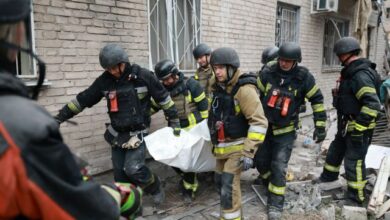
During the same exchange, Sybiha briefed the WTO chief on Russia’s broader campaign of strikes on civilians across Ukraine. A particularly lethal incident occurred on Wednesday, when a residential building in Pryluky was struck, leaving 22 people dead. This briefing aims to contextualize the maritime disruption within the wider pattern of Russian aggression, reinforcing the argument that restoring shipping safety is inseparable from addressing the broader security crisis.
A key element of Kyiv’s strategy with the WTO involves promoting a new standard for remote audits and inspections. Ukraine is seeking to establish a WTO-wide protocol for this practice, having already agreed on the framework with the EU, the UK, and Canada. This move is likely designed to maintain trade integrity and transparency even as physical access to infrastructure becomes increasingly hazardous, ensuring that Ukraine’s economic interests are protected through digital and institutional mechanisms rather than solely through physical security guarantees.
Sybiha’s diplomatic activity this week also included his first phone call with Omar Bula Escobar, the Minister of Foreign Affairs of Colombia. While the specific details of that bilateral discussion were not elaborated in the immediate reporting, the engagement signals a broadening of Ukraine’s diplomatic outreach beyond traditional Western allies, potentially seeking renewed support from nations in the Global South who are also concerned about food security and geopolitical stability.
As the war enters its third year, the focus of Ukrainian diplomacy has increasingly shifted to leveraging international institutions to counteract the economic and physical isolation imposed by the blockade of its ports. The combination of defending presidential legitimacy against foreign commentary and pressing for WTO intervention in the Black Sea highlights a dual-track strategy: safeguarding internal political sovereignty while demanding external enforcement of international norms regarding maritime safety. The immediate consequence of these efforts will be determined by whether the WTO and other international actors translate Sybiha’s warnings into concrete measures to protect civilian shipping and stabilize global food markets.