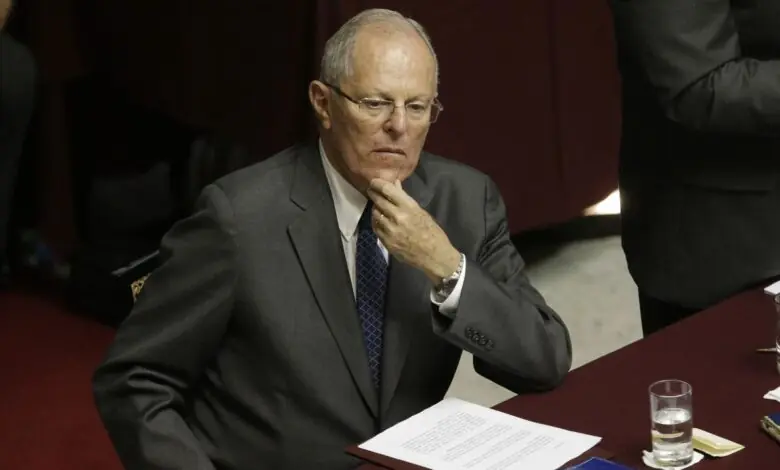
Kuczynski’s departure comes just 19 months into his five-year mandate and follows the release of secretly recorded videos on Tuesday night. The footage, released by the opposition party Fuerza Popular, allegedly shows a senior government official and Congressman Kenji Fujimori offering a member of Congress a share of public-works contracts in exchange for support against an impending impeachment vote. The videos ended any realistic prospect of Kuczynski surviving the second impeachment motion scheduled for Thursday in Congress.
The political crisis deepens a period of instability already triggered by the Odebrecht corruption scandal, one of the largest in Latin American history. Odebrecht officials, cooperating with prosecutors in Brazil, revealed that the Brazilian construction giant spent $800 million in bribes across the region over a decade to secure billions in contracts. Evidence indicates that $29 million of those funds went to officials in Peru. Kuczynski is the first sitting president in Latin America to be removed from office due to links with the firm.
While Kuczynski was not directly implicated in the alleged vote-buying, his credibility had already been severely damaged by previous revelations. Late last year, it emerged that while he served as a minister in the government of Alejandro Toledo, his private investment company received several million dollars from Odebrecht. Kuczynski claimed these were legal fees and that he was unaware of the payments. Odebrecht officials have stated that the fees paid to his firm were aboveboard and not part of their bribery scheme. However, in an atmosphere of growing public mistrust, his character was called into question, particularly after he survived a first impeachment vote in December 2017 by a narrow margin.
That initial survival was itself controversial. Kuczynski survived thanks in part to abstentions from some members of Fuerza Popular, the party of Keiko Fujimori. Days later, Kuczynski issued a pardon to Alberto Fujimori, the disgraced former president and father of Keiko and Kenji Fujimori, who was serving time in prison. The pardon was widely interpreted as a political deal, leading to the resignation of several ministers in disgust and harsh criticism from former allies.
The release of the new videos intensified the pressure. In the clips, a government official explains to a lawmaker how to profit from regional projects, while Kenji Fujimori assures him of government protection. Kuczynski’s government denied that contracts were awarded in exchange for political support, announcing that the official in question would be fired. Kenji Fujimori also denied wrongdoing, describing the interactions as typical negotiations to advance infrastructure projects.
Political analysts suggest that Kuczynski’s downfall was inevitable given the structural opposition he faced. Eduardo Dargent, a political scientist at Lima’s Catholic University, noted that while the parliamentary majority worked against Kuczynski from the start, the president took responsibility for his own failure through a lack of transparency and political maneuvering. “He dug his own grave,” Dargent said.
Kuczynski’s candidacy was built on a promise of transparency and modernization for Peru. His unexpected victory over Keiko Fujimori in June 2016, by a margin of less than one percent, had offered hope of a fresh start after years of political turmoil. However, the dominance of Fuerza Popular in Congress allowed opponents to block his cabinet choices and legislative agenda. As uncertainty mounts over whether Congress will accept his resignation or proceed with the forced ouster vote, the country faces a governance vacuum amid ongoing investigations into the Odebrecht network. The resignation marks a dismal end to a long public career, leaving Peru’s political future in limbo as the next phase of the impeachment process unfolds.