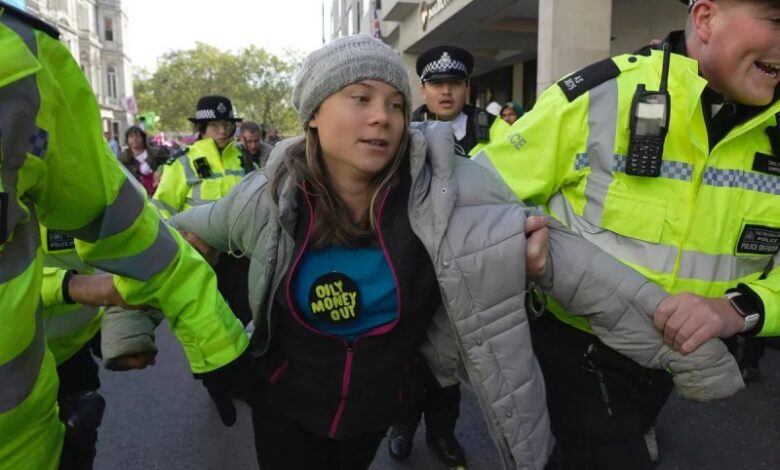
In The Hague, the protest was organized by Extinction Rebellion (XR) to denounce the Dutch government’s tax concessions for companies connected to the fossil fuel industry, including energy firm Shell and airline KLM. The demonstration was the 37th instance of activists attempting to block the A12 highway, a road that has been subject to regular blockades since 2022. The group aimed to pressure the government ahead of a planned debate on fossil fuel subsidies scheduled for June. Thunberg, flanked by fellow activists and marching behind a banner reading “STOP FOSSIL SUBSIDIES,” told AFP news agency that it was important to demonstrate because the world is living in a state of planetary emergency. “We must do everything to avoid that crisis and to save human lives,” she stated. While some local media noted that residents were annoyed by the protest occurring on such a hot day, potentially hindering access to the beach, the event drew significantly more international attention than previous XR blockades due to Thunberg’s presence.
The arrest in Berlin presents a different but related geopolitical dimension. The demonstration there was organized by the activist group Peacefully Against Genocide, whose members glued themselves to the entrances of the Rheinmetall facility in an attempt to prevent employees from accessing the site. Berlin police eventually removed the protesters and arrested those who refused to leave, including Thunberg. The target of the protest was Rheinmetall’s production of military equipment and ammunition components. Organizers allege that these supplies are destined for Israel, arguing that the company is complicit in the military operations in Gaza. According to the activists, the Berlin facility has increasingly shifted its output from automotive components to military products, including artillery ammunition components, thereby demanding a halt to supplies destined for the conflict zone.
Rheinmetall has not accepted these accusations, stating that it operates under German and international export regulations. The divergence between the activists’ claims and the company’s legal compliance highlights the complex intersection of corporate responsibility, international law, and public perception in modern conflicts. For Thunberg, this engagement marks a departure from her earlier, more narrowly focused climate activism. While she became internationally known for her stance on climate change, she has increasingly campaigned on issues related to the war in Gaza. This expansion of her platform illustrates a broader trend within the activist community, where environmental concerns are being linked to geopolitical stability and human rights issues in conflict zones.
The simultaneous arrests in Germany and the Netherlands illustrate the increasing friction between direct action protest groups and state authorities in Europe. In The Hague, the police response involved a physical blockade and the detention of participants who broke through lines, a tactic used in previous A12 highway protests. In Berlin, the use of adhesive to block entrances prompted a police removal operation. In both instances, the presence of Thunberg amplified the media coverage and political scrutiny surrounding the underlying issues: fossil fuel subsidies in the Netherlands and defense industry exports in Germany.
As the Dutch government prepares for its June debate on fossil fuel subsidies and as debates continue over the ethical implications of defense exports, the actions of groups like Extinction Rebellion and Peacefully Against Genocide aim to keep these topics in the public eye. The arrests serve as a concrete consequence of this direct action strategy, raising questions about the limits of protest in democratic societies and the evolving role of high-profile activists in shaping geopolitical discourse.