
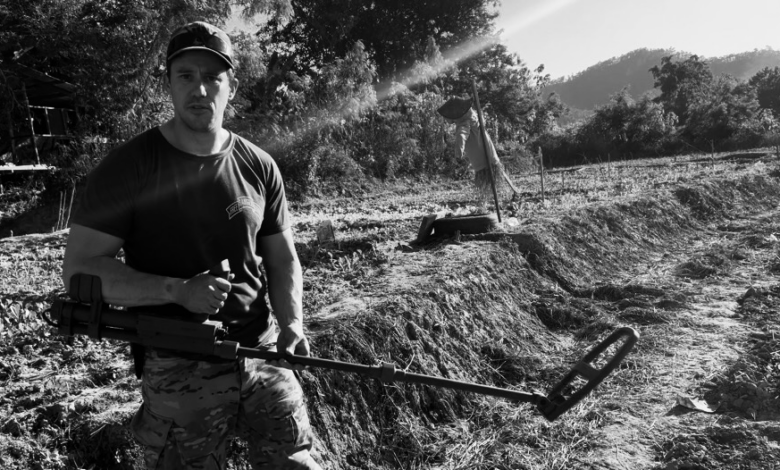
The most acute crisis is unfolding in Myanmar, where landmines have become a primary driver of civilian displacement and injury. In 2024, the country recorded 2,029 landmine casualties, accounting for nearly one-third of the 6,279 documented incidents globally. This represents a sharp increase from the 1,003 casualties recorded in 2023. The surge in injuries is exacerbated by the ongoing civil war, which has displaced an estimated 3.6 million people, many of whom are living in austere conditions in internally displaced person (IDP) camps. The 2021 military coup and the significant earthquake in March 2025 have further destabilized the region, worsening the humanitarian situation.
Large-scale international demining operations are largely absent from Myanmar due to strict safety protocols and donor risk aversion. Without an internationally recognized government, major humanitarian organizations face no clear pathway for entry. Donors are reluctant to fund clearance in areas where there is no guarantee against re-mining by conflicting factions. This vacuum has forced local communities to take matters into their own hands. Untrained villagers are increasingly using improvised tools, such as long sticks, to clear fields and homes to retrieve stored food or resume farming, leading to preventable injuries and deaths.
In response, grassroots initiatives are attempting to fill the gap. The Free Burma Rangers (FBR), a volunteer organization, launched a pilot program in Karenni State with the assistance of a $195,307 grant. The project focuses on a village that was once home to approximately 2,000 people but had only 10 standing structures remaining when the team arrived. FBR is working with local intermediaries to develop a Burma Mine Action Standard, aiming to provide a structured approach to clearance in areas that international bodies cannot currently access. Former Navy bomb technicians and missionaries are leading these efforts, testing detection equipment against specific threat profiles like the M14 mine.
Elsewhere, the sector is grappling with financial volatility. In Cambodia, the Cambodian Mine Action and Victim Assistance Authority (CMAA) has clarified that funding difficulties faced by the Cambodian Self Help Demining (CSHD) organization do not reflect the overall health of the national sector. CSHD, which employs 37 personnel out of the country’s total mine action workforce of approximately 5,700, has experienced funding shortfalls. However, the CMAA emphasized that nationwide operations continue with strong support from the Royal Government and international donors. The authority noted that funding fluctuations among operators are a recurring issue as priorities and funding cycles change, but the broader infrastructure of mine action remains intact.
Meanwhile, the inherent dangers of the profession persist. In Azerbaijan’s Aghdara district, two humanitarian deminers were injured after an anti-personnel mine detonated during routine clearance operations near Chardagli village. One worker, 31-year-old Surkhayli Alzamin Vazir oglu, sustained a leg injury, while his colleague, 28-year-old Fuzuli Rizvan oglu Mirzayev, suffered minor bodily injuries. Both were evacuated to a district hospital and reported to be in satisfactory condition. The incident underscores that even in post-conflict zones with established protocols, the risk to personnel remains high.
Despite these challenges, technical cooperation continues to evolve. Japan and Cambodia, which have a decades-old partnership in demining, are expanding their efforts to share expertise with other nations, including Ukraine. This transfer of know-how is critical as new conflicts generate fresh quantities of explosive remnants of war. However, the disparity between the capacity to clear mines in stable, post-conflict environments and the inability to operate in active, high-risk conflict zones like Myanmar highlights a significant gap in the global humanitarian response. As long as donor risk aversion persists and governance remains fragmented in key regions, the reliance on local, under-resourced initiatives will remain a defining feature of the demining landscape.