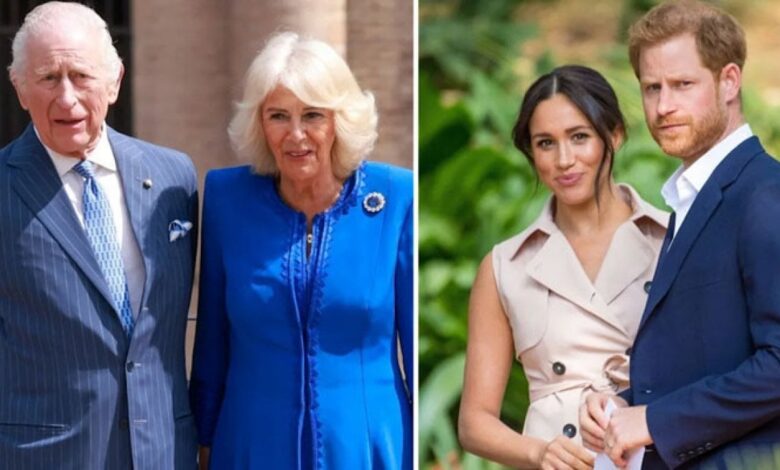
The security scramble coincides with the couple’s preparation for their first joint public engagement since their return. They are scheduled to visit Nottingham in central England, a city that holds symbolic weight as the site of their first public appearance together after announcing their engagement in 2017. The itinerary includes visits to three charities that support young people and local communities through music, film, sport, and efforts to tackle food poverty. For the Duke and Duchess, the trip is more than a routine charitable visit; it is a public assertion of their status. Royal commentators note that the outing is a direct response to a letter from King Charles, which clarified that their position is “akin to private citizens” rather than working royals. The King’s directive stated that they should not be addressed as “His and Her Royal Highness,” a distinction the couple appears intent on challenging through their active public schedule.
The tension between the couple’s self-perception and the Crown’s official stance has created a distinct divide within the Royal Family. While Harry and Meghan are reported to be “excited” to focus on their work projects, with sources noting they are working during the week while their children are in school, their relationship with senior royals remains frosty. Analysts suggest the couple’s move back to the UK is an attempt to leverage the prestige of the British monarchy, which carries more weight in the UK than it does in the United States, where they may be viewed simply as celebrities. However, reconciliation with the wider family, particularly with Prince William, appears distant. The choice of Nottingham is seen as a strategic callback to their early public life, signaling a determination to be viewed as active public figures despite the King’s explicit instructions.
Underpinning this public maneuvering is a complex and unresolved security situation. Since stepping back from royal duties in 2020, Harry and Meghan have not received the automatic, taxpayer-funded armed police protection afforded to senior members of the Royal Family. An independent body, the Executive Committee for the Protection of Royalty and Public Figures (RAVEC), ruled in 2020 that their security would be granted on a case-by-case basis. Harry lost an appeal last year challenging the government’s decision to reduce his publicly funded protection. For the past six years, the couple has relied on privately funded security teams. Now back in the UK, Harry is reportedly re-pleading his case for enhanced protection, having written to the government minister in charge of police regarding specific threats, including an alleged 2023 Al Qaeda threat that RAVEC did not warn him about.
The Home Office is currently conducting a formal risk assessment to determine if the level of threat warranting protection has changed. To facilitate this, the couple has been asked to provide detailed information about their new daily routines, including school runs, frequently visited addresses, and travel routes. This process is critical given the recent school incident and Harry’s longstanding concerns about paparazzi harassment, a issue he has linked to the circumstances surrounding his mother, Princess Diana’s, death in 1997. British media have agreed not to identify the location of the school or the couple’s residence to protect their privacy, a protocol that does not apply to international media outlets.
As the couple prepares for their Nottingham visit, the outcome of the security review will be a defining factor in their UK residency. The contrast between their public engagement and the private security struggles highlights the ambiguity of their current status. They are no longer working royals, yet they are not entirely detached from the institution. Their ability to operate as public figures in the UK depends as much on the conclusion of the Home Office’s risk assessment as it does on their public presence. The coming weeks will reveal whether the security apparatus can provide the protection Harry demands, or if the couple must continue to navigate their public life with limited official support, a situation that has defined their time in exile and now threatens to complicate their return home.